
Innovation in free flow as students redesign fountain technology

The sight of water dancing in a fountain always captivates — but how many of us give any thought to how that magic comes about? Today’s elaborate fountains are masterpieces of mechanical engineering; and, Toronto-based, internationally known Crystal Fountains recently turned to Humber College for help with design.

The challenge Crystal Fountains brought to a team of faculty and students from Humber’s School of Applied Technology was to build an electromechanical drive system for fountains, which they felt would be more cost effective and reliable than a traditional pneumatic system. The deliverable Crystal was looking for was a fully functional machined nozzle.

Students, working with Professor Hassan Hassan, built a prototype drive system that switched the power source and was more reliable, controllable, and compact than the pneumatic model. They also built a new nozzle with an innovative ball design and enhanced performance tension cables. It has much higher motion capability than previous Crystal Fountains models, but thanks to innovative mechanical techniques, it’s both smaller and less complex than older designs.

The students used electromagnetic components and couplings as well as electrical motors to power the nozzle instead of a pneumatic system and redesigned the nozzle to provide a broader range of tilting and rotation, which gives more control over how the water moves.

In the end, the students had created a nozzle that can make water dance and swivel from every possible angle, sequenced to music and lights. The project greatly enhanced the students’ design skills, highlighted Crystal Fountains’ creativity and innovation and gave the company a unique advantage over the competition.


Industry: Manufacturing
Partner(s): Crystal Fountains
Funded by: Crystal Fountains

About Humber Polytechnic

Humber Polytechnic is one of Canada’s leading postsecondary institutions, combining deep theoretical learning with applied, hands-on experience. Humber offers a wide variety of credentials including... Learn more

A community-built response to improving access to education

Deciding on post-secondary education is a big step that can be particularly difficult for students who’ve grown up in areas with lower socio-economic status. To counter that, Mohawk College in Hamilton, Ontario has developed “City School by Mohawk,” a community-based initiative that aims to break down barriers to education and employment for residents of some of the city’s struggling neighbourhoods.

The goal of City School by Mohawk is to overcome the post-secondary attainment gap that may affect residents of communities struggling with poverty and other causes of marginalization. To do that, it has brought college programming and services directly to residents in easily accessible downtown “learning hubs.” There, City School offers tuition-free college credit courses and workshops, taught by Mohawk faculty and staff, to encourage potential students to take gradual steps on a postsecondary pathway.

The two City School hubs offer college courses in a classroom environment, giving students a sense of what’s involved in attending college, as well as the chance to explore different topics they think they might like to study. And those who successfully complete the free course can earn a credit to be applied when they enroll at Mohawk.

“City school is a first for Hamilton and Ontario,” says Jim Vanderveken, dean of Interdisciplinary Studies at Mohawk College. “No other college in the province is taking community engagement to this level.” He describes City School by Mohawk as a basecamp on the journey to post-secondary education. Putting a college education within reach of everyone in the community is a priority for Dean Vanderveken and the college.

Research on the effectiveness of the City School project is being led by Dr. Alan Bourke, who is studying the perceptions students have of City School, and whether they succeed. Results of his work so far indicate significant promise: participants have high levels of satisfaction with their learning experience. Students report developing confidence in their academic abilities and building a connection with the college through a strong support system that advocates for their interests and aspirations.

Among a number of other positive findings, students appreciated the passion of their City School faculty, the flexibility of the course delivery schedules, and valued the child-care offered.

City School has generated significant interest in other communities tackling poverty and social marginalization. Mohawk also has plans to launch of a mobile City School.

Funded by: Community and College Social Innovation Fund, Social Sciences and Humanities Research Council

About Mohawk College

Mohawk College educates and serves 30,000 full-time, part-time and apprenticeship students at three campuses in Hamilton, Ontario. More than 1,200 international students from over 70... Learn more

The SeatBOT: automating quality assurance

Up, down, forward, back, straight or tilted or down, push button or lever — car seats have a whole range of motions that have to work. A team from Humber College helped to build a system to let auto manufacturers test that range robotically.

The Humber team – faculty members Neal Mohammed and Mohammad Al-Rady, and electromechanical engineering technology students Theodor Willert and Joshua Donnelly-Robertson – worked with industry partner 416 Automation Inc. to build SeatBOT, which eliminates the need for a person to do the functional and electrical tests automotive seats require.

SeatBOT can automatically test buckles on seatbelts, power seat buttons or manual track bars and levers, and any other features of seats in vehicles. Customers now want the SeatBOT as a standard on all test equipment.

The prototype developed with the Humber team is already a huge success for 416 Automation, which has sold five SeatBOTs around the world (two systems are already running in production) and has more clients interested in purchasing the system. It also worked out well for Humber students, who have been hired on at 416 Automation as a result of their participation in this project.

Industry: Manufacturing
Partner(s): 416 Automation

About Humber Polytechnic

Humber Polytechnic is one of Canada’s leading postsecondary institutions, combining deep theoretical learning with applied, hands-on experience. Humber offers a wide variety of credentials including... Learn more

Feeling better about what goes down the drain

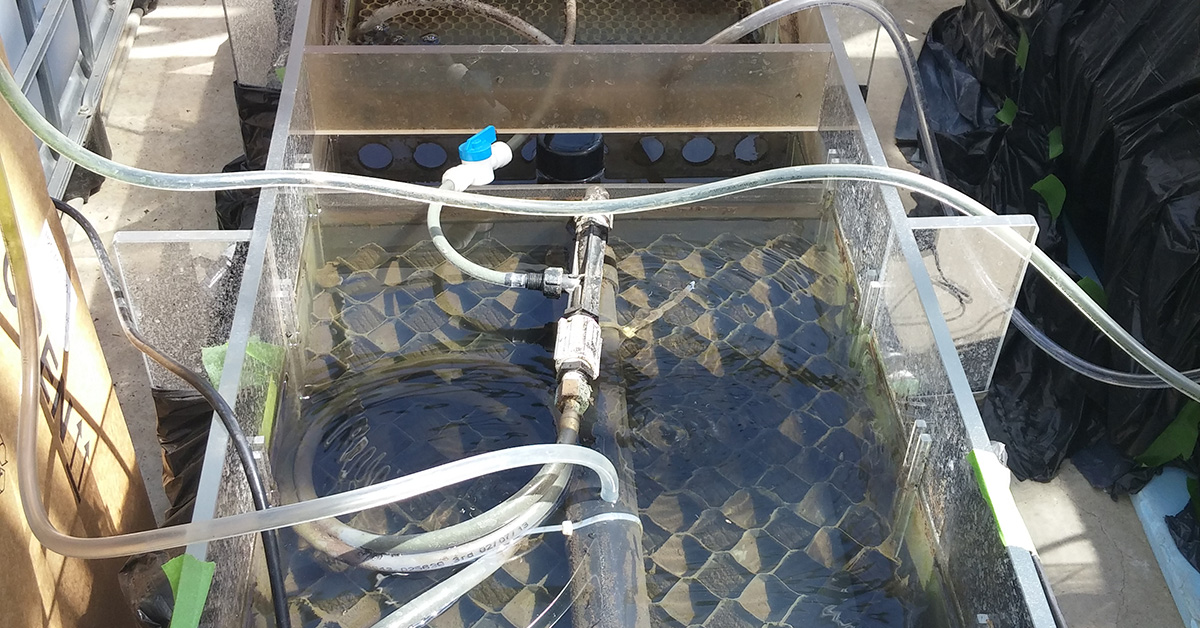
Blue Planet Environmental is an Ontario-based company that has developed an advanced wastewater treatment for both residential and commercial use. The company approached the Centre for Alternative Wastewater Treatment at Fleming College to find ways to improve its new system, so its performance would eventually meet industry certification standards.

The centre launched two consecutive applied research projects to optimize and redesign the system. The first assessed two variations of the system – run in parallel – to determine which removed nitrogen more effectively. The second project, building on the results of the first, modified the system to combine a fixed film filter process with a conventional septic tank. As a result of the second project, the Blue Planet system was further refined.

Four students assisted with the projects, which were directly related to their programs of study. They gained skills in sample collection, lab analysis and laboratory health and safety.
Systems like Blue Planet’s allow houses and businesses in areas without sewer systems to treat their wastewater efficiently and effectively, preserving water and protecting the environment.

Because of the two applied research projects at Fleming College, the advanced wastewater treatment system’s capabilities have been greatly improved. Blue Planet has deeper knowledge of how its technology works and data to back up that understanding. Thanks to the system provided by Fleming’s Centre for Alternative Wastewater Treatment, Blue Planet can speak with confidence of its technology’s capabilities and is in a better position to complete development and validation of the system.

Funded by: Engage Plus Grant

About Fleming College

Located in the heart of Central Ontario, Fleming College has campus locations in Peterborough, Lindsay, and Haliburton. Named for famous Canadian inventor and engineer Sir... Learn more

Helping a physician innovate with smart IV infusion

Every year millions of patients around the world need intravenous (IV) therapy. IV lines are used for delivering everything from medication to blood, saline and nourishment.

But this essential medical tool has an inherent risk. Caregivers must diligently monitor the IV fluid level and promptly replace it or switch off the infusion line when it gets low. Failing to do so can result in reverse blood flow and a high risk of developing a blood clot in the needle, which in turn may damage the blood vessel and require using another blood vessel to keep the IV going.

But changing an IV can be painful and traumatic, especially for geriatric and pediatric patients whose blood vessels are delicate, and hard to get a needle into. Other possible complications from a failure to monitor IV fluid levels include inflammation of the vein and air embolism.

Dr. Harendra Joshi, a physician who recently immigrated to Canada from India, had an idea for reducing the hazards of having busy staff monitor IV lines. Through his research institution, Joshi Health Inc. he developed his concept for a sensor to track IV fluid levels. To bring his idea to life, he turned to the new Wearable, Interactive, and Mobile Technology Access Centre in Health (WIMTACH) at Centennial College in Toronto.

WIMTACH’s multidisciplinary team worked rapidly to build a “fluid level indicating sensor,” the novel medical device Dr. Joshi envisioned. They created a battery-operated prototype, with electronic and mechanical components. Its liquid crystal display provides continuous monitoring of the fluid level in an IV bag, and sends alerts as soon as the IV fluid falls below a set level.

The team worked for several weeks to perfect the device, enabling push notifications through Google Cloud messaging, ensuring the strength of the signal and testing its automatic shut off. Using Wi-Fi and cellular data, mobile devices, and an audio signal at the patient’s bed site, the fluid level indicating sensor notifies providers, wherever they are, when an IV bag is nearing empty.

Partner(s): Smart IV
Funded by: Emerging Innovation

About Centennial College

Established in 1966, Centennial College is Ontario’s first public college primarily serving the eastern portion of the Greater Toronto Area through five campuses. It has... Learn more

Take heat, be cool

Take heat, be cool. Sounds like a line from a jazz standard, but it’s also a description of solar absorption cooling — a method of air conditioning that uses the power of the sun, rather than electricity, to operate.

Heating buildings through the power of the sun is nothing new, but solar-powered air conditioning seems like a contradiction in terms. In fact, it is merely harnessing the sun’s power another way: it uses water, heated by the sun, to drive the chillers in air conditioners. Not using electricity gives solar absorption cooling a huge advantage, because the electrical grid can get dangerously overloaded during heat waves as commercial and residential energy consumption soars.

Different approaches to solar absorption cooling are in use around the world, but in 2016 a team from Toronto’s Centennial College took on the challenge of building their own system. Team members were Mihail Plesca, who holds a Ph.D. in mechanical engineering (and specializes in solar energy), Centennial’s innovation program manager for energy, Hassan Haji-Esmaeili, and two student researchers, Eromosele Basil Ahunun and Harsh Pandya.

The team ran a software simulation based on the solar absorption cooling system they had designed, and found the optimal temperature for their single effect lithium chloride absorption chiller to operate at was 90° to 100° degrees Celsius.

In August 2016 the team presented their findings on their integrated solar absorption cooling system to the 2016 International Conference & Exhibition on Clean Energy at McGill University, where their results were well received.

The team continues to collect data on how well the prototype chiller performs and how accurately its components match with the simulation results the group presented in Montreal. A close match between theory and practice will make it possible to set the system up in other locations.

Partner(s): Renteknik Group
Funded by: Emerging Technologies for a Carbo-constrained Environment

About Centennial College

Established in 1966, Centennial College is Ontario’s first public college primarily serving the eastern portion of the Greater Toronto Area through five campuses. It has... Learn more

Hands-on work on remote control

Off-the-grid technology can present a problem for operators when it’s also out-of-reach. Toronto’s Clear Blue Technologies Inc. has more than two decades of experience in linking environmentally friendly green energy with the hardware and software necessary to monitor and manage it.

The company has worked with Centennial students and faculty several times over the years, most recently on a new piece of technology, the Macaw charge controller, which communicates vital information on off-grid hardware (including solar and wind-driven equipment) to remote operators. Macaw can provide users with a range of information, from functional problems to data on the amount of energy the green device is saving. Centennial College was instrumental in all facets of the device’s production and development.

Over the course of the project, Centennial did humidity and ambient temperature tests on the equipment, built the mechanical housing for motor generator sets, and installed a UGE wind turbine on campus, adding controllers and sensory equipment for monitoring.

Students fine-tuned campus solar panels by using Macaw algorithms, and designed the protective enclosure for its controller boards, factoring in corrosion, UV, humidity and other variables. Afterward, they built a prototype and tested its ability to communicate.

Co-op student Anna Serbina was involved in the first testing on Macaw. She found that her responsibilities increased along with the challenges did, but says “the teamwork environment was helpful when it came to asking questions.” Anna describes her experience as “extremely hands on.” She is one of three co-op students hired by Clear Blue after their work terms.

The project has also had an impact on Centennial’s curriculum, according to Frank Levstek, innovation program manager for Centennial’s Applied Research, Innovation, and Entrepreneurship Services. College faculty, he says, are using Macaw controllers in labs as a teaching aid.

About Centennial College

Established in 1966, Centennial College is Ontario’s first public college primarily serving the eastern portion of the Greater Toronto Area through five campuses. It has... Learn more

Refining brewing at Refined Fool Brewery

The idea of students getting immersed in beer doesn’t exactly go hand in hand with words like “efficiency” and “productivity,” — but they did when a group from Lambton College worked with Refined Fool Brewing Company, a micro-brewery in the heart of downtown Sarnia.

Refined Fool approached Lambton College for help in minimizing the space and labour their brewing process required, while increasing energy savings, efficiency and productivity. The first part of the project allowed the brewers to monitor the brewing process off site using smart devices. The second part automated keg washing, which was previously done by hand.

Faculty Researcher Kevin Ryan and three students from Lambton’s Instrumentation Control Engineering Technology program worked in collaboration with the Refined Fool team to implement the new technology in their facility.

Refined Fool’s partners say working with Lambton College helped increase profits and reduce production and operation costs.

Partner(s): Refined Fool
Funded by: Applied Research and Development (ARD) Grant

About Lambton College

As a post-secondary leader in education, training and research, Lambton College has experienced tremendous growth in recent years. In addition to a significant rise in... Learn more

Connecting Link2Feed to Collective Impact Platforms

Link2Feed is a Sarnia-based company that has created software to help food banks and other non-profits across North America (including Sarnia’s Inn of the Good Sheppard) to use data to understand and increase the impact of their work. The software is designed to collect and manage client data in ways that help organizations better understand the people they serve, increase their resources, and demonstrate their value to donors.

The work was a collaboration between Link2Feed and Lambton College’s Information Technology Research Group, led by faculty researcher Len Payne. Their challenge was to enhance the integration capacity of Link2Feed’s software, to give the company’s clients the data and system capabilities they needed to participate in collective projects.

Link2Feed’s software is now integrating successfully with a software in Dallas that helps link the emergency food system with the health-care sector, to improve clients’ health.
Link2Feed used the technology created in this project to create a spin-off platform called “Kids Café,” which integrates with their core platform and has helped emergency food organizations deliver meals to children.

“The research project with Lambton College gave us a fresh perspective on integration and a fantastic support to grow in our research and development efforts,” said a spokesperson for Link2Feed. “We have continued to work with the researchers outside of the project to grow other areas of our technical innovation.”

Partner(s): Link2Feed
Funded by: Ontario Centres of Excellence

About Lambton College

As a post-secondary leader in education, training and research, Lambton College has experienced tremendous growth in recent years. In addition to a significant rise in... Learn more

Tracking the Wanderers

People with autism or dementia tend to wander, which puts them at risk — so knowing their whereabouts are being tracked 24/7 can give their caregivers peace of mind and help ensure the wandering one’s safety.

That’s why Strategic Smart Inc. developed WeTraq. Unlike other tracking tools that use Bluetooth or GPS, WeTraq is an “internet of things” device. That’s the phrase used to describe objects, from cars to heart monitors, which have embedded software and sensors capable of collecting data and sharing it.

WeTraq is a credit-card-sized device that works by connecting wirelessly to smart phones via its mobile app. Seamless interaction between the WeTraq device and the monitoring phone can be made through cellular, radio, GPS or wireless signals. Battery charges can last up to 28 days, depending on use. When it’s needed for tracking, the location of the WeTraq is locked with proprietary software, which works around the world. The location data is encrypted and sent wirelessly to servers before being sent to the caregiver through the WeTraq app.

The WeTraq project involved two Durham College computer science students, who were responsible for the back-end functionality and database management, and one graphic design student who created a visually appealing and easy-to-use interface. The students acquired new skills, including in-depth code breakdown and analysis, high-level programming, database management and all aspects of web development.

All the features of the device, including report scheduling, geofencing (a program for alerting caregivers when their charge steps outside a defined safe zone) and panic mode are managed by the mobile application.

Thanks to this project, Strategic Smart Inc. is selling its device to more customers and earning increased revenues.

About Durham College

At Durham College, the student experience comes first. With campuses in Oshawa and Whitby, Ont. along with a learning site in Pickering, the college offers... Learn more