
Passive Treatment of Leachates from Forestry Waste

Wood waste from the Quebec forest industry is often stored in large piles that can degrade the soil under and around the stockpiles. Forestry researchers at the Centre technologique des résidus industriels (CTRI) at Cégep de l’Abitibi-Témiscamingue are testing ways to decontaminate water that may be affected by leaching from these stockpiles.

The cégep’s researchers applied their knowledge about treatment of wastewater from mine tailings to the problem of leachates from bark heaps for a local forestry company, Coopérative forestière du NordOuest, Mabarex.

The research team is designing, installing and monitoring a pilot passive treatment of leachate waters in wood residue concentration areas. The system is being set up in two stages. First, the team will design and install hydraulic works upstream of the forest depot. This facility will serve as a reactive barrier. The phenolic compound leachates in the water will be absorbed in the multiple reactive columns in the barrier. Several inexpensive absorption materials will also be tested in this stage. The second stage is neutralizing the phenolic compounds concentrated in the absorption materials. Using the aerobic enzymes in mushrooms, this organic process will improve the biodegradability of phenolic compounds.

This process is a passive treatment technique requiring no pumping or injection system. The new system could provide an effective and low cost alternative to existing techniques that are complex and often ineffective for treating leachate waters in wood residue stocking areas.

“Thanks to this project, CTRI is now a major player in innovation in the region,” says Sylvain Blais, Director General of Cégep de l’AbitibiTémiscamingue. “This project also advances applied research on passive treatment of organic pollutants and develops expertise to meet the increased needs in depolluting effluents in tailing areas, which is currently a major environmental issue.”

Equipment recently purchased by Cégep de l’Abitibi-Témiscamingue for CTRI make it possible to prepare samples, and identify and quantify microorganisms. The polymerase chain reaction (PCR), in which micro-organisms are used to treat a range of pollutants, is one of the potential processes being explored. This equipment will help address regional environmental problems and allow the cégep to offer additional expertise to local partners.


Funded by: Applied Research and Development (ARD) Grant

About Cégep de l’Abitibi-Témiscamingue

La communauté du Cégep de l’AbitibiTémiscamingue est animée par la conviction profonde que la santé d’une société est intrinsèquement liée au développement global des individus... Learn more

Franco Chiesa, Industrial Research Chair in Aluminum Transformation

Aluminum transformation is an important area of research for a number of Québec industries looking for improvements in molding or casting aluminum alloys.

Dr. Franco Chiesa has set up partnerships with multinational RioTintoAlcan (RTA) and with eight Québec small and medium-sized enterprises from various regions including the Saguenay, Cap-StIgnace, St-Cyprien, Drummondville, and greater Montreal.

RTA sub-contracts its casting-alloys research and development to tap into Dr. Chiesa’s expertise and into the research centre’s materials and resources, such as a low-pressure mold press. Most small and medium-sized enterprises have neither the scientific resources nor the specialty equipment to conduct such research. In return, SME projects allow the CCTT to fine-tune its ability to apply scientific principles to real-world problems.

This hands-on problem-solving is a core element of the Chair’s contribution to teaching in the cégep’s metallurgy department, as research projects involve academic staff either directly or through the supervision of students working on projects. The centre also proposes themes for end-of-studies projects, overseen jointly by a professor and Dr. Chiesa, and hires two student interns a year for 14 weeks. The strong working relationship allows professors to inject concrete examples into their courses, breaking from routine and heightening student motivation.

They also provide more up-to-date instruction on cutting-edge topics. Some of the challenges tackled to date include developing alloys with very high aluminum-copper content, die casting of low-iron alloys, high-production modified heat treatments, and direct-pour sand casting. The Chair also organizes its operations so that students can observe castings as part of their courses. Through projects designed by the Chair, two students won the 2013 and 2014 Prix de la relève (next-generation award) at the REGAL (Regroupement Aluminium) student day.

The benefits for SME productivity can prove spectacular as well. One example is a mold initially designed empirically, then “virtually” modified in a three-phase modeling process that not only improved quality, but also increased casting capacity from 10 to 15 units an hour while using 20 per cent less metal. Results from six research projects have been published in the 2014 and 2015 conference proceedings of the American Foundry Society and the 2014 and 2015 annual convention of the Canadian Institute of Mining, Metallurgy and Petroleum.

Industry: Manufacturing

About Cégep de Trois-Rivières

Fortement impliqué dans le développement socioéconomique de sa région, le Cégep de Trois-Rivières accueille près de 4 1750 élèves inscrits à l’enseignement régulier dans 40... Learn more

Composite Aerospace Component Manufacturing

In the aerospace field, the quality and reliability of manufacturing processes is vital. Research and development are the very core of this industry and are key to growth and development through innovation.

The use of new materials, such as composites, is increasingly common to reduce the weight of aircraft and improve performance. The Industrial Research Chair in Composite Aerospace Component Manufacturing at Edouard-Montpetit was created from a need expressed by the industry.

This research chair facilitates knowledge acquisition and offers access to a team of specialized workers, factors that can help companies remain competitive in an international market. It also builds knowledge about the manufacture of composite parts, supports the local supply chain, and maximizes training opportunities. It aims to be a “one-stop-shop” for the development of aircraft composites.

Staff at the Centre technologique en aerospatiale (CTA), Bombardier and smaller enterprises such as FDC Composites, Hutchinson and Texonic, along with several university partners, are working in partnership to prove and market new technologies. Dubé has had a direct impact on the training of future aerospace technicians at the École nationale d’aérotechnique (ÉNA) since 2013. ÉNA teachers have been involved in various projects, and in technological demonstrations on resin transfer moulding and infusion which are attended by nearly 120 students every year.

Dubé and his research team facilitate collaboration between SMEs and Bombardier to develop composite parts by providing a cutting-edge technological workshop and a team of specialists. Bombardier is solidly committed to using composite materials in the manufacture of its new devices and its aircraft division is currently developing products that are highly innovative in their intensive use of composite materials. These high-performance materials make it possible to build lighter, more aerodynamic and fuel-efficient aircraft.

To date, several primary aircraft structure parts have been developed at CTA. Since the inception of the Research Chair program, over 100 structural-quality composite parts, from simple test plates to a complex fitting, have also been built. Based in innovation and excellent productivity of local companies, this type of partnership between industry and the research chair provides the aerospace industry with qualified and specialized workers.

“The research framework and CTA’s specialized team have certainly accelerated our development projects,” says Didier Hoste, Section Chief of Aerostructures Technology Development at Bombardier.

Industry: Manufacturing

About Cégep Édouard-Montpetit

Établissement d’enseignement supérieur francophone, constitué du campus de Longueuil et de l’École nationale d’aérotechnique, le Cégep Édouard-Montpetit met en oeuvre des programmes d’études et des... Learn more

Creating Innovative Fibres from Recycled Wood Biomass

Innofibre is a College Centre for the Transfer of Technology (CCTT) at Cégep de Trois-Rivières focused on production of cellulose products made from wood, pulp, and paper biomass.

Every year, the recycling firm BRQ Fibre & Broyure reclaims more than 100,000 tons of residual biomass, including wood from demolition, deconstruction, and pruning. Traditionally, the biomass has been re-purposed in the energy sector but, as a leading-edge company, BRQ wants to break new ground by introducing innovative products. That’s why its executives called on Innofibre.

In their first partnership, BRQ and Innofibre designed a product made of 100 per cent recycled material, relying on collaborative efforts that allowed for a back-and-forth exchange of expertise. BRQ now has several wood-fibre-based products in its sights, and their development will require larger-scale research with Innofibre.

As BRQ spokesman Jean-Pierre Lafond summarizes, “Innofibre is our research hub. All of our scientific work goes through them.”

Over the past year, Innofibre’s research partnership with BRQ Fibre & Broyure Inc. has generated concrete results in the private sector. The partners now have a series of three-year research projects under development, some of which involve cooperation with other organizations, including La Coop fédérée. Innofibre and BRQ reap tangible benefits from their partnership and knowledge that can be shared with other companies in the biomass-conversion business.

Industry: Manufacturing

About Cégep de Trois-Rivières

Fortement impliqué dans le développement socioéconomique de sa région, le Cégep de Trois-Rivières accueille près de 4 1750 élèves inscrits à l’enseignement régulier dans 40... Learn more

Beacons for Airplane Safety

Tall structures such as wireless communication towers or windmills can be hazards for air traffic. A Québec company has developed specialized protective lighting for these structures to help aircraft see these obstacles.

Technostrobe approached the Centre collégial de transfert technologique en optique-photonique (Optech) at Cégep André-Laurendeau for help increasing the efficiency of their beacons, which are installed on radio broadcasting and wireless communications towers and on wind turbines. Meeting Transportation Canada’s very strict photometric standards, the beacons are exposed to severe climatic conditions over very long periods.

“Optech’s participation clearly and greatly sped up Technostrobe’s product development,” according to Francis Lacombe, V.P. of Sales and Marketing for Technostrobe. “This collaboration has allowed us to structure, prototype, and test our ideas and concepts locally, thanks to the Optech team’s great flexibility and availability.”

These new components have better optical performance, are lighter weight, and cost less since they require less material and fewer optical surfaces to reach and surpass conventional levels of spherical optical performance. They can be integrated into the optical systems used in various applications, such as imagery and projection systems.

As a result of this project, Optech has new expertise in free-form optical design and prototyping. Optech is also developing optical illumination and imagery expertise for the performing arts, digital media, and sciences.

Industry: Manufacturing
Partner(s): Technostrobe
Funded by: Innovation Enhancement (IE) Grant

About Cégep André-Laurendeau

Le Cégep André-Laurendeau est un cégep public de langue française, situé dans l’arrondissement Lasalle à Montréal. Le Cégep, pour qui les étudiantes et étudiants sont... Learn more

Interactive Optics Connecting Crowds!

Montreal-based PixMob has developed a unique multimedia concept that lights up crowds in interactive ways. Wearing a PixMob device, each participant at an event becomes a pixel that can light up, change colour, flash, turn off, or sparkle in response to an interactive optics and infrared projection system.

PixMob demonstrated their concept to the world during the Super Bowl in 2014 and the Sochi Winter Olympic Games.

Researchers at the Centre collégial de transfert technologique en optique-photonique (Optech), affiliated with Cégep André-Laurendeau, have worked with PixMob to evaluate the performance of their infrared projection system and propose new optical configurations with higher levels of performance. These configurations are based on free-form optical systems designed, prototyped and tested by Optech. The new system allows for more use of the projectors, thus improving system performance.

“PixMob is proud to have collaborated with Optech and the Cégep André-Laurendeau. Our teams worked hand-in-hand to refine new optics in imagery and increase projection performance. The results will be implemented in the field very soon.” says Vincent Leclerc, CTO of PixMob.

Partner(s): PixMob Inc.

About Cégep André-Laurendeau

Le Cégep André-Laurendeau est un cégep public de langue française, situé dans l’arrondissement Lasalle à Montréal. Le Cégep, pour qui les étudiantes et étudiants sont... Learn more

Developing an Interactive Thriller Video Game

A Montreal company has created a new form of game combining the narrative of movies with the video game experience of being the hero of the story – with the help of a Quebec cégep.

Formed in 2011, Zandel Média Inc. is a company working on a new kind of digital entertainment. The company called on the expertise of the Centre de développement et de recherche en imagerie numérique (CDRIN) affiliated with Cégep de Matane to help them with their innovation process. The team created a proof of concept in 2012 combining the interactivity and energy of video games with the richness of film images.

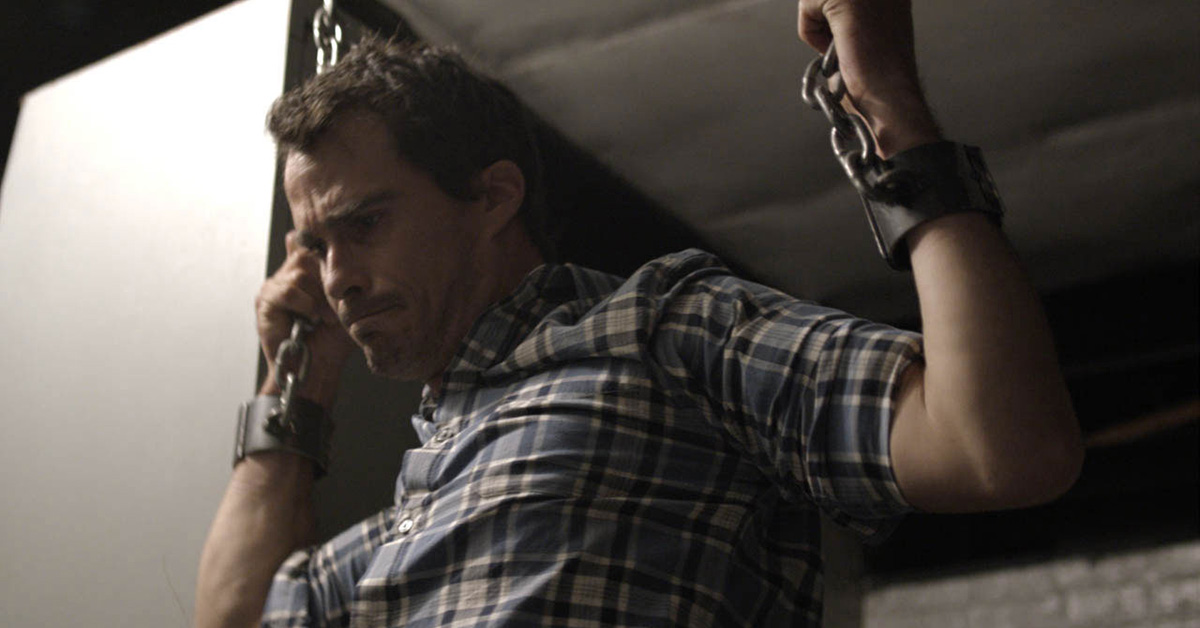
CDRIN’s multimedia integration techniques teacher and the 3D animation and image synthesis teacher participated in the research and development work of this new format of video game. Four years later, in November 2014, Zandel officially launched MISSING, its first interactive thriller application. The day after the launch, MISSING sat proudly at the top of iTunes Canada’s list of paid applications.

President and founder of Zandel Média Simon Tremblay says, “CDRIN has played a major role since Zandel Média was in its infancy. Our collaboration has helped us quickly and continually verify the technological feasibility of using a new interactive format with 100% live action in both the game and video components.”

Partner(s): Zandel Média Inc.

About Cégep de Matane

Bâtie aux pieds des majestueux Chic-Chocs, Matane se laisse bercer par le fleuve Saint-Laurent. Les gens qui y habitent sont passionnés de mer, de montagne... Learn more

Protection of Organic Crops

Some perennial weeds are so invasive that they can significantly reduce the production capacity of organic farms.

Dr. Anne Weill, Industrial Research Chair at Cégep de Victoriaville is working to ensure the sustainability and profitability of organic farms by improving crop protection and particularly weed control.

Through research at the Cégep and farms nearby, Victoriaville researchers are attempting to find effective ways of suppressing weeds that are especially problematic for organic farms, while allowing these businesses to be profitable and minimizing greenhouse gas production. Tests are conducted in collaboration with several farmers to make sure proposed methods meet their needs.

The research program develops action research methods with the farms and tests are planned with each farmer and adapted to their farm’s situation. This allows the Chair to quickly take on more partners and research projects. After two years of operation, the program now has 14 partners and, because the research is conducted on working farms, the results obtained are easily transferable to partner farms and other farmers in the region.

The research program gives all research team members and students an opportunity to work directly on the farms, talk to the farmers, and understand the realities of farming. It also allows the team members and professors participating in the projects to improve their action research skills. Students become familiar with the techniques and challenges of organic farming and learn how to conduct applied research. They must also find potential solutions to problems encountered on farms from both business and research standpoints.

Finally, the results are sent to the professors, who use them in their courses (student and adult training) and share the innovations arising from the Chair’s work.

“Combining minimum tillage and organic farming requires a considerable amount of research because very few farms use this method. After 17 years of organic ridge farming and minimum tillage, weed control is becoming increasingly difficult,” says Thomas Dewavrin of Les fermes Longprés. “The NSERC Research Chair in Protection of Organic Crops helps us improve our research and development efforts to curb perennial weeds, a major problem that worsens as these unwanted plants spread on our land. We are very optimistic because we already have some solutions as a result of the tests carried out. With the Chair’s assistance, we can find ways to combat perennial weeds more quickly. And what’s more, we receive visits from experts with different points of view, who help us find innovative solutions to our problems.”

Industry: Agriculture

About Cégep de Victoriaville

Le Cégep de Victoriaville c’est près de 1 600 étudiantes et étudiants à l’enseignement régulier, 375 à la formation continue et plus de 400 employés... Learn more

Improving Tools to Diagnose Eye Disease

As the population ages, retinal disease causing loss of sight, such as macular degeneration and glaucoma, are increasingly common. The ability to detect these diseases efficiently and as early as possible is extremely important.

The Centre collégial de transfert technologique en optique-photonique (OPTECH) affiliated with Cégep André-Laurendeau undertook a project in collaboration with Optina Diagnostic to improve the camera that takes detailed images of eyes to detect retina problems. Optina Diagnostic is a private company that provides retinal cameras that use super spectral imagery. This technology provides spectral and anatomical data from the back of the eye, allowing for earlier and less invasive detection of retinal disease.

Optech worked to improve the retinal camera by validating digital models of the various solutions that Optina proposed theoretically and then experimentally. Optech then designed and prototyped a new and improved opto-mechanical system that increased the precision of images from the back of the eye.

Jean-Philippe Sylvestre, Vice-President of R&D for Optina Diagnostics noted “The project was truly collaborative with the two teams working together to find an appropriate solution. Access to the Optech team’s expertise and to the equipment and laboratories was a considerable advantage in speeding up our development.”

Partner(s): Optina Diagnostics

About Cégep André-Laurendeau

Le Cégep André-Laurendeau est un cégep public de langue française, situé dans l’arrondissement Lasalle à Montréal. Le Cégep, pour qui les étudiantes et étudiants sont... Learn more

Upgrading Precision Optical Micro-assembly

In the biomedical field, integrating micro-optical devices requires very tight assembly tolerances and reliable processes that are scalable to industrial production. Designing and testing these systems for micro-assembling in manufacturing can only be done with highly specialized and precise equipment.

The Centre collégial de transfert technologique en optique-photonique (Optech) was able to acquire the specialized equipment for micro-assembly of optical components in 2013 through a College and Community Innovation grant. This allowed the college to outfit a laboratory specialized in optical micro-systems where industrial manufacturing conditions could be reproduced to encourage automation of micro-manufacturing, micro-assembly, and quality control methods.

Over the past few years, the Optech centre has carried out several optical micro-assembly projects in sectors requiring high-precision optical elements, such as telecommunications and biomedical and industrial engineering. One of its industry partners has been Dental Wings, which produces dental system technologies to help measure and plan dental implants, bridges, and dentures.

“Outfitting Optech with a lab for the microassembly of optical components has allowed Dental Wings to accomplish several projects,” says Jean-Marc Perot, Director of Dental Wings. “Our work of designing and implementing assembly processes for high-level optical microsystems called for cutting-edge expertise and equipment. Without local access to these skills and tools, we would certainly have had to subcontract a larger part of our R&D outside of Canada.”

Partner(s): Dental Wings
Funded by: Applied Research Tools and Instruments (ARTI) Grant

About Cégep André-Laurendeau

Le Cégep André-Laurendeau est un cégep public de langue française, situé dans l’arrondissement Lasalle à Montréal. Le Cégep, pour qui les étudiantes et étudiants sont... Learn more