Making Canada’s Summer sport safer for kids

After 10 years playing for the Calgary Stampeders in the Canadian Football League, Jeff Pilon knows about contact sports. So, when he witnessed some of the hits being taken by his son and his teammates on the community lacrosse team, he felt he had to do something.

Kids playing lacrosse are at risk of neck injury because most have not developed the coordination to cross check safely. Jeff decided to make a neck guard that would protect young players and allow them to participate more safely in this fast-growing contact sport.

Armed with a home-made model, Jeff approached Red Deer College’s Centre for Innovation in Manufacturing to identify problems and create design solutions for his neck guard. A couple of designs later, Jeff had a working proof-of-concept prototype, named Shell Shock, ready for field testing.

“Lacrosse is Canada’s summer sport,” Jeff says. “I want kids to be able to play it, be physically active, and their parents not worry about serious injury. Shell Shock will really help to build the sport.”

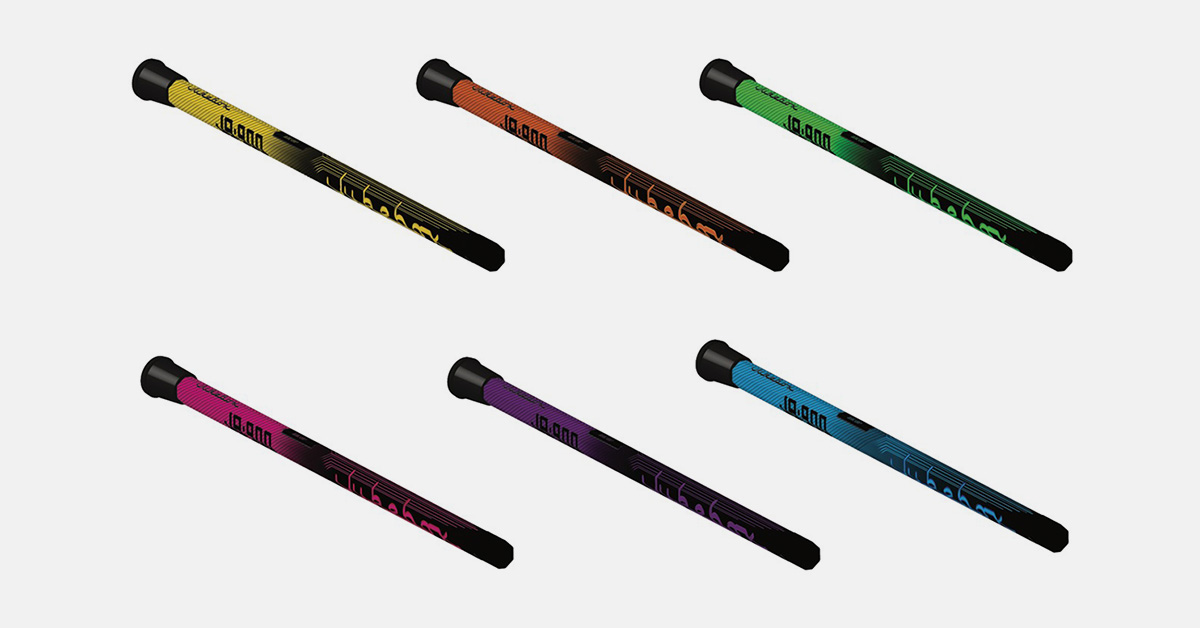
Since designing Shell Shock, Jeff has opened his own company, Jukebox and partnered with Philippe Jeanneau, an experienced sports equipment designer, to develop a full line of equipment for lacrosse, including gloves and shafts. Every contact sport has potential areas of risk for injury and players’ needs are very specific — hockey gloves will not work in lacrosse, for example. Jeff wants to provide sport-specific protection so lacrosse can continue to grow.

Partner(s): Jukebox
Funded by: Industrial Research Assistance Program (IRAP), National Research Council Canada

About Red Deer Polytechnic

Red Deer Polytechnic is central Alberta’s largest post-secondary institution, serving more than 10,000 credit, non-credit and apprenticeship students. Since becoming a polytechnic institute in 2021,... Learn more

Worth a Thousand Words

Picture this: women, working to get footholds in a new country, are armed with cameras. What will the pictures they take tell them about the journey they’re on? What will they tell the new country about itself?

Choon Lee Chai hopes the photos will fill in details and open up discussion on the programs and services available for immigrant women in a small city in central Alberta. He and his colleagues at Red Deer College and the University of Calgary are using a Community and College Social Innovation Fund grant to find out from immigrant women how those programs meet their needs and where they need improvement.

Part of their research is a technique called “Photovoice.” Fifty women involved in the project — which is funded by the Social Sciences and Humanities Research Council — will take pictures to illustrate the role of immigrant services in their everyday lives.

Sharing the photos with other immigrants and the researchers will elicit more than simple surveys can to expose what works and what doesn’t among Red Deer’s supports for immigrant women, Chai, the project’s director, explained in an interview.

The photos ground the research in reality and help the women establish what issues matter to them. “So much freedom is possible to explore and express their feelings,” Chai said. “One of its key strengths is what the photo reminds you of, it elicits responses a normal interview would not.”

Immigrant women are an important part of Canada’s economy, making up about 20 per cent of both the country’s total female population and its labour force. But new immigrants have more than double the unemployment rates of those who were born here, even though they are more likely to hold university degrees.

The project’s first year will be spent forming an advisory council of immigrants, representatives of government and non-government agencies and business people.  Then about 150 immigrant women will be interviewed about services in Central Alberta (Red Deer and the surrounding communities).

This project follows another, also a partnership between Red Deer College and the Central Alberta Immigrant Women’s Association. It looked at the economic security of immigrant women and found they face many barriers. But follow-up was needed on evaluating services for immigrant women and tailoring them to their needs.

“It’s best they have a role in that follow up,” Chai says. “I really don’t want it to be researchers going into the community and telling them what the problem is. My approach is to say you have ideas, you have talents, let’s work together.”

The photos and stories will be shared in exhibitions and presentations. Focus groups will be held with employers and other stakeholders and CAIWA will work with the women to modify or create new programs.

“Of course there are structural barriers that society as a whole has to address, but I don’t want to overlook the fact immigrant women have a lot of strengths and ideas,” Chai said.

About Red Deer Polytechnic

Red Deer Polytechnic is central Alberta’s largest post-secondary institution, serving more than 10,000 credit, non-credit and apprenticeship students. Since becoming a polytechnic institute in 2021,... Learn more

Confronting Loneliness in Crowded Places

They might seem a world apart, busy college students and homeless people, drifting around the downtown streets of a big city, but many share a hidden bond: they are lonely. Researchers in Edmonton are trying to help.

A research team from Norquest College is working in partnership with the Edmonton Public Library, to study the impact of loneliness on marginalized people. The project is funded by the Social Sciences and Humanities Research Council’s Community and College Social Innovation Fund.

The project began when Bob Marvin, a social work instructor at Norquest College, asked students in one of his courses to administer a questionnaire on loneliness to other students. “It was just for the students to get started on research, an attempt to demystify research,” he said in an interview.

The survey, however, opened up a conversation about loneliness on campus, with many students surprised to find they were not alone in what they felt. Marlene Mulder, of Norquest’s research department, was helping to analyse the data in the loneliness survey and noticed some surprising results. Second year students were lonelier than first years, and 60 per cent said they missed their families. That’s notably high for college students.

Mulder was aware that Norquest, the only publicly funded college in Edmonton, has an unusual student population. Because of its English as a second language program, it has a high percentage of newcomers to Canada. There is also a high proportion of Aboriginal students, and a large number of students who have gone through troubled times and have come to college in an effort to start again. “I come from a background working with newcomers to Canada, and with the homeless, and loneliness always comes up. Loneliness is a theme in both those populations,” she said.

Mulder wondered what impact loneliness has on people who live on the margins of the community, whether they are Aboriginal, homeless, or newcomers. What does it mean for their “social capital,” which is defined as “the social interactions, good will, fellowship, and sympathy that make a tangible difference in our lives.” Or, as Mulder puts it, the things that help you move forward.

Those thoughts led in turn to the Edmonton Public Library, which for more than five years has had social workers on staff to assist marginalized people who come to the library as a safe public space. The social workers build relationships and trust with these isolated members, helping them when possible with medical, housing and other issues.

As a partner in the project, the library is the link between the researchers and its patrons, providing the opportunity to explore causes of marginalization, to ask which supports work and what is still needed, and perhaps get them access to education.

The researchers have also enlisted the help of more than 40 community agencies, to help shape the research, and they’ll also be talking to Norquest students who have come back from the margins, asking what helps to build a better life. Finally, they will join the library’s patrons in focus groups.

About NorQuest College

As Alberta’s largest community college, NorQuest provides a work-relevant education that includes hands-on learning opportunities, workplace practicums, and supportive instructors. From class to career, NorQuest... Learn more

Measuring What’s Hard to Quantify

Calculating the value of unquantifiable change, identifying the ingredients of intangible success — it is no easy task to plan and evaluate social innovation. Yet, in the face of competing needs and limited resources, it must be done.

“The more you understand why something was or was not successful the more you can generalize later and come up with best practices that will help future projects have success,” said Russ Wilde, of Bow Valley College in Calgary.

Wilde is directing a project to develop evidence-based criteria for evaluating social innovation and to identify factors that promote or inhibit its success. The project is one of the Social Sciences and Humanities Research Council’s Community and College Social Innovation Fund grants. Its goal is to create tools to guide stakeholders through choosing and planning social innovation projects, and evaluating how well they worked.

Wilde and colleagues from Bow Valley College are working in partnership with the Town of High River, the United Way of Calgary and Area and Mount Royal University. The multi-stage, multi-year project will start with a questionnaire asking organizations involved in social innovation what they think its characteristics are and what barriers and facilitators affect social-innovation projects.

The questionnaire is being distributed as widely as possible — with the United Way as a partner, the project has deep reach into social innovation of all kinds — and will continue to be circulated until no new concepts are being brought up in answers. But what those concepts add up to is critical for the project, because such a broad range of activities are labelled social innovation. Defining it is difficult and doing research on it at a broad level is extremely challenging.

“One of the results of this research will be whether you can come up with a generalized set of criteria that is applicable to a broad range of social innovation projects,” said Scott Henwood, lead researcher for the project.

Based on the questionnaire, discussions with stakeholders and a literature review, the researchers will try to determine what qualifies something as a social innovation, what factors must combine to make it a success and what things are barriers or impediments to social innovation.

The next step is to create and test tools for planning and evaluating social innovations, including one with the Town of High River, a partner in the project. After the flood that devastated the town in 2013, there was a rush of new projects in the community of 13,000 south of Calgary. That will let the researchers and steering committee choose a real-life example of a social innovation they think will be the best test for their criteria and ability to evaluate.

Social innovation is a difficult area in which to judge success, because changes that make a profound difference in the lives of people may not be easily quantifiable. The Bow Valley team believe the outcome of their project — an online toolkit for planning and evaluating social innovation — will help people with that challenging task.

About Bow Valley College

As Alberta’s largest community college and a proud partner in Campus Alberta, Bow Valley College serves 15,000 learners each year in Calgary and throughout southern... Learn more

Partnering with Industry in Green Building Innovation

Green-minded home buyers in Calgary have recently purchased two net-zero energy homes constructed by student researchers at SAIT Polytechnic.

Green Building Technologies (GBT) is one of SAIT’s leading research areas in the Applied Research and Innovation Services department. The GBT research initiative was established in 2008, and received a five-year CCI Innovation Enhancement grant in 2009. The research group has grown in expertise, industry-based applied research projects and laboratory capabilities.

One of the research team’s key partners is Avalon Master Builders, a pioneer in green construction that has developed a series of net-zero energy homes. Two of these houses were constructed on SAIT’s campus. These applied research projects provide students with hands-on experience in green building and allow the GBT team to research, test and demonstrate the latest in environmentally efficient building methods. The finished homes now belong to green-minded buyers and are located in two Calgary neighborhoods.

SAIT students and researchers still actively monitor the energy management systems in the Discovery 4 and Discovery 5 homes. And a student project to customize/virtualize Discovery 4’s energy-management system won the 2013 SAIT Student Showcase and DIRTT Student Innovation Award, and represented SAIT at the 2013 Polytechnics Canada Student Applied Research Showcase. Discovery 4 was also named Custom Project of the Year at the 2011 Net Zero Energy Home Awards in Toronto. Avalon will manage the construction of SAIT’s new 4,000-square-foot GBT Lab and Demonstration Centre – scheduled to break ground in early 2015.

About SAIT

SAIT (Southern Alberta Institute of Technology) is a leader in action-based learning, delivering relevant, skill-oriented education. We offer two baccalaureate degrees, three applied degrees, 73... Learn more

Smart Technologies Enable Thermostat Management From Afar

A virtual thermostat developed through research at SAIT Polytechnic could allow building managers to have wireless control of heat throughout large facilities.

Kalen-Hudson Group is a manufacturer and importer of small electronic devices, especially thermostats and other control devices. Having previously worked with Applied Research and Innovation Services (ARIS) at SAIT to test and validate technologies, Kalen-Hudson knew where to turn when it needed to design a smart-control thermostat and a smaller, cost-effective consumer model.

“In order to develop the technology, having access to a facility like SAIT and the research grant gives us the chance to develop something new and be competitive with the major players. Without that ability, I don’t know that I’d be able to compete with them,” says Irfan Dhanani, owner of the Kalen-Hudson Group.

While researchers in the ARIS RADLab (RFID Application Development Lab) were working with Kalen-Hudson to design the software to support its new WiFi-enabled thermostat, its supplier in Asia ran into problems. In order to carry on the development of the device, a student researcher developed an application that could stand in as a virtual thermostat. This kept the project on time and on budget so a cloud-based client interface platform for the system could be developed.

At the end of the project, the SaaS engine developed by the RADLab was able to communicate to a large number of these new, wireless thermostats. This new technology will allow facilities managers and landlords to wirelessly control the various rooms in a larger building through a user-friendly interface.

Partner(s): Kalen-Hudson Group

About SAIT

SAIT (Southern Alberta Institute of Technology) is a leader in action-based learning, delivering relevant, skill-oriented education. We offer two baccalaureate degrees, three applied degrees, 73... Learn more

Energy-Efficient Housing for Arctic Living

What does it mean to live sustainably in the North? With two months of darkness, monthly utility bills over $1,500, temperatures below -40 degrees Celsius, and variable permafrost, it can be a challenge.

SAIT Polytechnic’s Applied Research and Innovation Services (ARIS) department was approached by GBM Construction in Fort Simpson, NWT, to design a high-performance net-zero energy home. Through consultation with Fort Simpson-based engineers, architects and tradespeople, ARIS’s Green Building Technologies researchers brought together passive and active elements to design the ultimate sustainable home.

Fit for an extreme climate, “Arctic House” includes a high-efficiency, wood-fired boiler to generate the hot water used for radiant heat and domestic requirements, and embedded floor sensors to detect solar heat and trigger a small pump to redistribute hot water to cooler areas in the home. And, since the home will produce more solar energy than it needs during the summer’s long daylight hours, Arctic House will contribute the excess energy to the power grid and draw from the grid only when necessary – resulting in a net-zero energy consumption per annum.

“I think the sky is the limit in what we can do in the North. It’s a great place to test projects like these,” says Derek Erasmus, owner of GBM Construction.

The project will not only provide northern Canadians with more energy-efficient design options, but the lessons learned can help perfect net-zero energy housing design worldwide.

Industry: Building
Partner(s): GBM Construction

About SAIT

SAIT (Southern Alberta Institute of Technology) is a leader in action-based learning, delivering relevant, skill-oriented education. We offer two baccalaureate degrees, three applied degrees, 73... Learn more

Skate Manufacturing Analysis for Graf Canada

Graf Canada Ltd. is working with researchers at SAIT Polytechnic’s Applied Research and Innovation Services (ARIS) department to develop better performing, lighter-weight skates.

SAIT’s Sports and Wellness Engineering Technologies specialists are hoping to provide Graf with the necessary information to manufacture more of its skate components in Canada at a higher quality with shorter lead times and smaller batch orders. The project will also provide Graf with some preliminary models of a skate that incorporates new materials and manufacturing processes.

Graf approached ARIS for assistance in reviewing the manufacturing processes and materials used in the production of its ice hockey skates in 2014. The company would like to improve the quality and cost of its product while bringing more of its manufacturing to Canada. In addition, the majority of Graf’s current components and processes are not documented with proper Computer Aided Design (CAD) files and therefore cannot be shared with potential manufacturing partners. This review and documentation project is the first step towards a larger project involving the design and prototyping of a new-model ice hockey skate.

Industry: Manufacturing
Partner(s): Graf Canada Ltd.
Funded by: College-University Idea to Innovation (CU-I2I) Grant

About SAIT

SAIT (Southern Alberta Institute of Technology) is a leader in action-based learning, delivering relevant, skill-oriented education. We offer two baccalaureate degrees, three applied degrees, 73... Learn more

Crop Inputs – Are there economic limits?

Does a producer’s net profit increase continually each time more inputs are added to the crop?

This question is the focus of a four-year research project about field crop input intensity initiated at Lakeland College in May 2014. The goal of the study is to develop field-scale data on the benefits of adding crop inputs at various levels and managing the plots using a typical crop rotation.

Plots were established on Lakeland’s student-managed farm land, with replications on the land of three local producers. The same plots will be used for the next four years. One of the local producers, whose son is a student at the college, was eager to participate in the trial.

“We believe in promoting and encouraging young individuals in further developing their understanding of agronomics,” said Henry Dejong.

Webbs’ Crop Services of Vermilion is a primary industry partner in this trial. The company is providing the main agronomy advice and field scouting services for the project. Medium, high and maximum levels of input intensity are being studied. The levels of input intensity and crop choice were defined by a steering committee made up of representatives of Lakeland College faculty and staff, the student-managed Farm Research Team members, agronomists, and producers.

Calvin Ireland of Webbs’ Crop Services has valued participating in the crop input trial. “Communicating with local producers on what areas of research are lacking in the industry, and implementing these practices first hand on their own land has given us valuable results that actually pertain to our region, soils, climate, and topography on a large scale.”

Industry: Agriculture

About Lakeland College

All colleges say they are educating the leaders of tomorrow. At Lakeland College in Alberta, our students are leading today. Students have the opportunity to... Learn more

Raising Fish to Grow Good Gardens

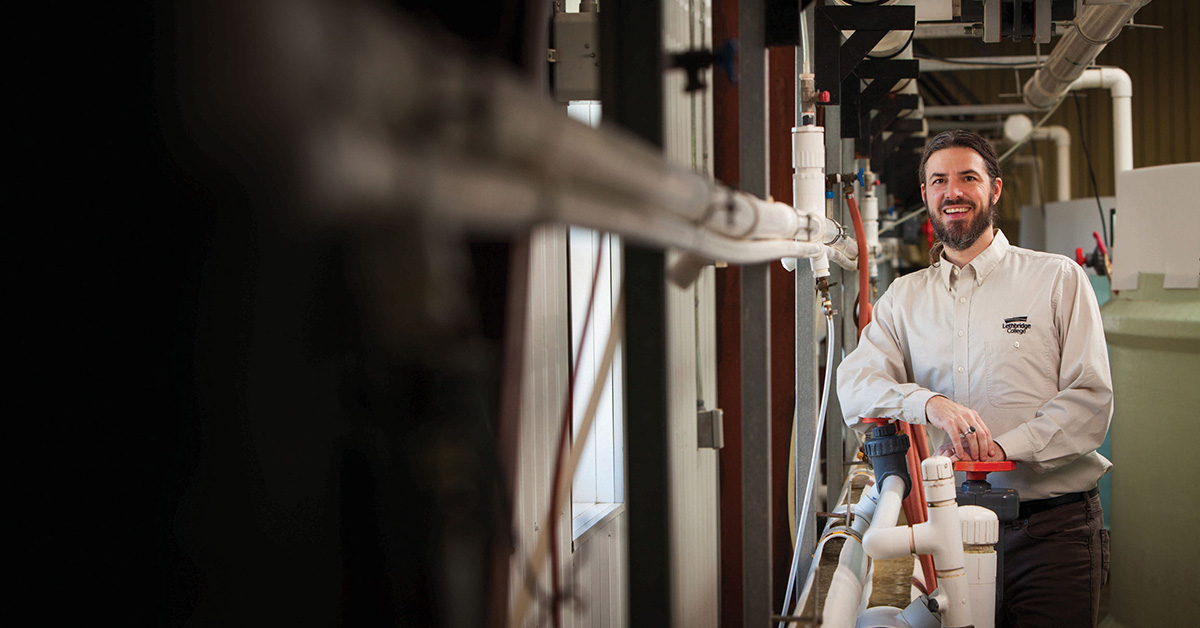
The results of one of Lethbridge College’s most delicious applied research projects can be found in restaurants throughout southern Alberta – produce grown in a greenhouse on the college’s campus.

This produce is grown using an innovative combination of aquaponics and aquaculture. Aquaculture and aquaponics are exciting developments in agriculture where fish and plants are cultivated together in a growing system with re-circulating water that produces plants year-round safely and efficiently. The novel system also enhances growth rates of greenhouse crops. The plants are seeded each March and nurtured by a water supply provided by fish. The water is then re-circulated back to the college’s fish facility for reuse. No herbicides or pesticides are used, and the aquaponics produce is harvested twice weekly starting from May until the end of October and for sale to the public.

In 2013, Lethbridge College received funding to advance applied research in aquaponics. Principal investigator Charlie Shultz assists aquaponics producers in the region to overcome technical problems and policy obstacles in their systems.

“This [project] could go a long way to addressing food security issues,” Schultz says.

Industry: Agriculture
Funded by: Innovation Enhancement (IE) Grant

About Lethbridge Polytechnic

Lethbridge Polytechnic has been a leader in education and innovation since becoming Canada’s first publicly funded community college in 1957. Each year, the institution welcomes... Learn more