
Repairing the riparian area — riverbank rejuvenation in Vermilion

Lakeland College’s Vermilion campus was founded in 1913 as an agricultural school and is surrounded by land used for studying and researching farming. In addition to space for farming and grazing, the fields contain wetlands which, with growing recognition of their importance in the overall health of the environment, are increasingly the subject of research themselves.

That’s because riparian (literally, river bank) areas provide habitat for wildlife, have an important role in protecting water quality and limit the damage caused by floods. But the banks of wetlands and rivers are often badly degraded — by animals seeking water and by how the adjacent land is used.

An assessment done before research started recommended fencing several wetlands to keep cattle off and let the riparian areas return to their natural state. However, only one wetland, a dugout, was fenced (water was provided for the cattle elsewhere). Instead, the college is aiming to develop a collaborative, sustainable and realistic approach to improving the overall health of college wetlands, in the belief many small improvements will lead to positive changes.

Research on college property began with making inventories of wetland plant species and a project measuring water quality.

In a related project, researchers are also reassessing a fenced off riparian area in Vermilion Provincial Park, to assess whether the fences have improved the health of the riparian area (which had been degraded by livestock). They have developed a set of protocols to use in the reassessment and in future monitoring. Students involved in the project focused on studying the amount of biomass produced in the area through assessments of grazing cages that had been set up for three years before the fences were built.

In the future, students may be involved in yearly assessments of the riparian areas within the fences.


Funded by: Innovation Enhancement (IE) Grant

About Lakeland College

All colleges say they are educating the leaders of tomorrow. At Lakeland College in Alberta, our students are leading today. Students have the opportunity to... Learn more

A barren patch of ground becomes a place to grow knowledge

Exposed soil — whether it’s left unprotected by farming, construction or industrial activity — has an increased risk of eroding. The environmental impact of erosion can include loss of farmland, sedimentation of waterways, reduced air quality, and, in severe cases, total abandonment of the land for any productive purpose.

However, there are methods available to temporarily control erosion and minimize its environmental impact during construction and until permanent ground cover can be re-established.

Lakeland College’s Centre for Sustainable Innovation became a candidate for temporary erosion control when a section of its grounds was left bare after a gasifier and solar concentrator were installed. That gave students from the Environmental Conservation and Reclamation program a chance to put what they were learning into practice.

The students were asked to develop an erosion-control strategy for the site. They decided to seed the land with a native seed mix before installing temporary erosion-control matting to protect against erosion while the seeds germinated and grew.

Matting was chosen because the site was small, it’s easy to install and affordable. However, the students took the opportunity to use the site to test and compare three types of matting with different lifespans — wood fibre, which lasts 12 months, straw, which lasts 18-24 months, and coconut fibre which persists for more than 36 months. The question was whether a more persistent mat would influence regrowth on the site; students continue to evaluate and report on that experiment.

Funded by: College and Community Innovation Program, Innovation Enhancement (IE) Grant, NSERC

About Lakeland College

All colleges say they are educating the leaders of tomorrow. At Lakeland College in Alberta, our students are leading today. Students have the opportunity to... Learn more

Waste not, want not: Red River College and local microbreweries take an innovative approach to leftovers

Who knew there’s more to beer leftovers than what lingers in the bottom of a stubby at the end of a party?

Red River College and two local microbreweries in Winnipeg teamed up make use of the spent grain that’s left at the end of the brewing process, in an experiment that shows how far a little imagination and innovation can go. Together, they made a new kind of miso — the thick paste that’s normally made from fermented soy beans and is a staple of Japanese cooking.

Spent grain is a by-product of the brewing industry and generally used as animal feed. Finding innovative uses for it could help create more valuable commercial opportunities with a chance to bring new products to market — an important consideration as Canada’s microbrewery industry continues to thrive.

Red River College has been ramping up its culinary research since 2014 through new partnerships with industry and support from federal and provincial governments; the shift has led to many innovations with local producers — in this case, Farmery Estate Brewery and Torque Brewing Company. The college research chefs made soup, popcorn and pastries seasoned with pale malt miso from Farmery and dark malt miso from Torque.

“It was a good fit for us to partner with Red River College and utilize their culinary expertise to explore what could be done with our spent grains,” said Farmery owner Lawrence Warwaruk. “We’re all about adding value to the ingredients we grow and use in our beer, and that includes what happens to the by-products.”

Industry: Agriculture | Food
Funded by: Innovation Enhancement (IE) Grant

About Red River College Polytechnic

Red River College (RRC) is Manitoba’s largest institute of applied learning. The institution is renowned for providing accessible, innovative, applied learning and research in an... Learn more

Planning for Sustainable Salmon Aquaculture

Fish farmers and fisheries experts are working together to monitor the effects of aquaculture on the ocean floor with the help of researchers from North Island College.

The BC Salmon Farming Association (BCSFA) and the local offices of the Department of Fisheries and Oceans (DFO) identified a need to strengthen capacity in monitoring the ocean floor of hard bed substrates where some B.C. fish farms are located. North Island College was approached in 2012 to help research the issue for the North Vancouver Island salmon aquaculture industry with the aim to ensure environmental sustainability of aquaculture.

Dr. Aisling Brady, a biology instructor at the college, looked at two fundamental issues — the significant ecological changes likely to occur at hard bottom sites near salmon farm operations, and the habitat indicators and thresholds at which significant negative large scale seabed changes occur. The research team used remote controlled vehicles and video observations for invertebrate community surveys on the seabed as well as environmental monitoring and measuring interactions between invertebrates and salmon farm waste.

The investigation provided a solid foundation for future industry growth in hard bottom areas. It also helped stimulate a broader dialogue about environmental monitoring and supports decisions grounded in empirical evidence. The college’s industry partners are interested in continued research to develop strategies and solutions to monitor and better regulate hard bottom substrates.

Funded by: Innovation Enhancement (IE) Grant

About North Island College

NIC is honoured to acknowledge the traditional territories of the combined 35 First Nations of the Nuu-chah-nulth, Kwakwaka’wakw and Coast Salish traditions, on whose traditional... Learn more

Aging in Place with Online Help

Helping seniors stay flexible and mobile is critical to their ability to live independently. A small Ontario company has been working with Sheridan College to create an online program to help older adults keep their functional mobility through exercise at home.

Attune Aging Strategies and Solutions is a husband and wife team that developed an idea for reaching frail older adults who have no way to get to the therapeutic care they need after an injury or operation. With the help of Sheridan College’s Centre for Elder Care, the physiotherapist and occupational therapist designed a technology-supported exercise program for physiotherapy so older patients could do their rehabilitation exercises at home. The exercise program is now on sale and Attune is working on ways to train home support workers to deliver better care when they go in to check on patients.

“The opportunity to partner with the Sheridan Centre for Elder Research and NSERC allowed our ‘idea’ for serving older adults in the community to develop into a new Canadian business,” says Anita Salituri, owner of Attune Aging Strategies and Solutions. “The applied research study helped us to better understand the clients we serve, and findings were used to create our first product, which was released to the marketplace in November 2014. Sheridan’s expertise, resources and professional consultation throughout this process has been invaluable and they have played a tremendous role in assisting us through our entrepreneurial journey.”

The Sheridan Centre for Elder Research has seen tremendous impacts on both students and industry partners during the five year research program. Students from a number of programs have worked as research assistants and volunteers on applied research projects. They consistently cite their real-world experience in applied research as the reason they graduate as highly-competitive job candidates, and often secure high-quality jobs immediately after graduating.

Funded by: Innovation Enhancement (IE) Grant

About Sheridan College

Sheridan College is one of Canada’s leading postsecondary institutions, serving over 23,000 full time students at four campuses in the western Greater Toronto Area. We... Learn more

Atlantic Canada Biorefinery Conference

The Collège communautaire du Nouveau-Brunswick (CCNB) has focused on knowledge transfer and industry support to promote a prosperous bioeconomy in Atlantic Canada. In 2010 it obtained an Innovation Enhancement grant that led to the creation of its Biorefinery Technology Scale-up Centre. The centre gives college and university researchers as well as companies the opportunity to test their products and processes at a near-production scale.

The research team working at the Grand Falls campus of CCNB supports industry in its bioproduct promotion efforts. The team uses microbial fermentation, hydrolysis, bioseparation and chemical processes to produce value-added industrial bioproducts such as bioethanol, biogas, biodiesel and alcoholic beverages from forest, agricultural and marine biomasses and industrial and municipal wastes.

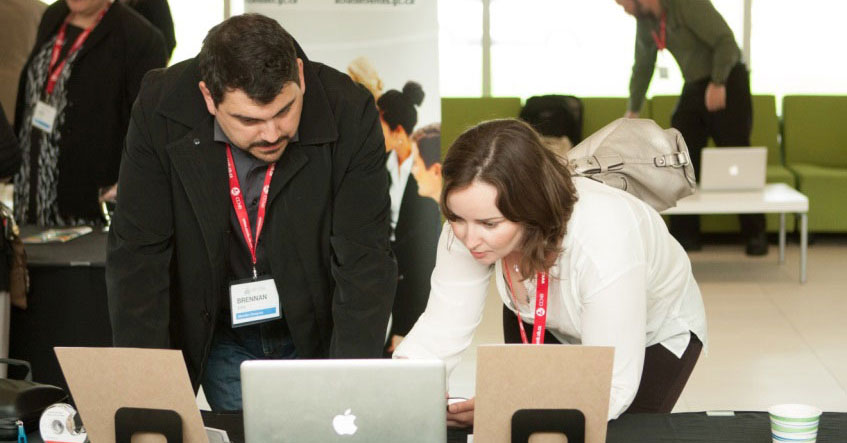
In partnership with two not-for-profit organizations – Springboard Atlantic Inc. and BioNB – CCNB has launched the Atlantic Canada Annual Biorefinery Conference. The conference has attracted more than hundred participants each year from private and public sectors. Industry visits, keynote speakers, student poster sessions and business-to-business meetings are crucial components of this event, providing opportunities to develop research collaborations and partnership agreements. Industry representatives, students and researchers get the chance to learn about existing or emerging technologies in the bio-processing sector, make new contacts and create new partnerships.

Brennan Sisk (CEO) of Mycodev Group Inc. (Fredericton, NB), a chitosan production company, sees great value in the conference. “The Atlantic Biorefinery conference provides Mycodev, an early stage biotech company, with a doorway to opportunities. Over the past three years, we’ve met academic and industry experts that have expanded our knowledge and network. As we embark into the market and expand our technology base, we are convinced that the friends made here will pay dividends in Mycodev’s success.”

Funded by: Innovation Enhancement (IE) Grant

About Collège communautaire du Nouveau-Brunswick

Fondé en 1973, le Collège communautaire du Nouveau-Brunswick (CCNB) offre près de 80 programmes de formation qui mènent directement au marché du travail. Grâce à... Learn more

Using Radar for Outdoor Perimeter Security

Algonquin College student researchers have been key players in the design and testing of a new 3D radar system that an Ottawa security company is developing for perimeter surveillance of military bases and pipelines.

3D Sentry Corp. is a company founded by security industry entrepreneurs, Dr Keith Harman and David Baird, to develop the next generation of advanced outdoor perimeter security sensors. Such systems could provide improved protection of the outdoor perimeters of critical infrastructure facilities, such as military bases, power stations, petrochemical plants, and pipelines.

3D Sentry recently completed a successful project with Algonquin’s Applied Research and Innovation Centre to advance the development of a “Ported Coaxial Cable” prototype, a covert terrain-following cable-guided radar. The work was carried out at Algonquin by a student research team led by Dr. Theo Mirtchev and at the company’s purpose-built development site in Almonte, Ontario.

Completing the prototype represents a critical milestone in the company’s development. It allows 3D Sentry to continue the development, then test and start selling a fully functional Evaluation System. The prototype will possess all of the major attributes, functionality and characteristics specified for the final production system. This will allow the company to demonstrate the advanced capabilities of the system to customers, strategic partners, consultants, testing agencies and investors. 3D Sentry will then undertake further development to produce a market-ready final product.

“This project included the design and integration of advanced hardware controlled by Labview software. In my view this work would be challenging for an experienced team of engineers,” says Dr. Harman, Chief Scientist at 3D Sentry Corporation. “The success of the project has led to a system that can be demonstrated to customers and potential venture capital people. This was only possible with the enthusiastic efforts of the students and the dedicated work of Dr. Mirtchev.”

Industry: Building
Funded by: Innovation Enhancement (IE) Grant

About Algonquin College

The mission of Algonquin College is to transform hopes and dreams into lifelong success. Algonquin College, a national leader in applied and online learning, offers... Learn more

Mozilla Webmaker in Thai and Russian

Making popular software available to non-English speaking users is a challenge for computer program developers.

To get help with localization of their software Webmaker, Mozilla came to Seneca College’s Centre for Development of Open Technology (CDOT). Seneca’s open technology researchers have worked with Mozilla on many projects that extend the functionality of the web. The college’s diverse student body became an important asset in this development project. Students come from all over the world to study at Seneca College, bringing their knowledge of other languages and cultures.

The CDOT research team put students to work on the internationalization and localization of Webmaker, Mozilla’s web literacy platform, to make it accessible to non-English speaking users, in languages such as Thai, Arabic, Ukrainian, and Russian. Localization is a process that adapts software for use in other languages, especially those with foreign characters (such as Thai or Russian). Internationalization involves enabling software to be easily translated and maintained after localization.

Ali Al Dallal, a developer at the Mozilla Foundation and Seneca ICT graduate, has been at the forefront of Seneca CDOT’s localization and internationalization efforts, and has worked on several Mozilla sub-projects including Popcornmaker, Appmaker and X-Ray Goggles.

“The localization and internationalization of software is extremely important – it means that people around the world get to experience the same high level of quality with different software. Seneca CDOT and Mozilla gave me the chance to be a big part of that and it’s been a great experience,” says Al Dallal.

To build on its new-found strength, Seneca is exploring how to provide global leadership in localization for Mozilla as well as other industry partners. What was learned during the work with Mozilla can be replicated to help other partners bring their products to the global market.

Partner(s): Mozilla Foundation
Funded by: Innovation Enhancement (IE) Grant

About Seneca Polytechnic

Seneca Polytechnic provides a great education to prepare our students for great careers. Combining academic rigour with practical, professional and career-focused learning, we offer our... Learn more

3D Modeling in the Cloud

Creators of 3D digital graphics have a new cloud-based software option thanks to an applied research project undertaken by Seneca College researchers in partnership with Ottawa tech company Exocortex Technologies.

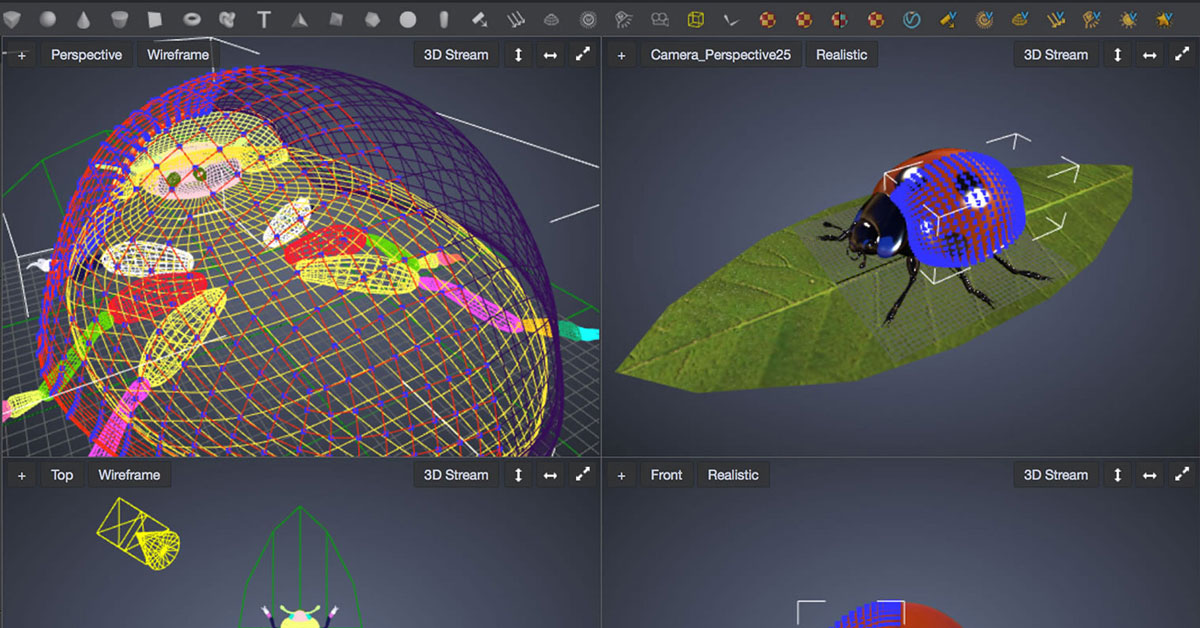
Seneca’s Centre for Development of Open Technology (CDOT) worked closely with Exocortex to produce Clara.io, a high-quality online 3D modeling, animation, and rendering software. Clara.io was built with many open source technologies, including three.js, a popular JavaScript library for 3D web development. As is the pattern in the field of web development, Exocortex has lent their experience in 3D graphics to enhancing the three.js library.

The development of Clara.io built on Seneca’s extensive work using WebGL, a JavaScript API for hardware accelerated 3D graphics. Clara.io significantly reduces cost barriers for 3D digital creators while offering performance comparable to traditional workstation-based 3D applications. It requires no installation and is entirely cloud-based with no need to install plug-ins. The tool is accessible to users with modest hardware set-up because the rendering engine and project assets are cloud-based.

Clara.io now has more than 94,000 registered creators with average editing sessions of over 70 minutes, a 100% increase in less than eight months. A large gallery of user-generated 3D models is already available. In the near future, Clara.io will open source a component of their software so that users can also enhance the tool.

“We are creating many, many jobs for highly skilled computer scientists, marketing and business people… revolutionizing the creation of digital media right here in Ontario.” says Ben Houston, CEO of Exocortex.

Funded by: Innovation Enhancement (IE) Grant

About Seneca Polytechnic

Seneca Polytechnic provides a great education to prepare our students for great careers. Combining academic rigour with practical, professional and career-focused learning, we offer our... Learn more

Beacons for Airplane Safety

Tall structures such as wireless communication towers or windmills can be hazards for air traffic. A Québec company has developed specialized protective lighting for these structures to help aircraft see these obstacles.

Technostrobe approached the Centre collégial de transfert technologique en optique-photonique (Optech) at Cégep André-Laurendeau for help increasing the efficiency of their beacons, which are installed on radio broadcasting and wireless communications towers and on wind turbines. Meeting Transportation Canada’s very strict photometric standards, the beacons are exposed to severe climatic conditions over very long periods.

“Optech’s participation clearly and greatly sped up Technostrobe’s product development,” according to Francis Lacombe, V.P. of Sales and Marketing for Technostrobe. “This collaboration has allowed us to structure, prototype, and test our ideas and concepts locally, thanks to the Optech team’s great flexibility and availability.”

These new components have better optical performance, are lighter weight, and cost less since they require less material and fewer optical surfaces to reach and surpass conventional levels of spherical optical performance. They can be integrated into the optical systems used in various applications, such as imagery and projection systems.

As a result of this project, Optech has new expertise in free-form optical design and prototyping. Optech is also developing optical illumination and imagery expertise for the performing arts, digital media, and sciences.

Industry: Manufacturing
Partner(s): Technostrobe
Funded by: Innovation Enhancement (IE) Grant

About Cégep André-Laurendeau

Le Cégep André-Laurendeau est un cégep public de langue française, situé dans l’arrondissement Lasalle à Montréal. Le Cégep, pour qui les étudiantes et étudiants sont... Learn more