
A mobile platform to keep patients safely in one place — home

When something goes wrong and patients have to return to hospital for the same problem in the month after they’ve been discharged, it takes a toll both on the individual and the health system. According to the Canadian Institute for Health Information, hospital readmissions cost the healthcare system as much as $1.8 billion per year.

It’s estimated, however, that almost 60 per cent of those readmissions could be avoided if those who were most likely to have to return to hospital could be identified and given better care before and after discharge. Older people, those with multiple health problems, those admitted the first time through the emergency department, and men are all more likely to be readmitted within 30 days.

It’s to help such vulnerable patients that ForaHealthyMe.com, a web and mobile virtual care tele-health system, was developed. ForaHealthyMe.com supports pre-operative consultations and post-hospitalization follow-ups for chronically ill and acute-care patients.

The company recently collaborated with Durham College to design and develop a framework to include video conferencing in its platform. It also worked with the college on a tool to help patients manage their chronic conditions at home, with the hospital monitoring them and providing education, consultation and counselling.

The project, which was completed in eight months, involved two computer programming students, who used their skills in HTML, CSS, JavaScript, SQL and data management and — with the integration of Adobe Connect — also experienced a framework that was new to them. Working on this project required the students to learn and expand their skill sets and enhanced their problem-solving skills.

This project considerably expanded the range of services ForaHealthyMe.com offers. The mobile site is live and helping health-care institutions improve the quality of their care and reduce readmissions while enabling patients to do better managing their conditions at home.


Partner(s): ForaHealthyMe Inc.
Funded by: College and Community Innovation Program, Engage Grant, NSERC

About Durham College

At Durham College, the student experience comes first. With campuses in Oshawa and Whitby, Ont. along with a learning site in Pickering, the college offers... Learn more

Helping a physician innovate with smart IV infusion

Every year millions of patients around the world need intravenous (IV) therapy. IV lines are used for delivering everything from medication to blood, saline and nourishment.

But this essential medical tool has an inherent risk. Caregivers must diligently monitor the IV fluid level and promptly replace it or switch off the infusion line when it gets low. Failing to do so can result in reverse blood flow and a high risk of developing a blood clot in the needle, which in turn may damage the blood vessel and require using another blood vessel to keep the IV going.

But changing an IV can be painful and traumatic, especially for geriatric and pediatric patients whose blood vessels are delicate, and hard to get a needle into. Other possible complications from a failure to monitor IV fluid levels include inflammation of the vein and air embolism.

Dr. Harendra Joshi, a physician who recently immigrated to Canada from India, had an idea for reducing the hazards of having busy staff monitor IV lines. Through his research institution, Joshi Health Inc. he developed his concept for a sensor to track IV fluid levels. To bring his idea to life, he turned to the new Wearable, Interactive, and Mobile Technology Access Centre in Health (WIMTACH) at Centennial College in Toronto.

WIMTACH’s multidisciplinary team worked rapidly to build a “fluid level indicating sensor,” the novel medical device Dr. Joshi envisioned. They created a battery-operated prototype, with electronic and mechanical components. Its liquid crystal display provides continuous monitoring of the fluid level in an IV bag, and sends alerts as soon as the IV fluid falls below a set level.

The team worked for several weeks to perfect the device, enabling push notifications through Google Cloud messaging, ensuring the strength of the signal and testing its automatic shut off. Using Wi-Fi and cellular data, mobile devices, and an audio signal at the patient’s bed site, the fluid level indicating sensor notifies providers, wherever they are, when an IV bag is nearing empty.

Partner(s): Smart IV
Funded by: Emerging Innovation

About Centennial College

Established in 1966, Centennial College is Ontario’s first public college primarily serving the eastern portion of the Greater Toronto Area through five campuses. It has... Learn more

Making Canada’s Summer sport safer for kids

After 10 years playing for the Calgary Stampeders in the Canadian Football League, Jeff Pilon knows about contact sports. So, when he witnessed some of the hits being taken by his son and his teammates on the community lacrosse team, he felt he had to do something.

Kids playing lacrosse are at risk of neck injury because most have not developed the coordination to cross check safely. Jeff decided to make a neck guard that would protect young players and allow them to participate more safely in this fast-growing contact sport.

Armed with a home-made model, Jeff approached Red Deer College’s Centre for Innovation in Manufacturing to identify problems and create design solutions for his neck guard. A couple of designs later, Jeff had a working proof-of-concept prototype, named Shell Shock, ready for field testing.

“Lacrosse is Canada’s summer sport,” Jeff says. “I want kids to be able to play it, be physically active, and their parents not worry about serious injury. Shell Shock will really help to build the sport.”

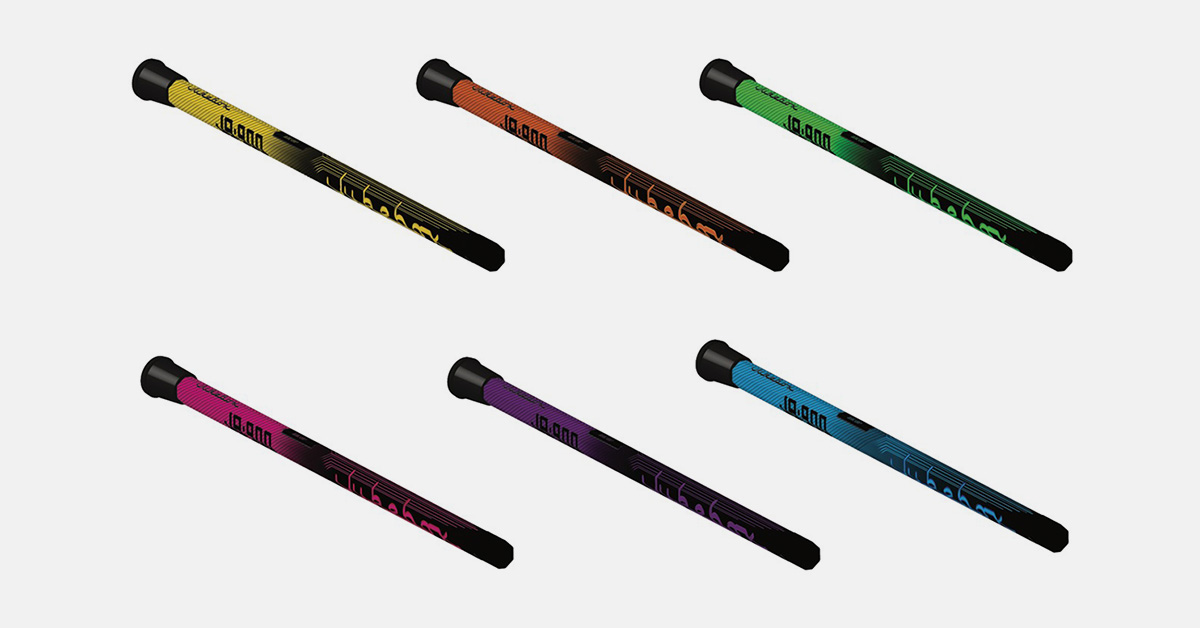
Since designing Shell Shock, Jeff has opened his own company, Jukebox and partnered with Philippe Jeanneau, an experienced sports equipment designer, to develop a full line of equipment for lacrosse, including gloves and shafts. Every contact sport has potential areas of risk for injury and players’ needs are very specific — hockey gloves will not work in lacrosse, for example. Jeff wants to provide sport-specific protection so lacrosse can continue to grow.

Partner(s): Jukebox
Funded by: Industrial Research Assistance Program (IRAP), National Research Council Canada

About Red Deer Polytechnic

Red Deer Polytechnic is central Alberta’s largest post-secondary institution, serving more than 10,000 credit, non-credit and apprenticeship students. Since becoming a polytechnic institute in 2021,... Learn more

Making power wheelchairs smarter

Many people who use power wheelchairs have poor manual dexterity because of spinal cord, stroke or head injuries, or because of degenerative diseases. Even getting in and out of an accessible vehicle can be time-consuming, and sometimes dangerous, for them. Other tasks — such as taking a shower — require an attendant to drive the wheelchair away.

SmartChair gives people who use wheelchairs more freedom and self-reliance while significantly improving their safety and mobility. SmartChair is a control system which can easily be integrated with any existing power wheelchair. The goal of the project is to give users added independence by improving their control of their power wheelchair, regardless of their level of ability.

A power wheelchair outfitted with the SmartChair control system will also offer computer-assisted autonomous movement to its user, letting him or her automate certain tasks. That might include following a pre-defined path, getting in and out of an accessible van, or navigating indoors in narrow hallways, through doorways and around tight corners. It’s a technology based on lived experience: several years ago, Eightfold Inc.’s president, Ke Wang, had an accident; he has used a power wheelchair ever since, and the idea for SmartChair grew from barriers he faces every day.

The SmartChair project got a boost when it partnered with a team of four students from Algonquin College, led by researchers Dr. Theo Mirtchev and Dr. Bruno Rocha. With funding from Ontario Centres of Excellence and the Natural Sciences and Engineering Research Council, the students worked as research assistants from January 2016 to April 2017. They acquired experience in developing both hardware and software, control engineering, sensors and in testing and measuring technology.

SmartChair can change the lives of power wheelchair users every day, in a variety of ways. They include better control in narrow spaces such as doorways and ramps and the ability to “drive” the wheelchair when it’s empty because the user has transferred from it to bed, the couch or the shower. Changes such as those can reduce the cost of attendants and allow for greater independence. It’s also small and lightweight.

Funded by: Engage Grant, Ontario Centres of Excellence

About Algonquin College

The mission of Algonquin College is to transform hopes and dreams into lifelong success. Algonquin College, a national leader in applied and online learning, offers... Learn more

Building a wall to keep memories in their place

Hospital stays are hard on people struggling with impaired memory. Disoriented by unfamiliar surroundings and stripped of their usual activities, elderly patients may see their mental abilities decline even as their physical problems are being treated.

To prevent deterioration in patients with memory problems, Woodstock General Hospital partnered with Fanshawe College to design and install a “cognition wall” in its complex continuing care unit. The CogWall, as it’s called, is divided into four sections, each featuring familiar objects against a background photo.

The idea is that in each section the background photo and the familiar items displayed in front of it will stir reminiscences and encourage activities that will give patients a sense of success. A photo of a 1950s kitchen, for example, is complemented with real kitchenware patients can handle. There’s a rotary-dial phone that rings periodically and when answered, plays a message. There’s a mailbox where letters can be dropped. There’s also a fishing pole and, in front of a farm scene, a tractor steering wheel and monitor mounted on the wall simulate a drive through a field for patients.

The CogWall at Woodstock General was designed by four students from Fanshawe’s Mechanical Engineering program. They also found all the material, built, and installed the wall. The students had to work through a variety of challenges and gained valuable research skills including project management, procurement, problem solving and critical thinking during the project, which ran from May to November of 2016. The CogWall was unveiled on January 31, 2017.

Since the wall was installed, the hospital has been encouraging patients with impaired memory to interact with it regularly, in hopes of improving their cognitive function and staving off memory loss. The hospital says both patients and their families are reacting positively. The CogWall has also garnered the attention of local media and has been well received by the community.

Funded by: General Research Fund, NSERC

About Fanshawe College of Applied Arts and Technology

Fanshawe College is one of the largest colleges in Ontario, with campuses located in London, Simcoe, St. Thomas, and Woodstock. The institution offers more than... Learn more

Technology better suited to assessing Parkinson’s disease

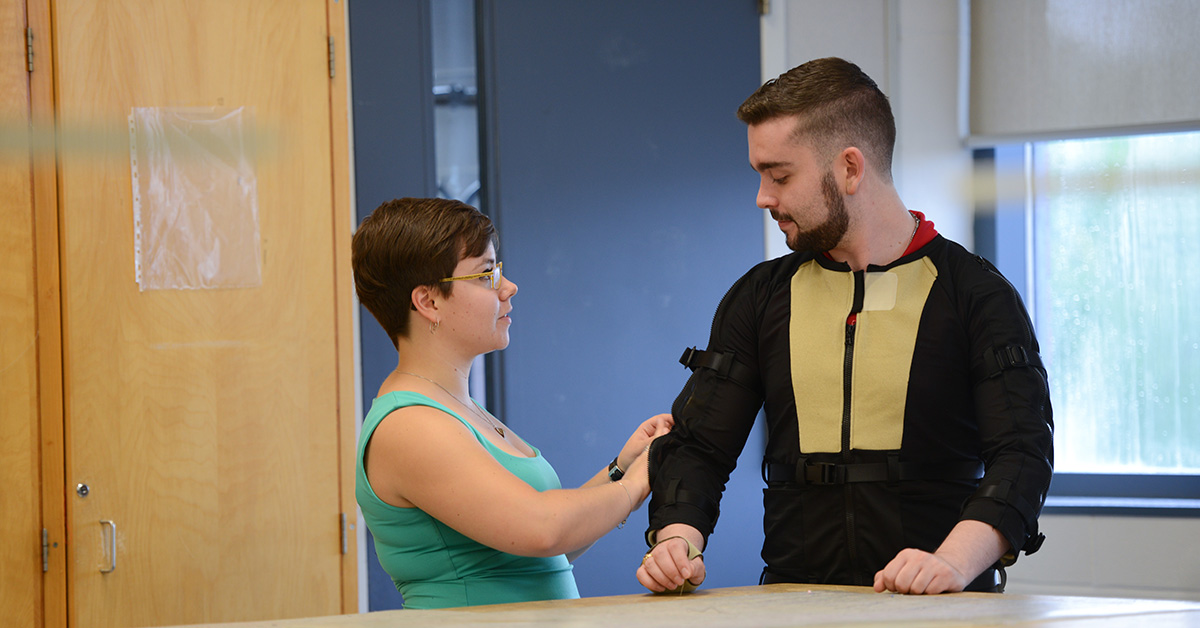
Precisely measuring the severity of tremors suffered by people with Parkinson’s Disease is difficult but vital when it comes to determining the correct dosage of Levodopa, a drug therapy for patients with Parkinson’s. Fanshawe College was proud to partner with Movement Disorder Diagnostic Technologies Inc. (MDDT) to create a prototype of a motion-capture suit and tremor arm sleeve to help with diagnosing and monitoring Parkinson’s patients.

Movement Disorder Diagnostic Technologies is a London-based medical device company using technology to advance care for people whose lives are being limited by tremors. It collaborated with Fanshawe’s School of Design to create a prototype motion-capture suit, which uses MDDT software to capture data from sensors placed at fixed points across the body. The suit can be adapted for home assessment and for commercial mass production. Data obtained from the suit will be used in the ongoing monitoring and assessment of patients with Parkinson’s disease.

Louise Marchand, a student in Fashion Design at Fanshawe College, was involved in developing the suit and won in the Applied Research Category at the 2016 CICan Student Showcase.

Fanshawe College’s School of Design has also designed a prototype TremorTek sleeve based on an earlier design by Movement Disorder Diagnostic Technologies. The sleeve contains multiple sensors that can accurately analyze complex movements. Using data from the sleeve, doctors can isolate specific areas in the arm to guide drug treatments, reducing tremors over the course of seven to 10 days.

“The collaborative efforts between MDDT and Fanshawe College allowed us to address an unmet patient need in medicine,” said Jack Lee, chief technology officer at Movement Disorder Diagnostic Technologies.

About Fanshawe College of Applied Arts and Technology

Fanshawe College is one of the largest colleges in Ontario, with campuses located in London, Simcoe, St. Thomas, and Woodstock. The institution offers more than... Learn more

Low-radiation X-rays offer powerful insights

Liz Lorusso, a professor at Fanshawe College School of Health Sciences, is being hailed internationally for her research on reducing radiation dose levels in X-rays. Lorusso worked with London area hospitals, capturing images using varying levels of X-ray radiation on mannequins with human bone anatomy. The results were astounding, showing today’s advanced digital imaging technology does not require the same quantity of radiation as film-based X-rays do.

“People are exposed to radiation through general X-ray imaging all the time, but using digital imaging we proved we could save patient dose by 50 to 75 per cent — without compromising diagnostic results,” Lorusso said. “Working in tandem with clinical colleagues at health care campuses in London and beyond, we confirmed it is possible to use far lower doses of radiation, and this discovery reinforces the ALARA (“As low as reasonably achievable”) principle every radiological professional follows.”

Since completing the study, Prof. Lorusso has made presentations at numerous conferences, most recently at the 2016 International Society of Radiographers and Radiological Technologists (ISRRT) World Congress held in Seoul, Korea, where more than 1,000 delegates heard about the safety breakthrough. “People all over the world share difficulties in this practice with technological advances, and educating the next generation of global radiological professionals on how to fully embrace the principle ALARA is pivotal,” Lorusso said.

Back home in London, protocols are being reviewed as a result of the study. Prof. Lorusso says work could not have been done without the collaboration among the broader London area’s clinical teams.

About Fanshawe College of Applied Arts and Technology

Fanshawe College is one of the largest colleges in Ontario, with campuses located in London, Simcoe, St. Thomas, and Woodstock. The institution offers more than... Learn more

Deep down safety for miners

Ultra-deep mines are those that reach 2.5 kilometres below the earth’s surface. They are not an easy place to work; as the depth increases, so does the temperature. In an ultra-deep mine, ambient heat from rocks and humidity meets heat from machinery and human activity to create a hazardous mix. Miners in ultra-deep mines follow a reduced work-rest cycle to prevent heat stress.

Modified hours are only part of what it takes to keep miners safe and Jannatec Technologies, which has been developing safety products for the mining industry for over 25 years, undertook to design a new kind of coverall that could complement deep-mine thermal management systems, meet safety standards and keep miners comfortable as they worked.

To achieve its goal of creating innovative work wear for ultra-deep mining employees, Jannatec Technologies partnered with researchers at two Canadian institutions — George Brown College’s School of Fashion Studies and the Olds College Apparel Innovation Centre. George Brown’s research team was headed by investigators Edith Strasser and Daniel Somsavath and included three students from the School of Fashion. Throughout the project, the team relied on guidance from Jannatec as it evaluated current designs in work wear for ultra-deep mines, looking for feedback on efficiencies and wearer requirements.

“This project helped hone my skills,” one of the fashion students said. “It introduced me to the people working in sciences that rely on people in design — who have little understanding of the scientist’s goals.”

When they were ready, the research team first created a prototype in cotton canvas, then produced the next prototype in two textiles in standard sizes, to allow Jannatec to test and compare them. The final deliverables also included a pattern with a sizing sheet for the prototype design.

Applied research in this area is expanding at the college, and student-faculty teams have completed a range of successful projects to solve apparel design problems and commercialize new products. The work of this George Brown team will lead to a safer working environment for miners everywhere, as Jannatec Technologies gets one step closer to manufacturing on a large scale.

Funded by: Ontario Centres of Excellence

About George Brown Polytechnic

George Brown strives to build a seamless bridge between learners and employment by developing dynamic programs that are informed by industry and workplace-ready graduates who... Learn more

Leaving Trauma Behind for a Brighter Future

In recent years, Canada has welcomed thousands of people seeking asylum, many of them survivors of war and torture. They come for the chance of a new life — but the shadows of the old one can block them from the best paths to a new one, education.

The after-effects of living through war and violence are a daily reality for refugees and asylum seekers. Their schooling may have been interrupted by war, or date from makeshift schools in refugee camps. Survivors may also experience after effects that diminish their ability to study, including memory and concentration problems, anxiety, insomnia and chronic pain.

Yet education remains their best chance at a successful life in their new country.

Jaswant Kaur Bajwa, a professor and research coordinator at the George Brown College’s Centre for Preparatory and Liberal Studies, is leading a project to help victims of torture and violence get access to post-secondary education. The project is a Community and College Social Innovation Fund grant from the Social Sciences and Humanities Research Council.

As things became more chaotic in Syria, Bajwa said, staff at George Brown began discussing how the college could accommodate refugees. Research shows refugees are less likely to pursue post-secondary education than other new Canadians and more likely to be unemployed or underemployed and earn less.

“The question was, what would happen to these folks when they came to school? Do we need to do things differently? Are there things the system needs to do differently?” Bajwa said in an interview. “Education is a really important determinant of whether they can move from the fringes to the centre of society.”

It is not just young refugees who need educations. Many well-educated refugees have left behind careers and need Canadian credentials to start again.

George Brown has partnered with the Canadian Centre for Victims of Torture and the Centre for Addiction and Mental Health on the project. The two-year program has three phases. It will start with interviews and focus groups with refugees on what they expect from education, and the barriers they perceive to attaining it.

The next step is to use information from the interviews to adapt the curriculum for George Brown’s Transitions to Post-Secondary Education program to the needs of refugees. The Transitions program helps people with mental illnesses re-enter higher education. It teaches life skills, academic upgrading, career development and English courses. They will be tailored to refugee needs.

The final phase will be to introduce the new programs in two four-month terms, or in short-term workshops and seminars, depending on the themes. Follow up will include gathering feedback from participants and instructors and other evaluation.

Bajwa wants the courses to give refugees something more than the tangible benefit of education — hope. “Focusing on the here and now and the future is good for their well-being,” she said. “Evidence shows refugees do better when they look forward, not back.”

About George Brown Polytechnic

George Brown strives to build a seamless bridge between learners and employment by developing dynamic programs that are informed by industry and workplace-ready graduates who... Learn more

Connecting Ideas in a Time of Transformation

Introducing all-day kindergarten was just a part of a massive transformation in early learning and child care in Ontario. From provincial governance to curriculum details to work relationships, everything is changing.

Researchers at Conestoga College in Waterloo are working with the Region of Waterloo Children’s Services Division to help make sense of those changes for stakeholders in the region — all the educators, planners and administrators who contribute to different aspects of care and education for very young children.

“They are being asked to embrace a pedagogy that is much more emergent, much more process-oriented,” said Goranka Vukelich, director of Ideas Connect, a Community and College Social Innovation Fund project, established by the Social Sciences and Humanities Research Council.

“Even the name of the new curriculum framework is a question, ‘How does learning happen?’” Vukelich observed. “They are being asked to embrace a pedagogy of possibilities.”

The focus of early learning, in other words, is shifting from what children learn to how they learn, with the understanding that laying down good processes of learning now will serve children throughout their school years and all through life. Content is just a vehicle to what’s really important, learning itself.

The change in philosophy is accompanied by other changes, too. A different ministry is responsible; accountability systems have changed, as has legislation and regulation for licensed child care providers. Instruction in all-day kindergarten is done by teams of early childhood educators and kindergarten teachers.

Conestoga College and the Region of Waterloo’s Children’s Services have worked together for more than five years, including creating the Early Childhood Education Professional Resource Centre on the Conestoga campus. Applying for the Social Innovation grant as a partnership allows students on work placements in community services to consult with experts at the college on issues related to the changing early childhood landscape. They get experience in planning and adapting to change, and Waterloo organizations get the benefit of research and guidance from the college.

“The students in the classroom are learning the latest research. They get to take that unique lens into the workplace, with the luxury to sit back and focus those ideas on real projects they can participate in,” Vukelich said.

The key to success, Vukelich believes, is their choice of project lead — a person who already knows the area and the issues, and could visit planning committees and identify problems for students and researchers to tackle before students went on the job. That informed head start will make all the difference, she said.

Three of Conestoga’s degree programs will be involved in the project: Bachelor of Early Learning and Program Development, Bachelor of Criminal and Community Justice and Bachelor of Applied Health Information Science. Projects they work on could be handbooks for meeting regulations, or computer programs for tracking professional development.

“This is a really interesting way of bringing new ideas and realities into the academic curriculum and having it extend into the community as we share research and ideas,” Vukelich said.

About Conestoga College

Conestoga College Institute of Technology and Advanced Learning is a leader in polytechnic education and one of Ontario’s fastest growing colleges, delivering a full range... Learn more