
Easier video surveillance

Lanoptic Video Solutions Inc. designs, sells and supports digital video devices for security and surveillance. It recently developed a system for installing digital video cameras that combines the mounting system with tools and a fastener. Called Novattach, the system makes cameras much simpler and faster to install than traditional methods.

Lanoptic, however, wanted to reduce the device’s overall cost without affecting its functionality and turned to researchers and students at Durham College for help, with a goal of ultimately creating a family of engineered solutions.

Two students from the Mechanical Engineering Technology Program worked on this project, creating designs for the mounting bracket and 3-D printing the prototypes. The students involved got to use the latest manufacturing technology, as well as developing a broad range of skills, from project planning and management, prototyping, researching material, sourcing components and choosing suppliers. They also had to make presentations, collaborate and manage conflict — all increasing their likelihood of being hired quickly after graduation.

The project was a key step towards the commercialization of Novattach as a highly competitive product. The new mounting bracket enabled Lanoptic to capture 10 per cent of the digital camera installation business in its first year. The company expects to get more orders, expand into new markets, and bring manufacturing of the product to Canada, creating jobs and a positive economic impact.


Industry: Manufacturing
Funded by: NSERC

About Durham College

At Durham College, the student experience comes first. With campuses in Oshawa and Whitby, Ont. along with a learning site in Pickering, the college offers... Learn more

Parisian Pastries from Prairie Pulses

The rich food value of dried peas, beans, lentils and chickpeas has been known for centuries — their collective name, “pulses”, comes from puls, a Latin word that means both “seeds” and “porridge”. Pulses are widely consumed both as animal feed and in savoury dishes for humans around the world, and research continues to expand their uses.

Some of those new uses are remarkable — the crowning achievement of this project was to create a nut-free, egg-free French macaron using navy bean flour as a butter substitute.

Best Cooking Pulses is a family-owned Canadian processor of pulse crops grown in Manitoba. Established in 1936, it keeps a close eye on developments in new ways to use pulses. Thanks to funding from the Natural Science and Engineering Research Council (NSERC), Best Cooking Pulses partnered with Red River College’s culinary research program to investigate the possibility of using pulse flour in baking to replace eggs.

One student, Alyssa Houston, was brought in to work on the project as part of her culinary work experience placement — the first time a culinary student has gained work experience through research rather than in food service. She even had the chance to demonstrate the research in public, at table-top discussions with industry. After the project, she went on to a job in food manufacturing, helping the company with production as well as recipe creation using the skill from this project.

Best Cooking Pulses is using research from this project to showcase the advantages and versatility of navy bean flour at conferences (such as the Research Chef Association), and to prepare papers demonstrating this new application for bean flour to clients and potential clients.

Industry: Agriculture | Food
Funded by: Engage Grant, NSERC

About Red River College Polytechnic

Red River College (RRC) is Manitoba’s largest institute of applied learning. The institution is renowned for providing accessible, innovative, applied learning and research in an... Learn more

A vest with sensations — the next fashion sensation

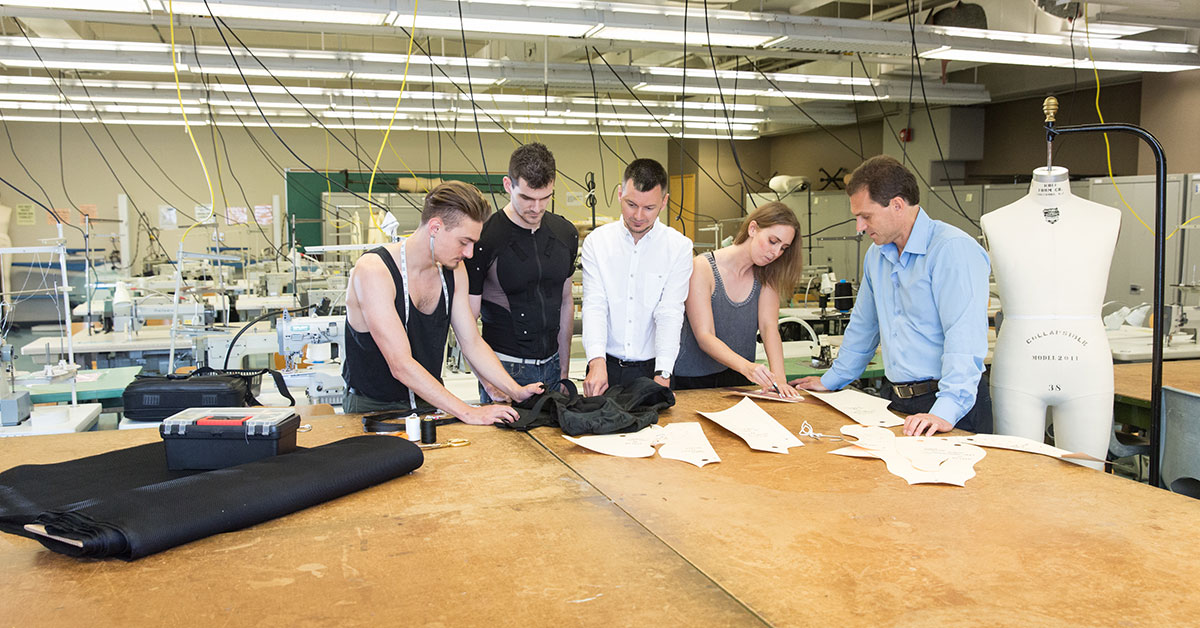
Entering a virtual reality world may soon be as easy as slipping on a life jacket with the development of ARAIG — a wearable wireless, multi-sensory, immersive suit for gaming and simulation training. The suit is the brainchild of Michael and Brodie Stanfield, founders of Inventing Future Technologies Inc.—IFTech for short — a start-up from Oshawa, Ontario.

ARAIG, an acronym for “As real as it gets,” was developed with computer gaming in mind. It consists of an inner T-shirt-like layer and an outer exoskeleton that looks like a high-tech version of a football player’s pads. ARAIG offers wearers surround sound, vibration, pressure and resistance feedback —basically allowing users to feel what’s happening in the virtual world, where in the past they only saw graphics and heard sound tracks.
ARAIG also has possibilities beyond gaming. The Stanfields have even heard from the Canadian Armed Forces, interested in the product’s potential as a hyper-realistic way to train and simulate combat.

When they approached George Brown, the Stanfields already had a proof-of-concept model. They had worked with Durham College on the vest’s electronics and their online community advised on its look and feel. What they needed from George Brown was help with the challenge of making the ARAIG vest washable, breathable and in line with aesthetic requirements. Two fashion studies students were recruited to undertake the design

They were supervised by principal investigator and faculty member Zoran Dobric, who noted that “IFTECH is a great example of the next level of wearable technology. It can be implemented in both entertainment and gaming industries, as well as simulation and training.”

After many iterations and pattern prototypes, IFTech now has product specifications, and is working closely with manufacturers for commercialization. Recently, IFTech won in the Durham region of the Spark Ignite Competition, taking home a prize of $25,000.

Funded by: Applied Research and Development (ARD) Grant, College and Community Innovation Program, NSERC

About George Brown Polytechnic

George Brown strives to build a seamless bridge between learners and employment by developing dynamic programs that are informed by industry and workplace-ready graduates who... Learn more

Building a wall to keep memories in their place

Hospital stays are hard on people struggling with impaired memory. Disoriented by unfamiliar surroundings and stripped of their usual activities, elderly patients may see their mental abilities decline even as their physical problems are being treated.

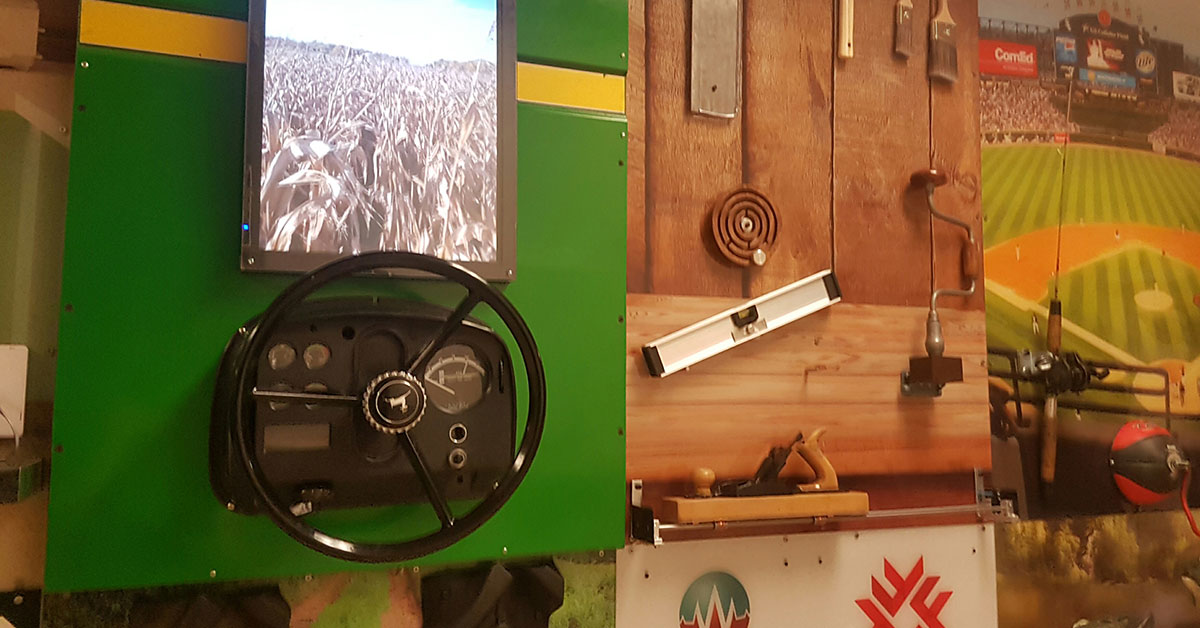
To prevent deterioration in patients with memory problems, Woodstock General Hospital partnered with Fanshawe College to design and install a “cognition wall” in its complex continuing care unit. The CogWall, as it’s called, is divided into four sections, each featuring familiar objects against a background photo.

The idea is that in each section the background photo and the familiar items displayed in front of it will stir reminiscences and encourage activities that will give patients a sense of success. A photo of a 1950s kitchen, for example, is complemented with real kitchenware patients can handle. There’s a rotary-dial phone that rings periodically and when answered, plays a message. There’s a mailbox where letters can be dropped. There’s also a fishing pole and, in front of a farm scene, a tractor steering wheel and monitor mounted on the wall simulate a drive through a field for patients.

The CogWall at Woodstock General was designed by four students from Fanshawe’s Mechanical Engineering program. They also found all the material, built, and installed the wall. The students had to work through a variety of challenges and gained valuable research skills including project management, procurement, problem solving and critical thinking during the project, which ran from May to November of 2016. The CogWall was unveiled on January 31, 2017.

Since the wall was installed, the hospital has been encouraging patients with impaired memory to interact with it regularly, in hopes of improving their cognitive function and staving off memory loss. The hospital says both patients and their families are reacting positively. The CogWall has also garnered the attention of local media and has been well received by the community.

Funded by: General Research Fund, NSERC

About Fanshawe College of Applied Arts and Technology

Fanshawe College is one of the largest colleges in Ontario, with campuses located in London, Simcoe, St. Thomas, and Woodstock. The institution offers more than... Learn more

An animated conversation — with no words

The global marketplace presents many challenges to Canadian companies. How, for example, do you boil complex molecular science down for the layman — without using any words? The sales and marketing team at CSL Silicones Inc., a Guelph-based manufacturer of silicone coatings, lubricants, compounds and adhesives, used presentations with two-dimensional images to demonstrate how the coating functions — a fairly standard approach.

But the company needed to find a way to communicate with a global audience —regardless of language or technical expertise. It wanted explanations that transcended language, designed for visual learners. They brought that challenge to a research team at George Brown College’s Centre for Arts and Design.

A team of students from the game development program was set to work developing an animation that would capture the complex science behind CSL’s products in a visual presentation easy for anyone—layman or expert—to understand.

The first animation focused on the flagship coating, Si-COAT® 570™ High Voltage Insulator Coating, which protects insulators from damage caused by weather, moisture and pollutants. The students worked in two groups, one focused on designing graphics and the other on developing animation, parsing out the exact science behind the product and how to explain that in a simplified, visual way.

Three game development students— Xuan Zhang, Megan Mattes and Thuc Phuong Lu—and one George Brown graduate, 3D artist Emanuel Melo, worked on the animation. They were supervised by the principal investigator, Billy Matjiunis (a game development professor) and Alexis Rodziewicz, the project manager.

The team at CSL Silicones is looking forward to doing further animations across multiple products and market projects, and anticipates this innovative approach could change the way they promote and sell all their products.

“In approximately 2½ minutes, you get a seamless story of the product value proposition, a visualization of the science, its application and supporting benefits. It takes our team about 3½ hours to do the same thing to a roomful of people,” said Rae Townsend, vice-president of strategic business initiatives at CSL. “What this animation allows us to do is grow from serving a global English-speaking audience of 350 million people, to an audience of over 6 billion people overnight.”

Partner(s): CSL Silicones
Funded by: College and Community Innovation Program, NSERC

About George Brown Polytechnic

George Brown strives to build a seamless bridge between learners and employment by developing dynamic programs that are informed by industry and workplace-ready graduates who... Learn more

A cool new way (literally!) to make ethanol

Biofuels, processed from agricultural waste and other living matter, have long been seen as a key element in providing cleaner energy and fighting global warming. For more than two decades, scientists and engineers have been developing methods for producing ethanol from straw, wood chips, corn cobs and other waste material, called biomass.

But use of ethanol has been limited by the high cost of producing it. One key driver of cost is the inability of the microorganisms used in the process (which are usually genetically modified) to tolerate high levels of ethanol.

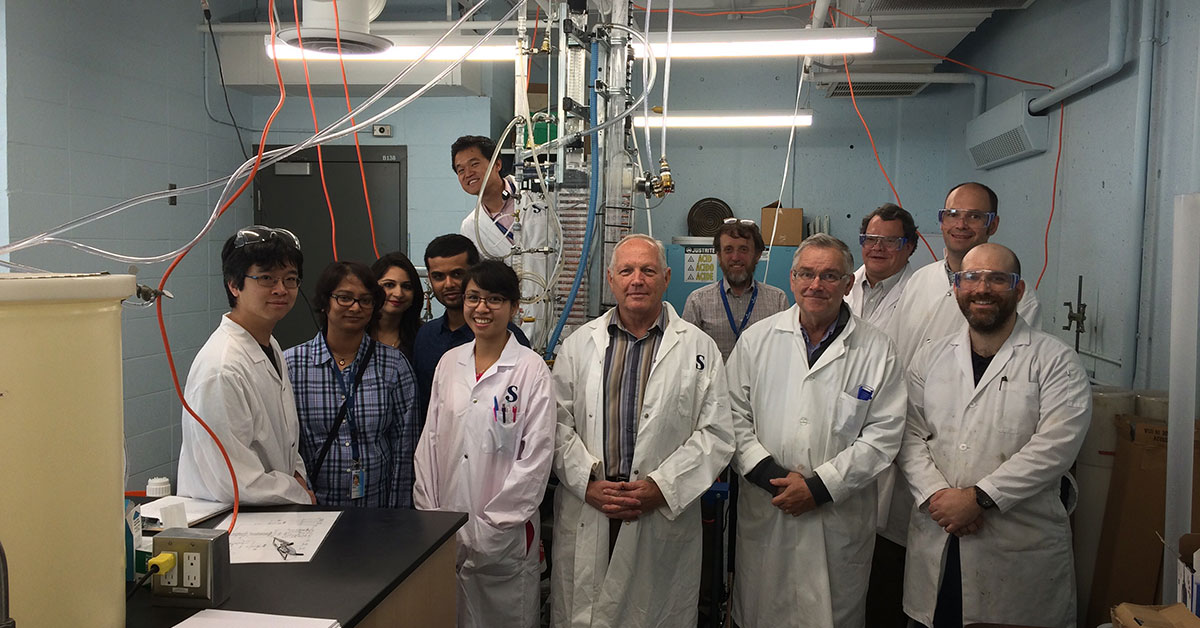
This was the focus of a partnership between Sheridan College and Drystill, a company that has developed an innovative process known as pass-through distillation. Its advantage is that it can be done at lower temperatures than most distillation, which preserves the expensive enzymes needed to create ethanol from biomass, thus greatly reducing cost.

The aim of the project was to design, construct, commission and test a pilot unit to demonstrate whether pass-through distillation can passively remove volatile components from a fermentation broth at room temperature and absorb them into a non-toxic brine solution with no net heat input in the process. The answer was yes, and once commercialized, this technology has the potential to make biofuel — such as ethanol made from agricultural residue — economically feasible.

The project took nine months from developing the proposal to completion, and involved four students. Two were Chemical Engineering Technology students, mainly involved in designing the process and constructing peripheral processes and the auxiliary equipment driving the pilot unit. Two Environmental Control students were involved in commissioning the unit and analysing samples from the trials. Because the process was so novel, many of the students’ activities focused on problem-solving and rapid prototyping, which allowed them to gain new skills that are in demand in Canada’s growing biofuel sector.

Every country that signed the Paris Agreement, including Canada, pledged to slow the build-up of carbon dioxide in the atmosphere. Biofuels such as ethanol are seen by governments and advocacy groups as one way to help do that. However, the high cost of producing them has stood in the way of widespread use. By distilling the ethanol economically at room temperature, this project could make advanced biofuels profitable to manufacture and sell.

Industry: Environmental
Funded by: College and Community Innovation Program, Engage Grant, NSERC

About Sheridan College

Sheridan College is one of Canada’s leading postsecondary institutions, serving over 23,000 full time students at four campuses in the western Greater Toronto Area. We... Learn more