
Asset and Inventory Management System

Keeping track of the conditions of the thousands of poles, holes, signs and lights that line the streets of cities and towns — keeping track of the streets themselves — is a huge job. Traditionally, municipalities have left the task of keeping track of the state of road conditions and infrastructure to staff (sometimes driving around for other reasons), or random checks and public complaints.

It’s a haphazard approach that may or may not get the job done, and North-Line Canada Ltd., recognized an opportunity to create an inventory-management system that could be installed in any vehicle and tailored to each client’s needs.

North-Line collaborated with Durham College to develop the Asset Inventory and Management System (AIMS). AIMS can track the condition of roads and infrastructure, automatically registering key assets like fire hydrants, traffic control signs, hydro lines, road incursions and even bus enclosures.

AIMS, which can be plugged into any vehicle, has an easy-to-view display, real-time GPS, wireless temperature and infra-red sensors and multiple wireless cameras. All connect to the module for full video recording. This lets AIMS log data on assets in real time, with limited user input. Its features can also be turned on and off based on the level of function the customer purchases.

AIMS should significantly reduce labour costs and allow the customer to manage and maintain assets, while eliminating the high incidence of human error, and ensuring upgrades and system deployments run effectively.

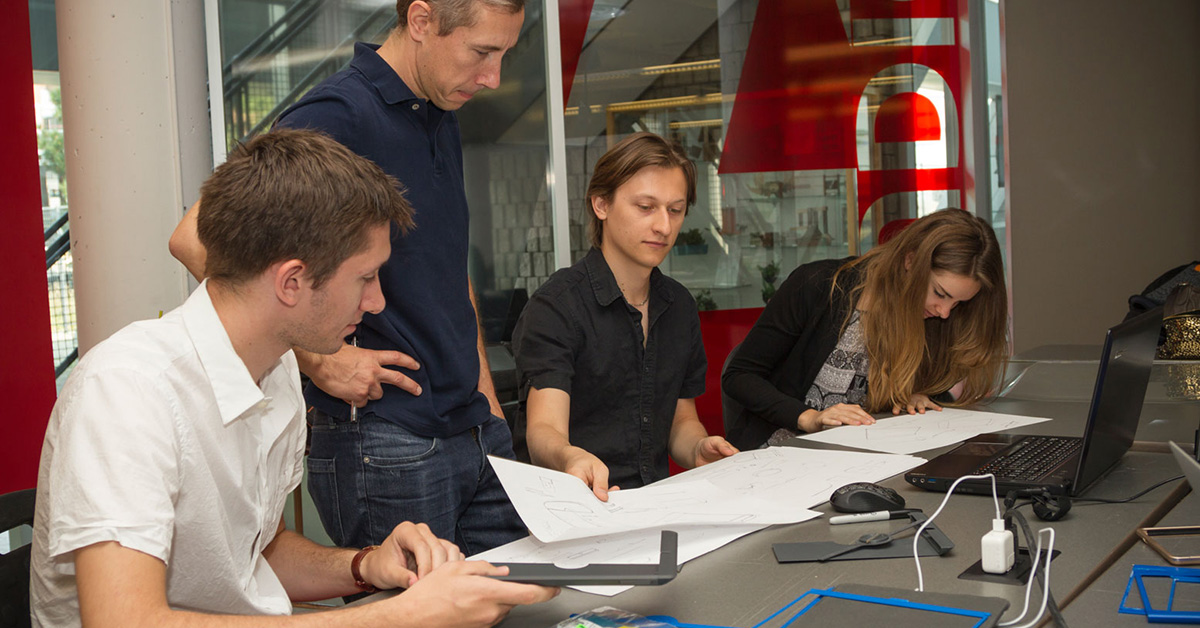
Two students with backgrounds in database development worked on this project to connect and develop a system of sensors that were then programmed on a device. They were required to order parts according to specifications and troubleshoot the entire system, enhancing their communication and problem-solving skills.

The project helped the students to develop and refine their technical and business skills, increasing their likelihood of being hired quickly when they graduated.

“The project was a game changer for us, connecting academic with practical experience; it was of great benefit to our company and the students.”


Funded by: Ontario Centres of Excellence

About Durham College

At Durham College, the student experience comes first. With campuses in Oshawa and Whitby, Ont. along with a learning site in Pickering, the college offers... Learn more

Aclarus

Easy access to high-quality drinking water can be a challenge for people outside urban areas — and it was to improve that access that Aclarus Ozone Water Systems approached Lambton College in Sarnia for help to test, develop and optimize its ozone water purification system.

Aclarus, based in Peterborough, Ontario, specializes in water purification through the use of ozone technology. Ozone, an inorganic molecule, is extremely efficient at removing bacteria, pesticides, odours, chemicals (and more) from water.

In June of 2015, Aclarus partnered with the Lambton Water Centre at Lambton College on a research project to validate its system’s effectiveness in treating and disinfecting bacterial contamination in drinking water. The project included installation of a remote monitoring system that allows the consumer or Aclarus technical staff to monitor the system from a smart phone or central control station.

Dino Evangelista, coordinator of the Lambton Water Centre, led the research project together with faculty researcher Kevin Ryan. Two students from Lambton’s Instrumentation Control and Engineering Technology program worked with them.

The research project with Lambton allowed Aclarus to improve and validate its technology, while at the same time improving the customer experience by creating remote monitoring options for the system. Due to the success of this project, Aclarus is planning to continue doing research projects with the Lambton Water Centre.

Partner(s): Aclarus
Funded by: Applied Research and Development (ARD) Grant, Community and College Social Innovation Fund, NSERC, Ontario Centres of Excellence

About Lambton College

As a post-secondary leader in education, training and research, Lambton College has experienced tremendous growth in recent years. In addition to a significant rise in... Learn more

Connecting Link2Feed to Collective Impact Platforms

Link2Feed is a Sarnia-based company that has created software to help food banks and other non-profits across North America (including Sarnia’s Inn of the Good Sheppard) to use data to understand and increase the impact of their work. The software is designed to collect and manage client data in ways that help organizations better understand the people they serve, increase their resources, and demonstrate their value to donors.

The work was a collaboration between Link2Feed and Lambton College’s Information Technology Research Group, led by faculty researcher Len Payne. Their challenge was to enhance the integration capacity of Link2Feed’s software, to give the company’s clients the data and system capabilities they needed to participate in collective projects.

Link2Feed’s software is now integrating successfully with a software in Dallas that helps link the emergency food system with the health-care sector, to improve clients’ health.
Link2Feed used the technology created in this project to create a spin-off platform called “Kids Café,” which integrates with their core platform and has helped emergency food organizations deliver meals to children.

“The research project with Lambton College gave us a fresh perspective on integration and a fantastic support to grow in our research and development efforts,” said a spokesperson for Link2Feed. “We have continued to work with the researchers outside of the project to grow other areas of our technical innovation.”

Partner(s): Link2Feed
Funded by: Ontario Centres of Excellence

About Lambton College

As a post-secondary leader in education, training and research, Lambton College has experienced tremendous growth in recent years. In addition to a significant rise in... Learn more

Deep down safety for miners

Ultra-deep mines are those that reach 2.5 kilometres below the earth’s surface. They are not an easy place to work; as the depth increases, so does the temperature. In an ultra-deep mine, ambient heat from rocks and humidity meets heat from machinery and human activity to create a hazardous mix. Miners in ultra-deep mines follow a reduced work-rest cycle to prevent heat stress.

Modified hours are only part of what it takes to keep miners safe and Jannatec Technologies, which has been developing safety products for the mining industry for over 25 years, undertook to design a new kind of coverall that could complement deep-mine thermal management systems, meet safety standards and keep miners comfortable as they worked.

To achieve its goal of creating innovative work wear for ultra-deep mining employees, Jannatec Technologies partnered with researchers at two Canadian institutions — George Brown College’s School of Fashion Studies and the Olds College Apparel Innovation Centre. George Brown’s research team was headed by investigators Edith Strasser and Daniel Somsavath and included three students from the School of Fashion. Throughout the project, the team relied on guidance from Jannatec as it evaluated current designs in work wear for ultra-deep mines, looking for feedback on efficiencies and wearer requirements.

“This project helped hone my skills,” one of the fashion students said. “It introduced me to the people working in sciences that rely on people in design — who have little understanding of the scientist’s goals.”

When they were ready, the research team first created a prototype in cotton canvas, then produced the next prototype in two textiles in standard sizes, to allow Jannatec to test and compare them. The final deliverables also included a pattern with a sizing sheet for the prototype design.

Applied research in this area is expanding at the college, and student-faculty teams have completed a range of successful projects to solve apparel design problems and commercialize new products. The work of this George Brown team will lead to a safer working environment for miners everywhere, as Jannatec Technologies gets one step closer to manufacturing on a large scale.

Funded by: Ontario Centres of Excellence

About George Brown College

George Brown strives to build a seamless bridge between learners and employment by developing dynamic programs that are informed by industry and workplace-ready graduates who... Learn more

Making power wheelchairs smarter

Many people who use power wheelchairs have poor manual dexterity because of spinal cord, stroke or head injuries, or because of degenerative diseases. Even getting in and out of an accessible vehicle can be time-consuming, and sometimes dangerous, for them. Other tasks — such as taking a shower — require an attendant to drive the wheelchair away.

SmartChair gives people who use wheelchairs more freedom and self-reliance while significantly improving their safety and mobility. SmartChair is a control system which can easily be integrated with any existing power wheelchair. The goal of the project is to give users added independence by improving their control of their power wheelchair, regardless of their level of ability.

A power wheelchair outfitted with the SmartChair control system will also offer computer-assisted autonomous movement to its user, letting him or her automate certain tasks. That might include following a pre-defined path, getting in and out of an accessible van, or navigating indoors in narrow hallways, through doorways and around tight corners. It’s a technology based on lived experience: several years ago, Eightfold Inc.’s president, Ke Wang, had an accident; he has used a power wheelchair ever since, and the idea for SmartChair grew from barriers he faces every day.

The SmartChair project got a boost when it partnered with a team of four students from Algonquin College, led by researchers Dr. Theo Mirtchev and Dr. Bruno Rocha. With funding from Ontario Centres of Excellence and the Natural Sciences and Engineering Research Council, the students worked as research assistants from January 2016 to April 2017. They acquired experience in developing both hardware and software, control engineering, sensors and in testing and measuring technology.

SmartChair can change the lives of power wheelchair users every day, in a variety of ways. They include better control in narrow spaces such as doorways and ramps and the ability to “drive” the wheelchair when it’s empty because the user has transferred from it to bed, the couch or the shower. Changes such as those can reduce the cost of attendants and allow for greater independence. It’s also small and lightweight.

Funded by: Engage Grant, Ontario Centres of Excellence

About Algonquin College

The mission of Algonquin College is to transform hopes and dreams into lifelong success. Algonquin College, a national leader in applied and online learning, offers... Learn more

Glasses-free 3D Technology for iPads

Humber College’s School of Applied Technology has recently completed a research project that involved designing and patenting 3D software for iPads.

Humber faculty member Odin Cappello partnered with Ooyavah Inc., a leading Ontario business in stereoscopic technology, to develop a prototype for glasses-free 3D visualization on the Apple iPad.

Ooyavah’s innovative technology required that users could easily mount the lens to their iPad with high precision, that iPad aesthetics and functionality were not compromised, and that the lens could be conveniently stored when not in use. To address this design challenge, Cappello led a team of Humber students who worked with Ooyavah to design and create a prototype of a case that integrates their 3D screen and to develop the user interface for the new product. Students from Humber’s Bachelor of Industrial Design program designed, printed, and evaluated several prototypes to design the hardware to house Ooyavah’s 3D lens. The team also collaborated with Sheridan College’s Centre for Advanced Manufacturing and Design Technologies.

The student researchers and faculty in Industrial design are all named with industry partner Ihor Petelycky as inventors on the patent pending for the case. Students from Humber’s Multimedia Design and Development diploma program worked with Ooyavah to design a user interface application and create a visually appealing experience for users. Working closely with Ooyavah and under faculty supervision, the student design team contributed to the development of a fully functional prototype ready for use by Ooyavah.

“The client gets the benefit of working with excited young people, and students get the benefit of having a really cool design project under their belts,” notes Capello, Faculty Lead in Humber’s School of Applied Technology.

Partner(s): Ooyavah Inc.
Funded by: Ontario Centres of Excellence

About Humber Polytechnic

Humber Polytechnic is one of Canada’s leading postsecondary institutions, combining deep theoretical learning with applied, hands-on experience. Humber offers a wide variety of credentials including... Learn more

Computerizing Homecare for Kidney Patients

A new technology for doing kidney dialysis at home is being developed by Sault College in partnership with a small Ontario engineering company.

Sault College has collaborated with eQOL Inc. to develop a prototype of a microcontroller-based device that will improve the connectivity of their eQ Connect™ technology (formerly called DiCAT). Kidney dialysis treatment usually requires several hospital visits a week, which can be onerous for people living several miles from a hospital but impossible for patients living in rural communities or on reserves 50 or more kilometres from treatment. eQOL Inc. is a process engineering company that builds devices to enable people living with chronic conditions to manage self-care at home and reduce their visits to hospital.

The company’s first product, eQ Connect™, is a technology-based solution for kidney dialysis at home that simplifies self-care. The objective is to add comfort and to enhance patients’ engagement with his or her own condition.

eQ Connect™ offers mobile and web-based applications that provide access to resources and support for patients and the health care team managing treatment. Moving beyond conventional monitoring technologies, eQOL provides a patient-centric model with comprehensive process management.

“Our self-care model, the basis of eQ Connect™, provides tools to patients that empower them to care for themselves in the comfort of their home,” says Binh Nguyen, co-founder & Chief Executive of eQOL.

Increased home dialysis uptake and reduced attrition will lower the overall cost per patient for renal care by lowering the number of staff required per patient through improved efficiency of workflows and resource usage. eQOL is based out of Sault Ste. Marie and Toronto. The company will create new jobs and stimulate economic activity in Ontario by utilizing local products and services when available.

Partner(s): eQOL Inc.
Funded by: Ontario Centres of Excellence

About Sault College

Sault College is located in Sault Ste. Marie, Ontario and aims to provide a transformative life experience through empowering students to think and learn in... Learn more