Optimizing Commercial Potential of Green Energy

The Lambton College Renewable Energy Conversion and Storage (RECSR) project is focused on the development of an integrated, modular hybrid renewable energy system with the capability of optimizing captured energy at varying production levels and operating conditions.

A scalable fuel production, storage and dispensing system is being designed to manage wind, photovoltaic solar-derived energy, drive electrolysis, compress and store electricity as gaseous hydrogen, and regenerate power via proton exchange membrane fuel cells. Housed in Lambton College’s Sustainable Smart Home facility, the project showcases several areas of applied research in green technology, including hybrid energy system management, dynamic optimization and control, energy storage, and micro-grid technologies.

Project partners specializing in instrumentation, controls and automation include Paton Controls, Provincial Controls, Electrozad Supply Company, and local utility operator, Bluewater Power Distribution Corporation.

“The RECSR project builds the research capacity of the region’s core industrial and energy sectors by bolstering the ability of local businesses to enhance their products and services toward commercialization.” says Mike Bonovski, MPB Industrial Ltd and TechAlliance.

The five-year project will wrap up in 2015, having employed more than 30 students and graduates in Lambton College’s Instrumentation & Control Engineering Technology and Alternative Energy Engineering Technology programs. A number of faculty members have also collaborated in this project, contributing their expertise while continuing to develop their knowledge. The project and its infrastructure have enhanced Lambton College’s capacity to do advanced applied research in energy storage and management technologies, and will create opportunities for future projects with new industrial partners.

About Lambton College

As a post-secondary leader in education, training and research, Lambton College has experienced tremendous growth in recent years. In addition to a significant rise in... Learn more

Remote Monitoring for Microhydro Sites

BlueStreak Equipment Inc. designs and manufactures micro-hydro turbines and develops micro-hydro sites. These small hydro producing sites are scattered across Ontario and daily visits to monitor them is not practical.

In an effort to develop a more efficient and cost effective approach to monitor operations at micro hydro sites, Bluestreak approached Durham College for assistance in developing a remote system that could detect when there is a system fault, so that crew members could be dispatched quickly to fix it.

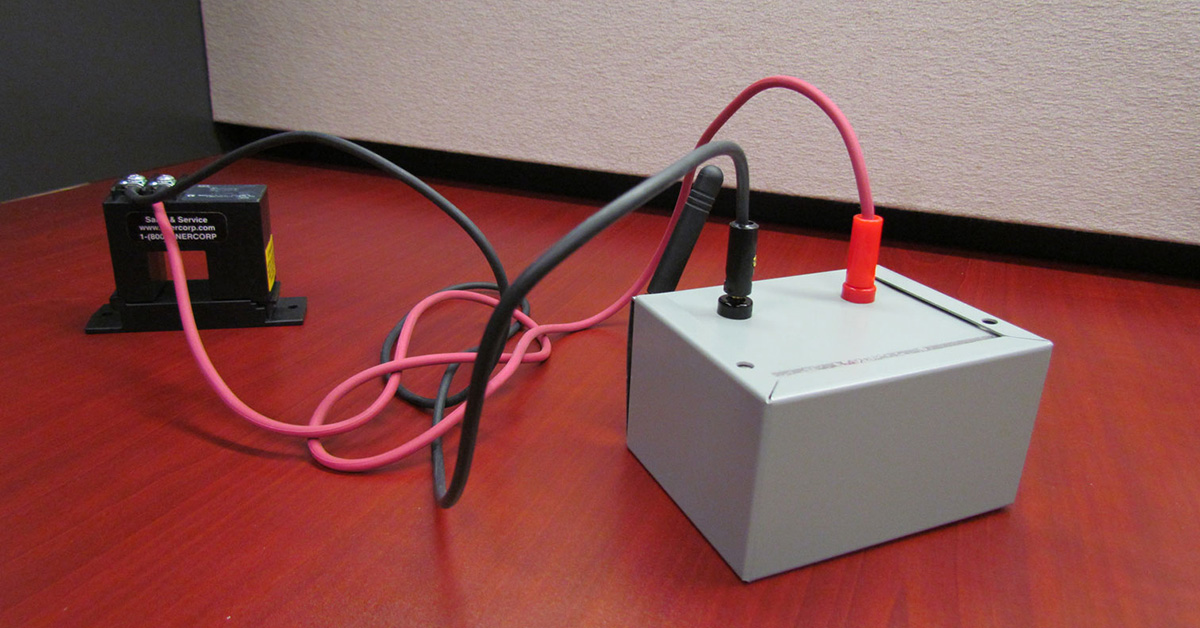
Monitoring systems currently on the market are designed for large installations that can afford larger capital costs and monthly fees. Micro systems are too small to support these costs. A simple, cost effective version of a monitoring system was developed by the students and faculty members at Durham College using the simple integration of three components — a micro-controller device, a cellular shield to allow cellular calls and text messages, and a current sensor to detect faults. The device was tested, and successfully sent a text message when the power was turned on and off on the line current sensor. The success of this low-cost remote monitoring system will allow Bluestreak to take the device to market and deploy their systems across Ontario.

About Durham College

At Durham College, the student experience comes first. With campuses in Oshawa and Whitby, Ont. along with a learning site in Pickering, the college offers... Learn more

Assessing Heat Stress in Solar Panels

Heat trapped under solar energy panels is reported to reduce the energy production of rooftop installations of photovoltaic panels. Georgian College researchers are analyzing existing systems to determine how to resolve this issue.

PowerStream is the second largest municipally-owned electricity distribution company in Ontario, supplying electricity to 335,000 residential and business customers. The company has created a business unit, PowerStream Solar, which leases industrial, commercial and institutional rooftops for installation of photovoltaic panels.

Nine photovoltaic arrays from multiple manufacturers have been mounted on a number of different panel mount styles on the rooftop of the Barrie office of PowerStream, where they can be used for research and development. Students working with PowerStream through Georgian College’s Center for Applied Research and Innovation have identified environmental factors that warrant further investigation.

Heat, generated by and trapped under the panel arrays, reduces their efficiency. No current models quantify the relationship between outside temperatures and weather conditions in Southern Ontario to the heat produced under photovoltaic panels and its effect on photovoltaic output. An applied research project currently underway at Georgian College supports a student in the Environmental Technology program during co-op work terms. The student is analyzing performance data and environmental data to determine the effects on efficiency of the photovoltaic panels. The resulting report will allow PowerStream to forecast operational efficiencies more accurately based on local conditions.

“PowerStream is very interested in determining the effects of environmental effects including heating that impact the performance of the roof top solar systems,” says Derek Quigley, C.E.T. Manager of Renewable Energy. “In collaboration with Georgian College student researchers the results from this research initiative will be invaluable to PowerStream in designing and installing optimum rooftop solar systems that have no negative affect on the roofing materials.”

Partner(s): SPINCORE, PowerStream
Funded by: Applied Research and Development (ARD) Grant

About Georgian College of Applied Arts and Technology

However you define your goals, the best learning to get you there extends far beyond the classroom. Georgian is a recognized leader in student work... Learn more

Nano-engineering for Better Smartphone Batteries

Nano-engineered materials are a cost-effective, environmentally-friendly alternative for many Canadian manufacturers. They make it possible to tailor the structure and morphology of materials at a nano-scale and expand their applications for technology we use every day, such as smart phones.

Lambton College has used an Applied Research Tools and Innovation grant to purchase highly-specialized, state-of-the-art laboratory equipment that forms the core of an ‘electrochemical test station’. This equipment is being used with existing college apparatus for advanced nanoengineered material synthesis, characterization and optimization.

Dr. Shahram Karimi, Industrial Research Chair in Advanced Material Development for Renewable Energy, and his research team have been working to develop the next generation of smart, costeffective nano-engineered materials for sustainable energy conversion and storage. These include longer lasting, lighter weight, quicker charging, and higher-energy density lithium-ion batteries. These advanced materials could soon be applied to rechargeable batteries used in smartphones and tablets, allowing users to charge their devices less often while prolonging the battery life and enhancing their performance. It could also make them lighter and less costly than existing state-ofthe-art batteries.

Using nano-engineered materials can make batteries stronger, lighter, and more durable. It can also make them more or less reactive depending on the application and enhance their electrical, optical and magnetic properties. Advanced, smart nanomaterials are also a clean alternative to fossil fuels, which benefits the health and well-being of all Canadians.

About Lambton College

As a post-secondary leader in education, training and research, Lambton College has experienced tremendous growth in recent years. In addition to a significant rise in... Learn more

Smart Grid Technology

The main challenges facing utilities today include aging infrastructure and equipment, continuing increases in renewable energy generation and coordination of this “distributed” form of power generation. The adoption of plug-in hybrid-electric vehicles and increased use of modern electronic devices are also expected to increase demand and degrade power quality in local distribution systems.

Mohawk College’s Industrial Research Chair in smart grid technologies, Dr. Nafia Al-Mutawaly, is investigating the impacts of harmonics (distortions of current or voltage in power distribution systems) generated by electric vehicles and residential loads. Harmonics can create unwanted heat and inefficiencies in power supply. Data collected through the research project will be used to develop adaptive harmonic filters to improve distribution system reliability.

Under Dr. Al-Mutawaly’s guidance, Mohawk and three other colleges (Algonquin, Georgian and Northern) have teamed up with Hydro One to create the Hydro One Applied Research Consortium (HARC). One of the main centres of its applied research is the Advanced Power Quality Lab (APQL) at Mohawk College, which is being used to assess impacts of electric vehicles and distributed generation from small renewable energy suppliers on power systems.

The APQL provides a state-of-the art replica of a real-world distribution system, including transformers of various sizes, electric vehicles, various types of home appliances and a complete suite of instrumentation. Various test beds are being constructed for research purposes using equipment from major vendors, including Siemens, Schweitzer Engineering Laboratories and GE, to assess harmonic profiles and their combined effects on transformers, meters, power protection systems and power flow patterns within a distribution grid. Local utilities have expressed interest in evaluating the impact of multiple electric vehicles on a distribution system when fed from the same transformer during peak hours. The APQL will evaluate these interactions, allowing researchers to produce a computer model based on the results. Utilities will then be able to use the computer model to determine the maximum number of electric vehicles which can be accommodated at any one time on their distribution system, and use that data to accurately forecast infrastructure needs in the years to come.

The data collected by testing various load combinations will be used to create a comprehensive database of harmonic profiles which can then be replicated on demand. Researchers will use this information to assist local utilities in evaluating the reliability and accuracy of power grid instrumentation.

“The knowledge gained through Dr. AlMutawaly’s research will directly benefit utilities, such as Horizon Utilities, through an increased understanding of the dynamics from these evolving stochastic energy sources and loads on the power grid,” says Max Cananzi, President and CEO of Horizon Utilities Corporation.

Working closely with project partners is also allowing Dr. Al-Mutawaly to provide hands-on education that offers students the chance to help solve real-world problems and address challenges and opportunities presented by industry.

About Mohawk College

Mohawk College educates and serves 30,000 full-time, part-time and apprenticeship students at three campuses in Hamilton, Ontario. More than 1,200 international students from over 70... Learn more

Computerizing Homecare for Kidney Patients

A new technology for doing kidney dialysis at home is being developed by Sault College in partnership with a small Ontario engineering company.

Sault College has collaborated with eQOL Inc. to develop a prototype of a microcontroller-based device that will improve the connectivity of their eQ Connect™ technology (formerly called DiCAT). Kidney dialysis treatment usually requires several hospital visits a week, which can be onerous for people living several miles from a hospital but impossible for patients living in rural communities or on reserves 50 or more kilometres from treatment. eQOL Inc. is a process engineering company that builds devices to enable people living with chronic conditions to manage self-care at home and reduce their visits to hospital.

The company’s first product, eQ Connect™, is a technology-based solution for kidney dialysis at home that simplifies self-care. The objective is to add comfort and to enhance patients’ engagement with his or her own condition.

eQ Connect™ offers mobile and web-based applications that provide access to resources and support for patients and the health care team managing treatment. Moving beyond conventional monitoring technologies, eQOL provides a patient-centric model with comprehensive process management.

“Our self-care model, the basis of eQ Connect™, provides tools to patients that empower them to care for themselves in the comfort of their home,” says Binh Nguyen, co-founder & Chief Executive of eQOL.

Increased home dialysis uptake and reduced attrition will lower the overall cost per patient for renal care by lowering the number of staff required per patient through improved efficiency of workflows and resource usage. eQOL is based out of Sault Ste. Marie and Toronto. The company will create new jobs and stimulate economic activity in Ontario by utilizing local products and services when available.

Partner(s): eQOL Inc.
Funded by: Ontario Centres of Excellence

About Sault College

Sault College is located in Sault Ste. Marie, Ontario and aims to provide a transformative life experience through empowering students to think and learn in... Learn more

Better Connections for Electronic Health Records

Easy patient-access to health records in Ontario has lagged behind the rest of the country and the world. While data on treatment and health history is now collected electronically, until recently there has not been a safe and simple way for health facilities to share this information with patients.

Hospitals and healthcare providers want to offer patients access to records, data, recommendations, advice and support. This access can increase patient knowledge and compliance, and lead to increased health and wellness. Secure communication is the key.

Mohawk College teamed up with researchers at McMaster University to explore secure methods to integrate Electronic Medical Records (EMRs) and Patient Health Records (PHRs) to put more relevant data in the patient’s hands – with less chance of losing data.

The Mohawk/McMaster research team came up with a communicative and connected process.

A customizable, open-source medical records system developed at McMaster, OSCAR, feeds patient data to a patient identifier cross-referencing tool (PIX manager). The PIX manager updates patient records to a cross-enterprise document sharing system (an XDS registry). This data is then available for a third party patient health record system to fetch, by cross-referencing the patient’s record identifier and fetching the document identifier from the cross-enterprise shared system. This means patient information about lab results, diagnostics and treatment from several hospital departments or clinics can be stored in the cross-enterprise registry and retrieved by a patient using a secure patient identifier.

The coordinated system offers new capabilities for doctors to offer their patients better insight into their own health history.

Funded by: Innovation Enhancement (IE) Grant

About Mohawk College

Mohawk College educates and serves 30,000 full-time, part-time and apprenticeship students at three campuses in Hamilton, Ontario. More than 1,200 international students from over 70... Learn more

Technology Cuts Paramedic Response Time

“In a medical emergency, seconds count,” says Terence Kuehn, CEO of Interdev Technologies.

Interdev is a leading developer of solutions for emergency medical services. One of their products is a dispatch interface for the computer tablets used by paramedics called iMedic ePCR. Using GPS positioning, the technology sends the address of a call to the tablets more quickly than current standards.

“This system can cut 60 to 90 seconds off response time, so that’s a significant reduction,” says Kuehn.

Centennial College Information and Communication Engineering Technology Department and Interdev have worked together to test and improve a prototype.

“We wanted it to be groundbreaking and leading-edge,” says Kuehn. “The students provided us with fresh thinking and ways to enhance the software and user interaction with the technology.”

Interdev has secured contracts to implement the system across Ontario.

To help bring the technology to the field, the company hired one of the students from Centennial’s Computer Programmer Analyst program.

“I worked on many projects while studying at Centennial, but it’s different when you’re on a real-life project,” says Maria Seastres. “It will affect people, and could even save lives. That’s when I came to develop a real appreciation for what I learned in school and how it can be applied in the real world.”

About Centennial College

Established in 1966, Centennial College is Ontario’s first public college primarily serving the eastern portion of the Greater Toronto Area through five campuses. It has... Learn more

Nurses Test New Operating Room Control System

Computerized monitoring systems are used in all operating rooms in Canadian hospitals.

But how would nurses respond to the graphic user interface design of the new system?

An Ontario company specializing in innovative audio and video solutions for the medical marketplace developed a new touch screen interface for its operating room control system, and asked Centennial College researchers to help them test it.

Because the college trains nurses and has a simulated operating room, it was able to help OASYS Healthcare test the interface using students as well as working nurses. Beyond assisting with the company’s evaluation, this gave students experience with the state-of-art technology they can expect to use on the job.

Fifteen peri-operative registered nurses were recruited to take part in a usability study which validated three important findings. The system was easy to use and could be operated by a circulating nurse with little or no training, the company’s V300 system added value to the surgical process, and the interface could be further improved.

OASYS used the study for the next stage of product development. The company said the data will help it to provide operating room control systems that increase efficiency, improve patient outcomes, and have a positive impact on patient safety.

OASYS collaborated with Centennial College researchers led by principal investigator Merritt Burstein, Coordinator & Professor in the Peri-operative Nursing and Collaborative Nursing Degree Program.

Partner(s): OASYS Healthcare

About Centennial College

Established in 1966, Centennial College is Ontario’s first public college primarily serving the eastern portion of the Greater Toronto Area through five campuses. It has... Learn more

Cloud-based Software for Connected Wellness

Seneca College’s Centre for Development of Open Technology (CDOT) and NexJ, a leading provider of cloud-based software for customer relationship management, have been working together on projects since 2009. The partnership began with Seneca developers creating several software adapters to enable the connection of the NexJ Express Server to implemented databases.

Impressed with the centre’s work, NexJ approached its researchers again when they started working on expanding NexJ Connected Wellness, a cloud-based platform for empowering patients to manage their own health and wellness. Using Bluetooth technology, CDOT researchers created mobile applications that would enable medical devices to transfer data directly to a patient’s smartphone and then send it to a personal health record.

These successful projects led to a recent collaboration that involves an entirely different area of the company’s work. Chris Tyler, Seneca’s Industrial Research Chair in Open Technology, is using his expertise in large-scale automated testing, deployment and management systems to help NexJ’s streamline their software deployment cycle.

“NexJ has benefited from close collaboration with CDOT on multiple projects over the past five years, and continues to collaborate on open source technologies,” says Ken Ono, Vice President of Innovation and Commercialization at NexJ Systems. “These collaborations have led to product improvements, technology innovation, and talent acquisition opportunities. The new collaboration between NexJ’s healthcare and finance product teams and Seneca’s IRCC applied research program will allow us to improve our competitiveness in a fast-moving marketplace.”

Partner(s): NexJ Systems

About Seneca Polytechnic

Seneca Polytechnic provides a great education to prepare our students for great careers. Combining academic rigour with practical, professional and career-focused learning, we offer our... Learn more