Vegan Alfredo Sauce gets a New Lease on Life

Nona Vegan Foods was founded to accommodate the often challenging act of balancing a nourishing vegan diet with hectic schedules.

The company’s standout product was a vegan Alfredo sauce, sold in eight stores in its first year of business. But there was one clear challenge: the shelf life of this delicious, cashew-based sauce was 10 days, limiting how and where they could sell the product. So Nona Vegan Foods came to George Brown’s Food Innovation Research Studio (FIRSt) to increase the shelf life of the product.

This type of improvement is technologically challenging due to the neutral pH of an Alfredo sauce. Using a combination of new ingredients, processing methodologies, packaging techniques, and a modified product design, researchers perfected a new formula. By reducing the thickness of the sauce, the research team was able to heat it to a higher temperature, killing more bacteria. The new sauce also looks more appetizing, with herb flakes throughout and a more traditional creamy white colour.

The shelf life of Nona’s Alfredo sauce has increased to nine weeks, opening the door for bigger retailer contracts—the first of which was with Whole Foods stores. The company has a new standardized formula, which includes recommended processing techniques, improved raw materials specifications, laboratory results quantifying the microbial attributes of the sauce, and recommended labeling suggestions.

Industry: Food
Partner(s): Nona Vegan Foods

About George Brown Polytechnic

George Brown strives to build a seamless bridge between learners and employment by developing dynamic programs that are informed by industry and workplace-ready graduates who... Learn more

Mozilla Webmaker in Thai and Russian

Making popular software available to non-English speaking users is a challenge for computer program developers.

To get help with localization of their software Webmaker, Mozilla came to Seneca College’s Centre for Development of Open Technology (CDOT). Seneca’s open technology researchers have worked with Mozilla on many projects that extend the functionality of the web. The college’s diverse student body became an important asset in this development project. Students come from all over the world to study at Seneca College, bringing their knowledge of other languages and cultures.

The CDOT research team put students to work on the internationalization and localization of Webmaker, Mozilla’s web literacy platform, to make it accessible to non-English speaking users, in languages such as Thai, Arabic, Ukrainian, and Russian. Localization is a process that adapts software for use in other languages, especially those with foreign characters (such as Thai or Russian). Internationalization involves enabling software to be easily translated and maintained after localization.

Ali Al Dallal, a developer at the Mozilla Foundation and Seneca ICT graduate, has been at the forefront of Seneca CDOT’s localization and internationalization efforts, and has worked on several Mozilla sub-projects including Popcornmaker, Appmaker and X-Ray Goggles.

“The localization and internationalization of software is extremely important – it means that people around the world get to experience the same high level of quality with different software. Seneca CDOT and Mozilla gave me the chance to be a big part of that and it’s been a great experience,” says Al Dallal.

To build on its new-found strength, Seneca is exploring how to provide global leadership in localization for Mozilla as well as other industry partners. What was learned during the work with Mozilla can be replicated to help other partners bring their products to the global market.

Partner(s): Mozilla Foundation
Funded by: Innovation Enhancement (IE) Grant

About Seneca Polytechnic

Seneca Polytechnic provides a great education to prepare our students for great careers. Combining academic rigour with practical, professional and career-focused learning, we offer our... Learn more

Improving Automated Financial Trading

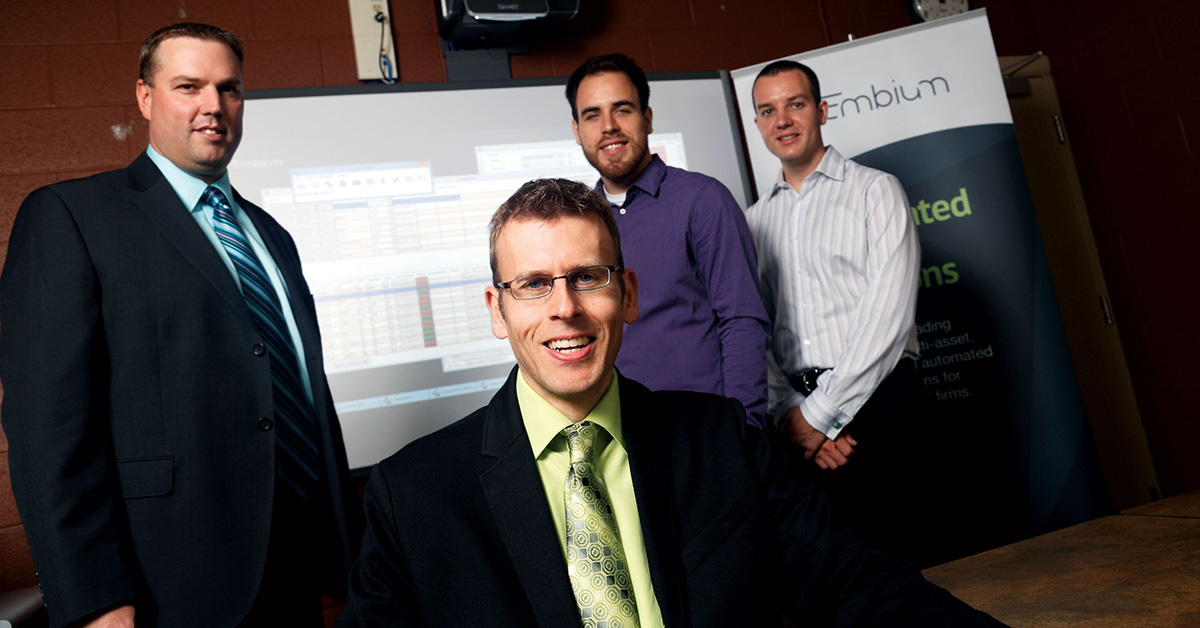
An Ontario company specializing in automated technology for financial trading is working with Fanshawe College and Western University students to give their products a competitive edge in the financial trading sector.

The research project hopes to improve Embium’s real-time trading cloud computing infrastructure.

Embium was founded in London in 2008 as Cyborg Trading Systems. It specializes in developing automated trading technology for global financial firms, including hedge funds, brokers, banks, exchanges, and professional traders. In addition to its London presence, the company has offices in Waterloo and Toronto and headquarters in New York City.

According to Jason Lukez, vice-president of finance with Embium, the algorithm under development will be ready for commercialization early next year. He says it is crucial that new global market technologies are tested and re-tested prior to release, and the work of Fanshawe students has been an essential component of the firm’s technology development and deployment process.

Embium is the only Canadian provider of a complete trading solution that enables the rapid development, testing and global execution of sophisticated proprietary strategies.

“Timing of producing the product is critical,” says Lukez. “Having collaborative partners to keep the progress moving is so important given the competitive market, especially since we are contending with large global firms. Fanshawe has been a strong partner.”

This initiative has led to full-time jobs and raised the profile of Fanshawe’s Computer Programmer Analyst program as it continues to produce high calibre students to fill many knowledge-based jobs in southern Ontario. Six students from Fanshawe College have been hired full-time at Embium, with three more currently on work placement.

Funded by: College-University Idea to Innovation (CU-I2I) Grant

About Fanshawe College of Applied Arts and Technology

Fanshawe College is one of the largest colleges in Ontario, with campuses located in London, Simcoe, St. Thomas, and Woodstock. The institution offers more than... Learn more

An Android App for Better Energy Use

Lambton College has partnered with global startup Liricco Technologies Ltd. to develop a new android application that can help users save energy.

Liricco’s Valta line energy product is a remote energy management system that can detect standby power, identify waste, and notify users to help them save energy. Currently, only iOS-based smartphone control applications exist for this green-energy technology.

This was a ground-breaking project for Lambton College. The students applied the college’s android development expertise to a project straight out of the energy management industry. Faculty from the Information Technology programs who conducted the research were able to increase their knowledge and skills by troubleshooting in the development stages.

With the developed product, Liricco was able to show off side-by-side functional apps for iOS & Android at Germany and Hong Kong tech trade shows, attracting more investors, and increasing their potential customer base 400%.

“Liricco has benefited greatly by partnering on the development of our android app that we have now commercialized. We are currently looking into a second phase of this project that we are excited to partner with Lambton College with once again,” says Jeff Lin, Executive Director of Liricco Technologies.

Funded by: Applied Research and Development (ARD) Grant

About Lambton College

As a post-secondary leader in education, training and research, Lambton College has experienced tremendous growth in recent years. In addition to a significant rise in... Learn more

Enhancing Sales Efficiency with Mobile Computing

Sales representatives in many companies rely on simple note-taking and observation in the field. However, advances in mobile computing and highspeed networks provide significant opportunities to improve sales efficiency.

Being in touch through mobile devices can help sales reps be more productive while on the job, share updates with other reps more effectively, and enhance their client relationships.

Through an applied research project at Sheridan College, three students designed and developed a fully-functional iPad prototype for Encore Market Engagement.

The iOS prototype developed was complex and involved a great deal of research. Students developed a variety of technical skills that improved their employment readiness, and all of the students found high-quality co-op work term positions immediately after completing the project. Encore Market Engagement is interested in further developing the project with Sheridan.

The benefits to the partner included a technology solution that increased sales force efficiency by streamlining processes, and increased profit margins by maximizing their return on investment. The benefits to the research discipline included new knowledge and expertise that can be disseminated and transferred to Canadian companies locally, provincially, and nationally.

“As this was our first experience with an ARD, we were pleasantly surprised by the interaction with Sheridan, its staff and students. All parties were professional, engaged, capable, and committed to making this initiative as productive and successful as possible,” says Brian Vanstone, a partner at Encore Market Engagement. “We look forward to the opportunity to potentially work together again on additional research projects.”

About Sheridan College

Sheridan College is one of Canada’s leading postsecondary institutions, serving over 23,000 full time students at four campuses in the western Greater Toronto Area. We... Learn more

Creating an Eternal Journey

Over the past 40 years, the video game industry has grown from relative obscurity to a multibillion dollar global business.

Green Pixel is a small Ontario start-up located in London that was working on the development of a new role-playing adventure video game. Their web and mobile games, including Pocolypse, had already attracted thousands of players, and fans were ready for a new offering from the company.

Green Pixel engaged Humber’s Game Programming expertise to help develop Eternal Journey, their newest video game. The program coordinator for the Game Programming Advanced Diploma worked with Green Pixel project manager Fredd Eyles and game programming students to develop the online game. The Eternal Journey project provided an opportunity for students to apply class-based learning to help an industry partner in the development cycle of the game from prototype, through alpha and beta testing, to the game’s release.

“We can’t thank Humber Research enough for how much it helped and opened our eyes to the possibilities that research, Humber, and students can do for such a small studio,” said Fredd Eyles.

By providing a new and unique experience for their gaming consumers, Green Pixel have expanded their product line and positioned themselves as leaders in the mobile applications and interactive digital media markets. The game has been launched, and is now available here.

Partner(s): Green Pixel

About Humber Polytechnic

Humber Polytechnic is one of Canada’s leading postsecondary institutions, combining deep theoretical learning with applied, hands-on experience. Humber offers a wide variety of credentials including... Learn more

3D Modeling in the Cloud

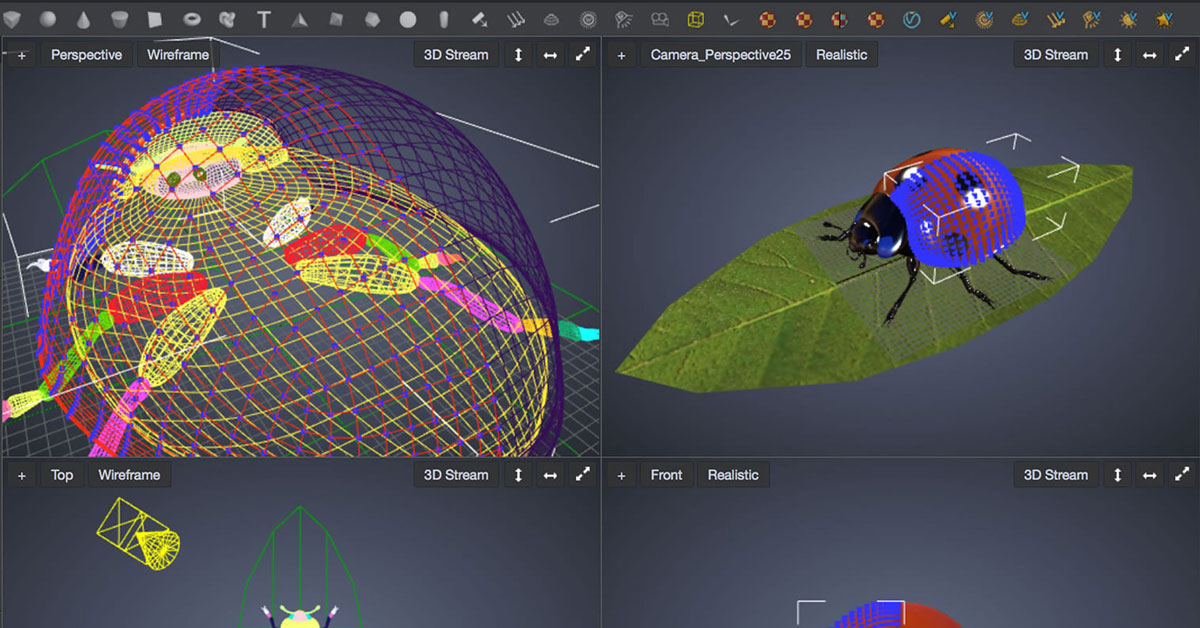
Creators of 3D digital graphics have a new cloud-based software option thanks to an applied research project undertaken by Seneca College researchers in partnership with Ottawa tech company Exocortex Technologies.

Seneca’s Centre for Development of Open Technology (CDOT) worked closely with Exocortex to produce Clara.io, a high-quality online 3D modeling, animation, and rendering software. Clara.io was built with many open source technologies, including three.js, a popular JavaScript library for 3D web development. As is the pattern in the field of web development, Exocortex has lent their experience in 3D graphics to enhancing the three.js library.

The development of Clara.io built on Seneca’s extensive work using WebGL, a JavaScript API for hardware accelerated 3D graphics. Clara.io significantly reduces cost barriers for 3D digital creators while offering performance comparable to traditional workstation-based 3D applications. It requires no installation and is entirely cloud-based with no need to install plug-ins. The tool is accessible to users with modest hardware set-up because the rendering engine and project assets are cloud-based.

Clara.io now has more than 94,000 registered creators with average editing sessions of over 70 minutes, a 100% increase in less than eight months. A large gallery of user-generated 3D models is already available. In the near future, Clara.io will open source a component of their software so that users can also enhance the tool.

“We are creating many, many jobs for highly skilled computer scientists, marketing and business people… revolutionizing the creation of digital media right here in Ontario.” says Ben Houston, CEO of Exocortex.

Funded by: Innovation Enhancement (IE) Grant

About Seneca Polytechnic

Seneca Polytechnic provides a great education to prepare our students for great careers. Combining academic rigour with practical, professional and career-focused learning, we offer our... Learn more

3D Configuration Helps Sell Products

Real-time rendering on the web is still a relatively new technology. But it holds great potential for helping customers visualize products they are planning to buy.

Enterprise Resource Planning (ERP) software firm Seradex engaged a research team of applied computing students working with Sheridan’s Screen Industries Research and Training Centre (SIRT) to help incorporate 3D visualization and configuration into its website. Sheridan students and faculty worked to take the product and service to a later stage of commercialization.

By integrating a 3D application developed with the support of Sheridan researchers into its customer website, the software firm will be on the leading edge of innovation in its field, using product configuration and visualization to provide accurate quotes, improve job costing, and streamline processes.

This project will allow Seradex to meet the visualization needs of client companies in a variety of sectors more effectively, using the results to provide better information to internal staff such as engineers and sales people, as well as dealers and customers. This software is applicable in a number of sectors served by Seradex including cabinetry, metal fabrication medical supplies, and capital equipment. It will help increase sales as companies are able to recommend solutions more rapidly and to configure and visualize complex products on a computer screen.

Mark Corker, President of Seradex Web Services, says, “The collaboration with Sheridan through this NSERC/OCE project resulted in a key 3D revisualization prototype that will significantly enhance our software and our customers’ experience. The work of these talented students will result in brand new commercialization possibilities for Seradex.”

Sheridan was able to provide the students with collaborative opportunities with the industry partner, maximizing the engagement of the students, faculty and staff at SIRT throughout the applied research process. Seradex has asked about hiring the students involved in the project once they have graduated.

Funded by: Applied Research and Development (ARD) Grant

About Sheridan College

Sheridan College is one of Canada’s leading postsecondary institutions, serving over 23,000 full time students at four campuses in the western Greater Toronto Area. We... Learn more

Improving BigBlueButton Online Learning

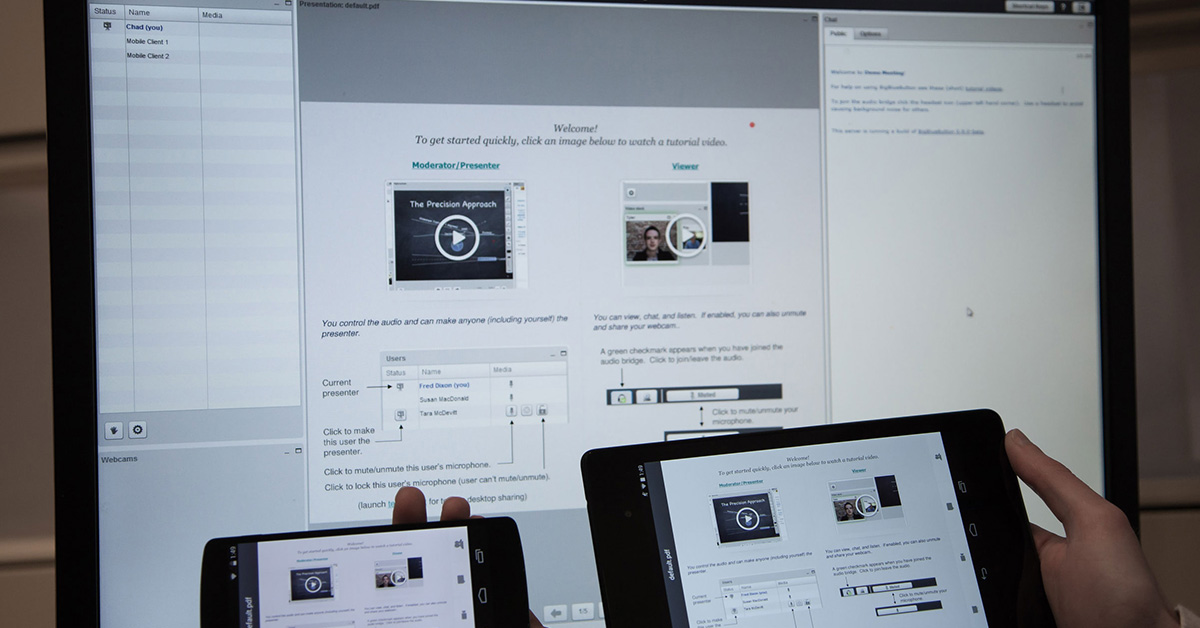
Seneca’s open technology developers, working in collaboration with Blindside Networks, have made significant contributions to the development of the BigBlueButton platform for distance education.

Blindside Networks is an Ottawa-based company dedicated to helping universities, colleges and commercial companies deliver high-quality learning experiences to remote students. They do this by providing commercial support and hosting for BigBlueButton, an open source web conferencing system for on-line learning.

“The mission of BigBlueButton is to ensure every student with a web browser has access to a high-quality on-line learning experience,” says Fred Dixon, CEO of Blindside Networks. “BigBlueButton is an open source project that has localizations in over 15 languages. The contributions from Seneca College are helping make this goal a reality for students world-wide.”

Using new technologies such as WebRTC, there are now HTML5 and mobile versions in development. In spite of the challenges working with technologies lacking established protocols, BigBlueButton is becoming an innovative and world-class platform for on-line learning that will allow users to join lectures and conferences through their smartphone or mobile tablets. The web conferencing system is already being used by over 50 organizations around the world in Canada, the U.S., Brazil, Germany, Australia, and the U.K.

Partner(s): Blindside Networks

About Seneca Polytechnic

Seneca Polytechnic provides a great education to prepare our students for great careers. Combining academic rigour with practical, professional and career-focused learning, we offer our... Learn more
Open Source Technology for Emerging Platforms

The digital economy has transformed almost every area of human endeavour, from transportation to politics to dating. Since vast areas of our planet do not yet have reliable Internet access and new services are being developed every day, technology developers foresee a continuing expansion of the digital economy. However, this expansion will come at a cost.

The data centres that power the digital world consume thousands of hectares of land and over 300 gigawatts of electricity, the energy equivalent of 300 nuclear reactors. The solution to this problem lies in increased data centre density and power efficiency.

Hyperscale computers that will provide this density and efficiency are nearing commercial readiness. However, the transition to hyperscale systems is not a straightforward replacement of current hardware. The complexity of hyperscale systems demands changes in software, system deployment, network management, and security.

The main focus of the Open Source Technology for Emerging Platforms (OSTEP) program, funded by Seneca’s Industrial Research Chair for Colleges grant, is adapting, expanding, and transforming the open source software which underlies the digital economy to prepare for emerging hardware platforms.

Initial research was focused on adapting core open source software to run on ARM-based systems. Collaborating closely with Red Hat, a multinational open source software company, and with open source software developers, the program operated a network of more than 60 prototype ARM computers to build two new versions of the Fedora Linux operating system, a collection of 20,000 interdependent software packages. The ARM version of Fedora was developed successfully to the point where it had parity with the existing PC-compatible version of Fedora, and was made part of the standard Fedora software offering.

A Fedora re-mix optimized for Raspberry Pi computers (called Pidora) was also developed. It includes almost all of the software in Fedora, plus tools and software libraries specific to the Raspberry Pi.

Harish Pillay, Global Head of Community Architecture and Leadership at Red Hat, says, “Working with Seneca has helped drive and define a new set of capabilities in the Fedora space around the ARM CPU specifically the Raspberry Pi. This will greatly enhance the education reach of the Raspberry Pi and the knock-on impact of it will be the influences in the ARM CPU space for servers.”

Current research efforts focus on building an enterprise-grade version of the Linux operating system that will work on the new ARM hardware.

Other areas of research includes collaboration with NexJ Systems on large-scale automated testing, deployment, and monitoring systems to streamline software deployment cycle, and a project with BRAKERS Early Warning Systems to build a system which enables emergency responders to directly broadcast a warning message to vehicles nearby, using a combination of an emergency-vehicle control unit, an Internet-server-based distribution system, and a smartphone app.

About Seneca Polytechnic

Seneca Polytechnic provides a great education to prepare our students for great careers. Combining academic rigour with practical, professional and career-focused learning, we offer our... Learn more