

Designing Mobile Software Systems That Help Cities and Residents Address Life-Critical Needs

Trying to get important information through your phone is tough enough — it’s even more awkward when it’s crammed onto your screen, because the web app has been inadequately downsized from a design for full-sized computers. But until recently that’s been the practice — design for desktops, then adapt. “Mobile first” technology flips that approach, intentionally designing for mobile devices.

Since 2013, New Brunswick Community College has been home to the inaugural Industrial Research Chair in Mobile-First Technology, held by Dr. William McIver Jr.  Funded by the Natural Sciences and Engineering Research Council, with matching funds from industry, the Mobile First Technology Initiative focuses on the unique technical and design issues of mobiles.

These two projects, funded by the National Research Council, were done in partnership with the City of Fredericton and local companies. In one, the Chair developed a software system for Kognitiv Spark, a company that develops apps for Microsoft HoloLens, mixing reality and geographic data. This project will streamline inspections of public infrastructure, by letting inspectors locate fire hydrants then visualize their status and maintenance history in the field. It uses a geospatial database system developed to support data management.

In the other project, the Chair worked with ReadyPass, the creator of a mobile app by the same name for public transit riders. The system that was developed gives both passengers and bus drivers real-time bus location and schedule information via web apps and services.

The Research Chair is also developing follow-on research projects with both companies and expects to collaborate with them again.

Funded by: Contributions to Organizations Agreement, Industrial Research Assistance Program (IRAP), National Research Council Canada

About New Brunswick Community College

With over 90 regular programs and six campuses across New Brunswick, New Brunswick Community College (NBCC) is a collaborative, learner-centred college – creatively contributing to... Learn more

Making Canada’s Summer sport safer for kids

After 10 years playing for the Calgary Stampeders in the Canadian Football League, Jeff Pilon knows about contact sports. So, when he witnessed some of the hits being taken by his son and his teammates on the community lacrosse team, he felt he had to do something.

Kids playing lacrosse are at risk of neck injury because most have not developed the coordination to cross check safely. Jeff decided to make a neck guard that would protect young players and allow them to participate more safely in this fast-growing contact sport.

Armed with a home-made model, Jeff approached Red Deer College’s Centre for Innovation in Manufacturing to identify problems and create design solutions for his neck guard. A couple of designs later, Jeff had a working proof-of-concept prototype, named Shell Shock, ready for field testing.

“Lacrosse is Canada’s summer sport,” Jeff says. “I want kids to be able to play it, be physically active, and their parents not worry about serious injury. Shell Shock will really help to build the sport.”

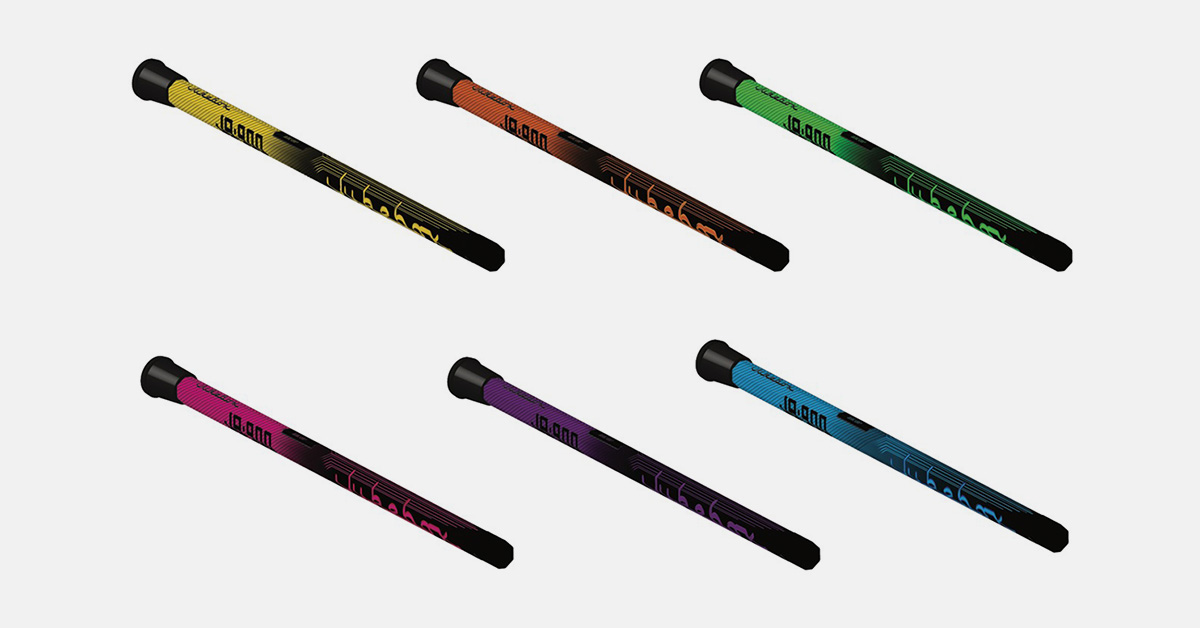
Since designing Shell Shock, Jeff has opened his own company, Jukebox and partnered with Philippe Jeanneau, an experienced sports equipment designer, to develop a full line of equipment for lacrosse, including gloves and shafts. Every contact sport has potential areas of risk for injury and players’ needs are very specific — hockey gloves will not work in lacrosse, for example. Jeff wants to provide sport-specific protection so lacrosse can continue to grow.

Partner(s): Jukebox
Funded by: Industrial Research Assistance Program (IRAP), National Research Council Canada

About Red Deer Polytechnic

Red Deer Polytechnic is central Alberta’s largest post-secondary institution, serving more than 10,000 credit, non-credit and apprenticeship students. Since becoming a polytechnic institute in 2021,... Learn more

A Small Solution for a Big Cleaning Problem

Planes today that seat as many as 200 passengers have just two to four lavatories, which means they can get pretty dirty, pretty fast. But fuel-conscious airlines sharply restrict the weight, size and balance of equipment carried on board, and lavatories and galleys on planes are small. Regular cleaning tools just don’t fit.

When Vaughan Payne, president of Calgary-based Dakota Supplies, watched flight attendants cleaning airplane lavatories with nothing more than spray bottles and paper towels, he was sure there must be a better, more sanitary way. So, Payne and his partner Deborah Humphries got to work on what would become Moppitt™, an all-in-one inflight cleaning system.

In 2015, they brought their idea to Red Deer College’s Centre for Innovation in Manufacturing and worked with its expert product designers and fabricators to create a prototype for product trials.

Just over one year later, Dakota Supplies had partnered with Celeste Industries Corporation, global leader in cleaning products for the airline industry, to distribute Moppitt™ worldwide. It promises to revolutionize how aircrafts are cleaned.

Essentially an expandable mini-mop, Moppitt™ can be a hand-tool for cleaning counters, tray tables or around toilets, or its hidden handle can expand to allow floor spills to be mopped up. A new cleaning cartridge, filled with biodegradable cleaning fluid and a small mop head, clicks into place for each job. But its biggest selling point is its size: retracted, it tucks easily into an overhead bin or a small cupboard.

Moppitt™ offers many benefits: a cleaner, healthier environment for airlines’ customers and staff and reduced turn-around time because planes can be kept cleaner during flights. Airlines may even spend less on outsourced cleaning services.

Industry: Manufacturing
Funded by: Alberta Innovates, Industrial Research Assistance Program (IRAP), National Research Council Canada

About Red Deer Polytechnic

Red Deer Polytechnic is central Alberta’s largest post-secondary institution, serving more than 10,000 credit, non-credit and apprenticeship students. Since becoming a polytechnic institute in 2021,... Learn more