What’s on my Mind? With Pari Johnston.
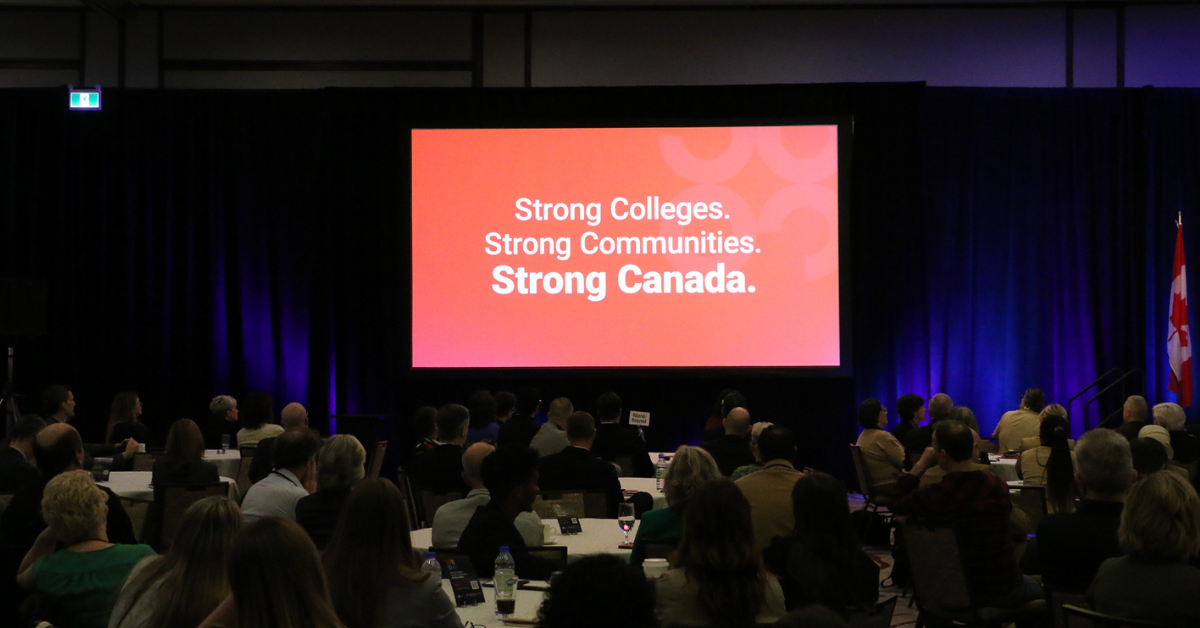
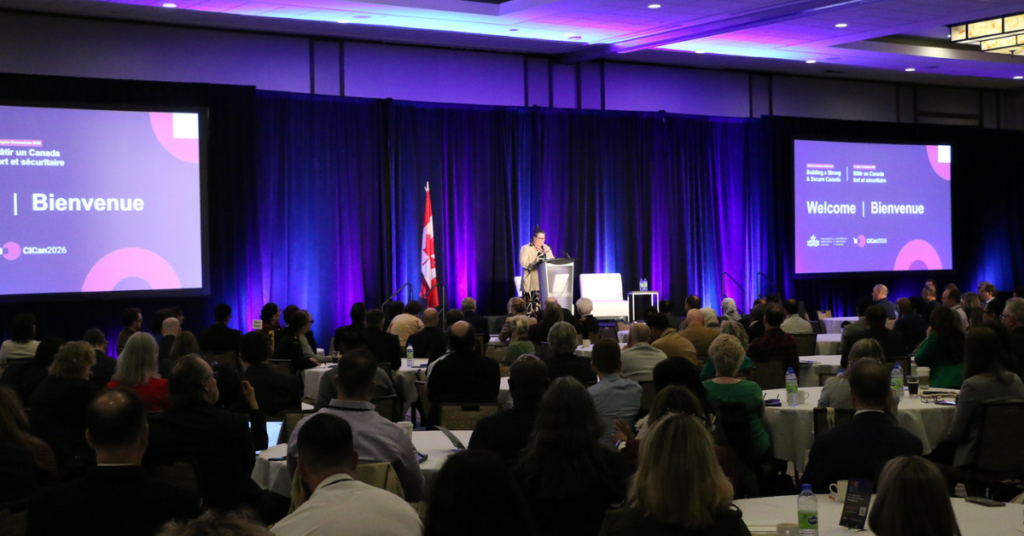
There is no more important time to convene and connect with intent. Last month in Ottawa, we did just that.
At a time of uncertainty, transformation, and disruption, over 500 leaders from Canada’s public colleges, institutes, CEGEPs, polytechnics, and Indigenous Institutes of Education came together with a clear message: For our country and for our communities, the path forward runs through our sector.
I’m incredibly proud that CICan’s national Connections Conference can be this pivotal convening space – exactly when it matters most. And I’m inspired by the ideas shared, the seeds planted, and the connections sparked among our community and with our partners that will spur greater alignment and action to fully centre our institutions in their roles as nation-builders.
As Canada’s Minister of Foreign Affairs, Anita Anand, put it so powerfully during her closing keynote, “Canada is home to world-class colleges and institutes and they’re critical to our mission of building Canada Strong.”
The Connections Conference is an unmistakable sign that we are ready.
My Key Takeaways:
From General Jennie Carignan, Canada’s Chief of the Defence Staff, I heard a renewed vision for a people strategy for defence readiness – more agile, more responsive, supported by a new strategic reserve and modernized procurement models that will enable partnerships at scale, powered by college and institute expertise in both training and research.
- She reminded us that this is not only about training capacity; it is also about innovation – and through initiatives such as CICan’s College Defence Training & Innovation Network, our sector is well positioned to contribute both the talent pipeline and the dual-use research capacity required for national readiness.
From Natan Obed, President of Inuit Tapiriit Kanatami, I’ll remember his quiet passion and powerful perspective on Canada’s future in the North, grounded in Inuit leadership, place, and self-determination.
- He reminded us that Arctic sovereignty, economic development, and national security are inseparable from the strength of Inuit communities and urged postsecondary institutions to work in true partnership with Inuit Peoples, supporting skills development across Inuit Nunangat and lifting up visionary initiatives such as the new Inuit Nunangat University, anticipated to launch in 2030.
From DeRionne Pollard, President of the American Association of Community Colleges, and Luis Armando González Placencia, Executive Director of the Mexican Association of Universities and Institutes of Higher Education (ANUIES) – who joined me for a North American postsecondary leaders’ fireside chat – I’ll remember that, across borders, institutions are facing similar disruptive pressures and that we must be loud and proud about the relevance, mission and impact of our sector.
As the incomparable Dr. Pollard put it, colleges and institutes are not peripheral to national prosperity – they are central to it.
From Canada’s Minister of Jobs and Families, Patty Hajdu, who moderated a National Missions Roundtable with labour economists, business and college leaders, I’m applauding the message that incremental change is no longer enough – we need coordinated, system-level action where all partners share responsibility and urgency to build the trained workforce who will Build Canada.
- On that note, the government delivered in spades in the Spring Economic Update, answering our call of “who will build the national projects and missions” with generational investments in the skilled trades and end-to-end pathways to support their careers. Read Our Statement.
From Canada’s Minister of Foreign Affairs, Anita Anand, I’ll remember her vocal support for the strength of Canada’s college and institute system as a powerful tool for strategic global engagement. It is also a recognized model for workforce development and applied innovation, sought by countries like India looking to strengthen their vocational training systems and improve graduate employability outcomes.
- Through CICan-led initiatives such as the new Canada–India Talent and Innovation Strategy, we can strengthen training systems, build sector-specific talent pipelines, support trade diversification and boost exports, and build long-term economic resilience.
At the heart of it all? Our extremely talented students and graduates. The panel featuring our 2025 and 2026 Awards of Excellence student winners brought it all powerfully home.
- Generous and open in sharing their aspirations, experiences and challenges, each one spoke about the importance of a college experience that centres true connection, authentic engagement, and meaningful learning and life opportunities.
And across more than 45 sessions led by 138 CICan member, industry, defense, Indigenous, and community partners, I’m marking a collective shift in mindset. We are no longer asking where colleges and institutes fit into Canada’s future, we are right there helping to define it.
This is about putting into practice and scaling the community and nation-building work happening every day in our institutions.
A Roadmap to Greater Impact
Across sectors and borders, we heard a consistent call to strengthen coordination, to deepen partnerships, and to respond with urgency to shared economic, social, and security challenges.
This is where our new Roadmap to 2030 comes into full focus. It is a commitment for CICan to be a beacon and a bridge, to lead through disruption, to align culture with ambition, and to evolve with intent.
To take what we learned and discussed at the Connections Conference and use it to design a more impactful future.
Our Roadmap is not a dry document; it is a transformation agenda designed and owned by all of us to empower the sector to continue delivering results for Canada, and for Canadians, in an increasingly complex, volatile, and rapidly changing world.
What Comes Next
I’m excited by the opportunities that will drive this next chapter:
- Our brand new CICan Academy for College Leadership – renewed, elevated, high-impact leadership development for Canada’s public college and institute sector, supporting institutional renewal, mentorship, and succession planning at every stage of a postsecondary leader’s career.
- CICan’s renewed Indigenous Education Protocol – a reaffirmation of how we show up in relationship with First Nations, Inuit, and Métis partners, grounding our work in respect, reciprocity, and responsibility, and ensuring reconciliation is embedded in everything we do.
- And continued convening momentum through our 2026 National Indigenous Education Symposium – October 18 – 20, in Richmond, British Columbia, in partnership with the Indigenous Institutes Consortium, and Leaders Summit 2027 – April 7 – 9, in Ottawa, Ontario.
More Ahead
As I continue to reflect on what was shared and what I heard through the Conference, and in the context of Tuesday’s game changing Spring Economic Update, I’m convinced that we have never been more relevant.
We are here to roll up our sleeves and get to work. In other words, to build a strong and resilient Canada.
The work ahead will require focus, coordination, resolve, resilience, and courage.
But we are ready – and we will tackle it together.