
February 26, 2026

Colleges and Institutes Are Strategic Partners in Canada’s Defence Future

Canadians are adapting to a new world order and making real-time decisions for the future of our country based on middle power alignment, interests-based global trading relationships, sovereign defence capabilities and a strong domestic economy. Being ready and able to defend our territory, our people, and our values is more important than ever.

A Defining Moment for a Generation

This is a moment to make generational efforts to strengthen both economic resilience and national security. Our 130 members – Canada’s public colleges, institutes, CEGEPs, polytechnics, and Indigenous Institutes of Education – are trusted institutions that have always responded with resolve in Canada’s moments of crisis. Now, we are strategic partners in Canada’s defence future.

A Bold New Direction

The federal government, last week, shared a bold new direction for a comprehensive Defence Industrial Strategy (DIS), building on a foundation that contributes over $9.6 billion in GDP and over 80,000 jobs to the Canadian economy.

Among the key priorities:

  • A new Canada-first defence procurement plan that will prioritize building, buying, and making things in Canada to benefit domestic industry, ensure sovereignty, and position the defence sector as an engine for growth, innovation, and long-term national resilience;
  • A new Canadian Defence Skills Agenda that will leverage collaboration with the provinces and territories to prioritize defence-related skills upgrading, improve interprovincial labour mobility, expand apprenticeships, and strengthen regional defence workforce pipelines;
  • Boosting government investment and modernizing Industrial and Technological Benefits to support a comprehensive approach to defence-related research and development – from fundamental research, through applied R&D, to the demonstration of technologies in the field.

In particular, the ambitious strategy names our sector as key partners in two areas – as leaders in defence innovations and in STEM and skilled trades training and partnerships supporting the Canadian Armed Forces to strengthen regional defence workforce pipelines.

It’s clear the path to DIS success runs through our sector.

Training and Innovation to Drive Transformation

Colleges build talent, train workers, and power jobs through recognized military training, military-connected campuses, and high-quality industry-aligned education, training, and upskilling to support defence-related manufacturing and supply chain resilience.

And, our members are leaders in impact-oriented and place-based innovation. As the Defence Industrial Strategy looks to expand defence-related research and the adoption and deployment of dual-use technologies in aerospace, ship and submarine building, artificial intelligence and quantum technologies, specialized manufacturing, and uncrewed and autonomous systems, our sector is a key partner in delivery and will be around the table on the new Science and Research Defence Advisory Council.

  • For example, SAIT’s Centre for Innovation and Research in Unmanned Systems (CIRUS) is home to Canada’s first remotely piloted aviation training centre;
  • The Aerospace Technology Centre at the Cégep Édouard-Montpetit supports aerospace companies in the development, validation and optimization of practical technological solutions – from concept to industrialization, while helping to reduce risks;
  • Innovation Maritime at the Cégep de Rimouski contributes to a strong maritime sector with particular emphasis on Acoustics & Vibrations, Marine Design & Engineering, and Maritime Intelligence; and,
  • Our sector is home to four NATO’s Defence Innovation Accelerator for the North Atlantic (DIANA) test centres and accelerators designed to foster dual-use, deep-tech innovation.

Canada’s defence investments are a call to action, and our pan-Canadian network of colleges, institutes, CEGEPs and polytechnics are the key partners needed to drive the transformation – to rebuild, rearm, and reinvest in the Canadian Armed Forces and advance the goals of the new defence industrial strategy.

On the Blog: Read Defence Strength Built on People and Innovation.

A Strategic Asset

In this Strategy, the federal government will need partners – and our pan-Canadian network of public colleges and institutes is a coordinated national asset to be leveraged.

Our College Defense Training and Innovation Network – with nearly 60 participating institutions from coast to coast and in the North – builds on that strength and positions colleges to develop scalable and targeted solutions to meet Canada’s defence needs through coordinated action tables that map readiness and strategic alignment.

Through these two new action tables, the network will set to work to modernize training models, align curriculum and micro-credentials, and create clear pathways for military-connected learners, advance Military-Connected Campus models, and deepen engagement with CAF and DND partners.

Defence for a Prosperous Future

A strong Canadian defence industry and a secure and prosperous Canada go hand in hand.

What fuels our economy – skilled Canadian workers and talent, strong home-grown businesses, and a dynamic national research and innovation ecosystem – must also be put to use to defend our values and sovereignty.

We are ready to work together with governments, the Canadian military, industry, and other training and research partners to deliver on this imperative national mission.

January 28, 2026

A Strong and Sovereign Canada Needs Strong Colleges

What’s On My Mind? With Pari Johnston.

Members of Parliament are now back in the House of Commons following a six-week holiday break – focused on delivering on the promise of November’s federal Budget investments in nation-building missions for housing, major infrastructure, and defence.

But if Prime Minister Carney’s powerful speech at the World Economic Forum in Davos last week was any indication, this Parliamentary session will not be a return to normal.

The Prime Minister evoked a new world order, a rupture (not a transition), and real-time decision making for the future of our country – based on a clear vision of middle power alignment, interest-based global trading relationships, sovereign defence capabilities and a strong domestic economy.

At the same time in communities across the country, Canadians are anxious about their jobs, their homes, their groceries, their children’s future and their elders’ care.

Our job – as trusted place-based institutions that have always responded with resolve in Canada’s moments of crisis and need – is to anchor the Prime Minister’s clarion call for national missions of growth, sovereignty, and unity in what our sector does best in communities across this country, every single day: provide real opportunity, deliver tangible results, partner by default and ultimately inspire hope in the future for Canadian learners, graduates and employers.

Workforce Solutions at Pace and Scale

The government has placed a big bet on the nation-building ambition of the Projects of National Interest (PONIs). The new Major Projects Office will accelerate permitting, regulatory approvals, and financing for the PONIs, but the “people strategy” to deliver them is not in the MPO mandate. The stark reality is that these big projects will not get off the ground without a skilled and ready workforce and an aligned talent pipeline.

Delivering on the promise of the PONIs isn’t just a numbers game – it’s about addressing structural gaps in Canada’s talent plan.

That’s where we come in. Colleges and institutes are not just responsive training providers, but serve as regional hubs for workforce coordination, support learner success and completion, and actively engage employers in industry-aligned training pathways.

Look at what Northern Lights College in Dawson Creek, B.C. built with Tourmaline Oil, Canada’s largest natural gas producer – co-creating and delivering just-in-time field operator training to address major labour gaps in the industry and prepare graduates for guaranteed employment in B.C and Canada. This approach is replicable and scalable across partners and industries.

As Members of Parliament come back to the House of Commons, our focus is on working with the federal government to move beyond fragmented, narrow programs to establish targeted system-level investments that improve training capacity and workforce mobility, including apprenticeship pathways – to prime the PONI people pipeline and spur large-scale private sector investment which counts on a steady talent supply.

  • Remember that Canada’s public colleges and institutes train roughly 70% of apprentices nation-wide, and they are often the only trainers offering both pre-apprenticeship and apprentice training in many communities, especially in rural and remote regions. These same regions will be ground zero for many of the major projects.

We’re looking forward to strategic conversations – and bringing ideas to the table – on how our sector can partner with governments, industry and labour to build innovative curricular models at pace and scale and modernize Canada’s apprenticeship system by accelerating and improving completion rates – the elements that support the availability, mobility, and adaptability of Canada’s skilled people.

Our Defence Readiness Mission

The world is quickly becoming more fractured than ever, and Canada’s national security is a live concern for our government and for Canadians. Budget 2025 invested $81.8 billion over 5 years, which includes the goal of attracting 13,000 new regular and primary reserve members to the Canadian Armed Forces. Canada has also committed to reach NATO’s 5% spending target by 2035.

In addition, a hotly anticipated Defense Industry Strategy is intended to fortify Canada’s sovereign capabilities by boosting home-grown innovation and manufacturing, securing supply chains, improving access to capital for Canadian SMEs, and developing dual-purpose technologies.

Our network is a strategic asset. Canada’s public colleges and institutes have proven expertise in skills training and applied innovation to address critical defence workforce, personnel, and technology gaps – both military and civilian.

As I learned on the Canadian Leaders at Sea program in December, the Royal Canadian Navy alone is short 2,000 sailors and 1,000 new maritime technicians right now.

Our focus now is on national coordination to meet these goals – expanding strong local and regional relationships between defence leaders and our sector to enable greater impact. CICan’s College Defense Training and Innovation Network – now 60 members strong – will lead the way. For example, four CICan members are currently hosts of NATO’s DIANA test centres with expertise in robotics, cybersecurity, drones, secure communications, and more.

To realistically meet Canada’s NATO target and deliver on the ambition of new investments in people and equipment, Canada’s defence ecosystem must include this pan-Canadian network as ready, willing, and essential delivery partners.

  • In this Parliamentary session, I’m looking forward to continuing fruitful discussions with the Department of National Defence, Innovation, Science and Economic Development Canada, the Canadian Armed Forces, and Veterans Affairs Canada on how to deliver national training, workforce and innovation solutions at pace and scale.

From Ambition to Action

We have a high-stakes year ahead of us as Parliament resumes and Canadians look to turn this moment of global crisis into national solutions. Inspired by my prairie roots, I’m convinced the moment requires grit, a can-do mindset, and strong, coordinated, and intentional partnerships.

As Prime Minister Carney underlined in Davos, Canada has what the world wants – capital, talent, resources, strong values, opportunity, and a clear vision for our future.

  • With the right investments, our colleges, institutes, CEGEPs, polytechnics, and Indigenous Institutes of Education can be ready to align ambition to impact – to work together and with industry, labour and governments in new and bold ways – and deliver results to get us there.

On behalf of CICan and our members, I look forward to working with the federal government this session to ensure a strong and sovereign Canada is built in partnership with the full strength of its public post-secondary network from coast to coast to coast.

December 16, 2025

This Year’s Actionable Insights

What’s On My Mind? With Pari Johnston.

When Canada and its communities need solutions, colleges and institutes show up – this year was no different. As I mark the end of my second year at CICan, I’m reflecting on how we rose as a sector to meet the moment.

Consider these actionable insights to continue driving our country forward:

1. Be Purposeful

In once-in-a-generation times of national consequence like these, Canada needs our institutions more than ever. We are the key partners in getting things done at pace and scale.

This year, we showed that when we come together to think and act strategically about workforce solutions, coordinate in real time across the sector on program design, and leverage our industry and community partnerships to scale impact, Canada wins.

Impact Follows Purpose

We came together with purpose at CICan’s inaugural Leaders Summit this April to drive bold action for Canada – bringing together the right people at the right time to ask the right questions about where Canada’s challenges, a new government’s priorities, and the big opportunities in postsecondary education take shape.

Next Year: Building a Strong and Secure Canada

Where bold ambition and sector transformation intersect, CICan’s 2026 Connections Conference will turn ideas into actions that align the best of what our sector has to offer with Canada’s most pressing national priorities. We are driving the future of postsecondary education in the direction our country and communities need us to go.

2. Be the Institutions Canada – and its Communities – Need

Through unprecedented challenges this past year, we showed resolve and resilience as a sector and as a country. Canadians held firm in the face of tariffs, transformed industries, and built new trading partnerships – and as a sector, we showed that when we double down on what we do best, our communities come out on top.

Our institutions launched new programs to train the skilled workers who will meet Canada’s AI adoption imperative, retool domestic manufacturing, build more homes better and faster, take care of more patients and aging family members, and support Canada’s energy production and transition – all while ensuring that we remain the most accessible postsecondary institutions in the country.

This resolve to be a beacon of opportunity for our learners and our communities is happening at a time when college leaders face unprecedented operating and financial challenges.

Our college graduates are the builders, makers, and doers Canadians need most. We need to invest in a sustainable public training system for their future and for Canada’s.

Coordination Maximizes Impact

We mobilized this year to form CICan’s College Defence Training and Innovation Network – a pan-Canadian coalition of colleges, institutes, CEGEPs, and polytechnics leading sector action to provide training and research solutions at scale to make real the government’s historic investments in military and defence readiness.

3. Think Place-Based

Ninety-five percent of Canadians live within 50 km of a Canadian college or institute – in every corner of the country, they are anchor institutions for learners, communities, and businesses in times of precarity.

This year, in problem-driven, people-oriented, place-based innovation, we showed that the breadth and reach of our network is a vital Canadian asset.

Innovation Canada Needs

College-led research and innovation bring partners together to develop the economic and social solutions Canada needs most – like building homes better and faster, strengthening our sovereign defence capabilities, boosting energy production and transition, and getting major national projects done.

Colleges lead over 8,500 applied research projects that help businesses – primarily small and medium-sized Canadian enterprises – transform their operations to be more productive and competitive. This translates into nearly 9,000 new products, prototypes, processes, and services that deliver downstream impact that benefits the local economy, that generate and keep wealth at home, and that build strong and prosperous communities.

4. Turn Intentions to Action

As the most accessible postsecondary institutions, we have so much to learn and gain from Indigenous-led approaches to benefit learners, communities, and the entire college system. By working authentically with Indigenous partners, we can turn intention into action to advance greater economic reconciliation.

Meaningful Reconciliation through Action

Together with three of our leading Indigenous Institutes of Education, we launched Mamawi, CICan’s first Indigenous-led national initiative. This is a tremendous opportunity to work together with Indigenous learners and communities and CICan members to benefit all Canadians and to explore building business and entrepreneurship training with a new lens – grounded in Indigenous ways of knowing and being.

5. Meet the Moment

Canadians asked for change – and Prime Minister Carney presented a plan to build boldly with strategy and ambition by catalyzing private sector investment and infrastructure, helping businesses harness AI and new technologies to be more productive, and delivering local and national training solutions for Canada’s defence needs.

To achieve the nation-building objectives of Budget 2025, with the right investments, colleges and institutes are ready partners, as we have always been.

This year, we showed that the path to Canada’s future runs right through public colleges, institutes, CEGEPs, polytechnics, and Indigenous Institutes of Education in every corner of the country.

Up Next: A New Strategic Direction

At CICan, we’re always evolving, laser-focused on relevance and impact, for our members, for Canadians, and for our country. This year, we undertook to redefine how we convene, mobilize, and champion our members to build strong colleges, strong communities, and a strong Canada.

There’s more work ahead of us in the coming year. The CICan of the Future is committed to being the national association that best serves our members – and best positions the sector and its leaders to drive the transformation that will define a strong and secure future for Canada – and Canadian communities – from coast to coast to coast.

November 26, 2025

Turning Ideas and Intentions into Reconcili-ACTION

What’s On My Mind? With Pari Johnston.

First and foremost, a sincere thank you to Elder Martin Heavy Head and Samantha Fox, Interim President of Red Crow Community College (CICan’s newest member) for welcoming us so warmly to Treaty 7 and allowing us to have these important conversations on their traditional Territory.

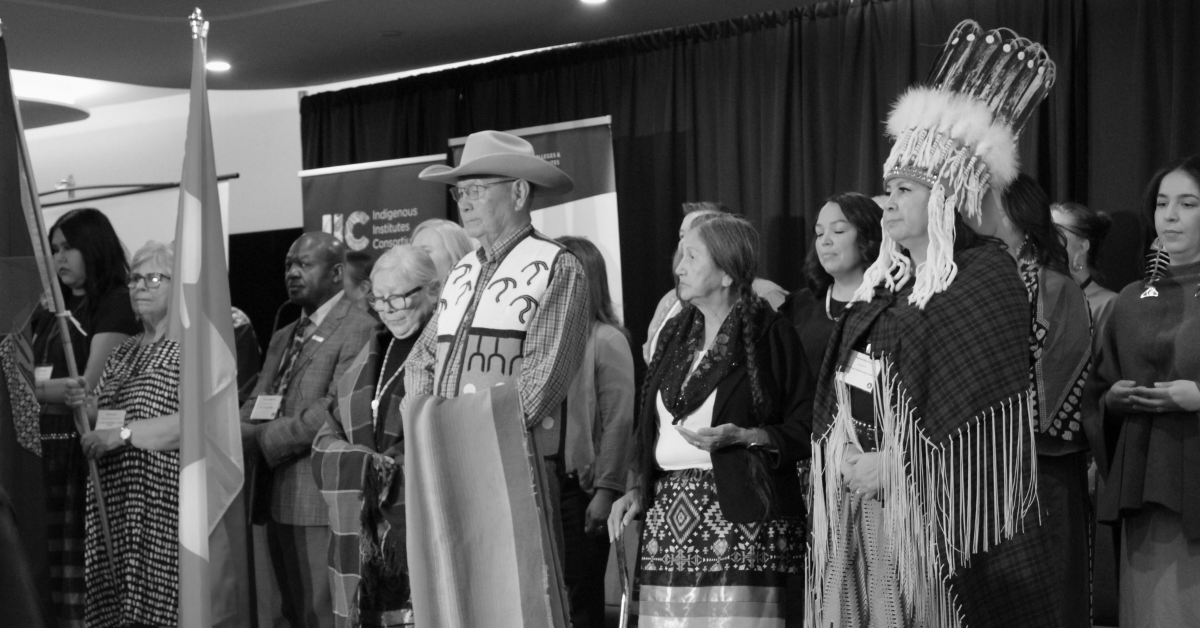
I’m completely inspired coming off the heels of the National Indigenous Education Symposium in Calgary at the end of October. Huge thanks to Marsha Joseph and our co-host partners at the Indigenous Institutes Consortium.

My Key Takeaways?


From Michael Fox of Indigenous Community Engagement, I was struck by the Four Ps of economic reconciliation: participation, partnership, procurement, and proponency. I am enriched by the understanding that by working together on community-oriented joint ventures, we can leverage opportunities to deliver more and be more effective with Indigenous communities and for a better Canada. Thanks for your powerful storytelling, and call to action – that the major projects of national importance must be grounded in Indigenous rights and opportunities.

From Carol Anne Hilton of Indigenomics, I’ll forever remember your astute observation about the appropriateness – and the inappropriateness – of the intersections between Indigenous knowledge systems and tools like AI: knowing where and why they do not and cannot mix. As you said so powerfully, AI can serve, but never replace, Indigenous knowledge and wisdom from Elders and the land.

From Tia Larocque-Graham of Saskatchewan Indian Institute of Technologies, Jennifer Taback of Design de Plume and Cambrian College, and Lora Tisi of Niagara College – who participated in the Indigenous Women in Leadership and Entrepreneurship Panel that I had the privilege of moderating – I applaud your advice to the participants: that true leadership means trusting your voice, even when you’re the only Indigenous person in the room. That it’s more important than ever for Indigenous youth, who are the next generation of leaders, to see Indigenous peoples thriving across all fields. Your collective message thundered: You can’t be what you can’t see.

Of course, there were many more rich conversations among the more than 200 participants – from Elders and Knowledge Holders to students – during interactive sessions showcasing institutional examples of change and progress. We were once again reminded that we have much to learn and gain from Indigenous-led approaches, in the true spirit of building and nurturing partnerships, that benefit all we do, and all we work with.

I am also grateful to Dr. Maurice Manyfingers and President Misheck Mwaba of Bow Valley College for their partnership and hospitality.

A First for CICan, But Not the Last

It was a monumental milestone and celebration as CICan embarked on its first national Indigenous-led initiative – a historic partnership between CICan, the Nicola Valley Institute of Technology, the Saskatchewan Indian Institute of Technologies, and Six Nations Polytechnic.

It was a profoundly humbling and powerful experience to be invited into the Circle, to participate in the traditional pipe ceremony that signified the binding of our partnership and “treaty” – as CICan and the three Indigenous Institutes furthered the sharing of partnership ceremonies and solidified our commitment, with all symposium participants as witnesses.

The additional signing of the Memorandum of Understanding was a demonstration of respectful relations and reconciliation.

We are grateful to the guidance and funding provided by the BHP Foundation.

As an organization, we embrace Mamawi – meaning “working together”. We have a tremendous opportunity to work together with Indigenous learners and communities and CICan members to benefit all Canadians in an exploration of building business, entrepreneurship, and economic research with a new lens – grounded in Indigenous ways of knowing and being.

We look forward to the values to be taught by First Nations, Inuit, and Métis experts.


Partners gathered for a signing ceremony to mark the beginning of Mamawi.
Partners gathered for a signing ceremony to mark the beginning of Mamawi. From left to right are: Pari Johnston, President and CEO, Colleges and Institutes Canada, Victoria Lamb Drover, Vice President, Academics, Saskatchewan Indian Institute of Technologies; John Chenoweth, President and CEO, Nicola Valley Institute of Technology; Rebecca Jamieson, President and CEO, Six Nations Polytechnic.


We hope that together with our partners, Mamawi will demonstrate meaningful reconciliation through action. By supporting Indigenous-led approaches, we will expand more inclusive, community-driven collaboration and successful outcomes across the entire college system.

Through Mamawi, we are supporting capacity building to benefit learners, communities, and institutions across the country. In upholding an Indigenous-led approach, a newly formed Governing Circle will oversee the initiative and partnership accountability.

We understand our role in this collective responsibility as mutual stewards of this initiative to advance greater economic reconciliation in this country. CICan and I are committed to this learning journey.

Turning Principles into Action

For those who attended the 2024 National Indigenous Education Symposium in Halifax, you’ll remember the focus to engage the community in discussions to renew CICan’s Indigenous Education Protocol, marking its 10th anniversary.

A year later, it’s my pleasure and honour and to recognize the work of CICan’s National Indigenous Education Advisory Committee – chaired by Denise Pictou-Maloney of Nova Scotia Community College.

In reaffirming and renewing the Protocol I commend the Advisory Committee Members:

  • Kory Wilson, Executive Director, Indigenous Initiatives and Partnerships, British Columbia Institute of Technology
  • John Chenoweth, President, Nicola Valley Institute of Technology
  • Jason La Rochelle, Director, Office of Indigenization, Justice Institute of British Columbia
  • Anita Cameron, Manager, Indigenous Strategic Relations, Saskatchewan Polytechnic
  • Mara-Lee Moroz, Chief People & Culture Officer, Olds College
  • Robert Rayko, Cultural and Community Facilitator, Portage College
  • Tracy Brant, Chair, Indigenous Education Programs, Red River College
  • Jason Seright, Vice-President, Inclusion and Belonging, Humber College
  • Dany Losier, Chef de développement et Formation continue, Collège communautaire du Nouveau-Brunswick
  • Neil Cooke, President & CEO, Manitoba Institute of Trades and Technology (MITT)
  • Kim Martin, Dean of Indigenous Education, Cégep John Abott College
  • Along with CICan’s former VP of External and Members Relations, Anna Tonneguzzo

The Protocol – grounded in Indigenous ways of knowing and being, justice and accountability – further demonstrates CICan’s ongoing commitment to its membership.

We’re excited to share that we have 77 signatories to the Protocol, representing 60% of CICan’s membership. Over the coming months, you’ll hear more about the renewed principles of the Protocol, and how you can access resources associated with it.

Stay tuned for more – on how we turn words into reconciliACTION.

What Comes Next

As I continue to reflect on what was shared and what I heard through the Symposium, I’m reminded of the tough work ahead and the importance of listening and learning from our partners and members – Indigenous and non-Indigenous alike. We will continue on our journey to be the national association our members – and Canada – need us to be right now and in the future.

Mamawi and the Protocol are cornerstones to our progress and the work that lies ahead.

I remain energized and focused in strengthening CICan to be an innovative leader and champion to our members.

I’m thankful for the support from our Executive Indigenous Advisor, Wendelyn Johnson, our National Indigenous Education Advisory Committee, the Mamawi Governing Circle and our partners.

Being gifted with the Two Row Wampum from Six Nations Polytechnic inspires us to become a stronger ally to our partners and to Indigenous Peoples, while respecting the distinct and unique differences of who we are, and what we know.

CICan is open to growing and learning with you.

November 21, 2025

To build big things, we must build the builders

By Zabeen Hirji, Inez Jabalpurwala, and Pari Johnston.

This op-ed was published by The Globe and Mail on October 31, 2025.

Zabeen Hirji is an executive adviser to business and governments and former chief human resources officer at Royal Bank of Canada.

Inez Jabalpurwala is the president and CEO of the Public Policy Forum.

Pari Johnston is president and CEO of Colleges and Institutes Canada.

The federal government has embarked on an ambitious nation-building economic growth agenda, one that needs an equally ambitious talent and skills agenda. Nowhere is this more evident than in the government’s push to fast-track major projects – a cornerstone of its new industrial strategy to drive growth.

But a big question remains: Where will the talent and new skills come from? The answer is clear: In our drive to build big things, we’re going to have to build big talent, too.

To get there, we need to connect the dots, aligning the government’s project-acceleration agenda with its work-force-acceleration agenda.

Major projects already on the national list, including critical minerals, small modular reactors, liquefied natural gas, infrastructure and corridors, will require tens of thousands of skilled workers over the next decade. The Ontario Power Generation SMR project alone will need 1,600 workers during the construction phase.

And then there is the urgent need to build everything from millions of homes over the coming 10 years to new ships for the navy, coast guard and Transport Canada.

recent Deloitte report estimated that, factoring in retirements by 2034, Canada may need more than 800,000 new construction workers. An anticipated doubling of electricity demand by 2050 and the required doubling or tripling of supply will require more than a million workers, according to a 2023 Public Policy Forum report.

Apart from major projects, Canada also needs people to fuel its life sciences and AI sectors, both of which could drive productivity.

We need tradespeople, research scientists, project managers, permitting specialists, biomedical engineers, data scientists, Indigenous community negotiators, laboratory technicians, cybersecurity analysts and environmental scientists, to name only a few.

We need a co-ordinated national approach to develop the work force that aligns labour-market strategies with all of Canada’s nation-building efforts, including major projects and housing, ultimately ensuring an inclusive economic future.

This begins with aligning curriculums and immigration to work-force needs, but it does not end there. We must co-ordinate work-force, innovation and industrial strategy and infrastructure in order to attract, develop and retain talent, and enable SMEs to scale up.

In particular, government procurement levers should be used to encourage large suppliers to invest in the development of a local work force, and provincial and regional funding streams could be designed to support initiatives that directly respond to the evidenced needs of local businesses.

Governments and businesses must address the chronic underinvestment in work-force training and development, as well as better linking skill strategies to business needs.

In addition to ensuring that our existing public postsecondary education training capacity is visible and viable, tax incentives could be provided to businesses investing in staff training and development. Sector-specific centres of excellence, based on the success of the Canadian Alliance for Skills and Training in Life Sciences, could also be created.

None of this will be easy; in fact, it will demand a policy-making consensus seldom achieved in Canada. But it is doable.

Canada has reignited its ambition to get the economy moving. It must be paired with the right kinds of investment in talent and reskilling and upskilling to drive productivity.

The prize is a once-in-a-generation opportunity to build people, as well as sustainable prosperity.

September 11, 2025

Real Impact Starts Here

What’s On My Mind? With Pari Johnston.

There is a visceral buzz right now as thousands of students return to postsecondary campuses across the country. I should know – I am the proud parent of one with the same butterflies, hopes and dreams for my kid’s future as parents in Swift Current, Sherbrooke and Sault Ste. Marie.

As college leaders return to campus to welcome these students, there are big priorities and even bigger demands on the horizon.

Members of Parliament will soon return to the House of Commons to hash out a plan to deliver for Canadians – to expand and strengthen trade and export relationships, boost housing construction, invest in national defence, increase energy production, and support businesses to be more productive, among other priorities.

Making it happen will require a vision anchored in and coordinated across every community in the country. 

As a network, it’s time to showcase what we can do. 

The federal government has ambitions to build the strongest economy in the G7. To do so, Canada needs a highly skilled, agile and mobile workforce to build; strong and resilient businesses to grow; and mission-driven, place-based and hands-on innovation to solve our national challenges.

The plan starts on a college campus

  • Your faculty provide training for Canada’s young people, mid-career workers, newcomers and international students, new military recruits, and veterans transitioning into civilian jobs. 
  • Your state-of-the-art facilities equip the next generation of workers with the productivity-boosting skills needed to leverage technological innovations to build more and better. 
  • Your research labs, Centres collégiaux de transfert de technologies and Technology Access Centres develop the solutions that help businesses derisk, adapt, and commercialize new technologies that improve the lives of Canadians.

In short, you meet the moment.

Each time I visit a member college, CEGEP, institute, or polytechnic campus (and I’ve been to over 40 in 9 provinces since I started 18 months ago), I see how our institutions grow talent that delivers on the things we need most, drive new ideas that take us where we need to go, and make real differences in the lives of Canadians.

Join a Coordinated National Campaign

While my team and I continue to tell your story of impact in Ottawa, your on-the-ground expertise and community connections bring that story to life. 

This October, we’re hosting CICan’s inaugural Campus Connection Week – a coordinated engagement effort designed to highlight the work and impact of Canada’s public colleges, institutes, CEGEPs and polytechnics.

  • How to participate? This Fall, invite a Minister, Member of Parliament or Senator to campus – to tour a lab or training space, meet students, faculty, and campus leaders, speak to community partners and showcase the real work colleges and institutes do every day to train skilled workers, support businesses and help build strong, prosperous communities.Learn more.

Canada has ambitious plans

At a time when the country is facing a deepening housing crisis, aging demographics and critical labour shortages, lagging productivity, rising security demands, and an urgent need to diversify our energy markets and supply, the leadership of our sector matters more than ever. These are not local or isolated issues – they are national in scope and demand coordinated solutions with all levels of government working together with key partners.

In every province and territory, Canada’s public colleges and institutes are strategically positioned to support these priorities and the big projects needed to respond. 

My mission for the coming academic year: that more Parliamentarians will see, hear, and understand that real impact starts here and make the necessary investments.

Training for a Strong and Secure Canada

In the context of Canada’s most pressing challenges, we need colleges and institutes to help build a nation. With strategy, skills, and innovation, our sector can help Build Canada, support Canada’s armed forces, expand Canada’s defence research capabilities, and grow a talent pipeline that will build the national infrastructure needed to deliver.

A strong and secure Canada is a skilled Canada.

Read CICan’s pre-budget submission

April 15, 2025

Meeting Canada’s Moment

A federal election is two weeks away and Canada is at a turning point. The next government will shape Canada’s future, setting priorities on everything from housing and workforce development to resource development and global competitiveness.

For any government to succeed in delivering on its promises, Canada’s public colleges, institutes, CEGEPs and polytechnics are essential.

Coming Together When It Matters

At CICan, we work year-round with the federal government to ensure our members have what they need to thrive

That means bringing a unified national voice for the sector to Ottawa, working with the right people and partner organizations, shaping the right policies and investments, and implementing the right supports to empower our sector to continue doing what we do best: anticipating future needs, and delivering accessible, adaptable, and sustainable training, education, and applied research solutions across the country to meet Canada’s biggest challenges.

In everything we do, we bring our members together to share knowledge, drive innovation, align efforts to drive bold, lasting impact, and Election 2025 is a pivotal – and consequential – moment.

  • That’s the rationale behind our inaugural Leaders Summit, taking place next week. We’re bringing sector leaders – and partners – together at a critical moment for our country.

This national dialogue will ensure our institutions are ready to collaborate with whoever forms government – thinking proactively and strategically about what Canadians need from us, and how we can build coalitions of the willing and meet the moment together. 

Canada’s Challenges, Our Solutions

Supporting Team Canada – building, training, growing, making, and powering the jobs and solutions that drive this country – and public colleges, institutes, CEGEPs, and polytechnics go hand in hand. We are responsive, adaptable, deeply embedded in communities and working directly with employers in every part of the country.

Canada’s major parties have started outlining their election platform and promises, and nearly every key election issue connects to our work and the very challenges we help solve every day.

That’s why investing in our institutions is essential for lasting, meaningful impact. 

On Building and Making Things at Home

  • Construction and Homebuilding: There are currently close to 65,000 students training at colleges and institutes to become our future construction workers and engineering technicians, building better homes faster. Plus, they also offer over 300 pre-apprenticeship programs that train skilled construction workers Canada urgently needs. 
  • Food Supply: Colleges and institutes offer 164 agricultural programs – including crop sciences, farm management, and greenhouse technologies – that train workers and business owners to grow food for Canadians.  
  • Plus, through nearly 3,000 applied research projects, our sector works with Canada’s manufacturers and producers to improve the way we make and grow stuff in Canada, for Canadians. 878 of these projects were specifically tied to supporting Canada’s natural resource sector and agricultural sectors. 
  • Healthcare and Social Services: Close to 100,000 students are trained through over 1,100 college and institute programs in healthcare, including close to 300 nursing programs. With shifting demographics and an aging population, college and institute-led innovation in seniors care and social innovation is more important than ever.  
  • Defence and Public Safety: Colleges and institutes also play a crucial role in offering certified training for high-demand occupations within the Canadian Armed Forces (CAF) and supporting veterans, reservists and their families transitioning to civilian careers.  And, close to 22,000 students are trained in security and protective services, including 14,901 in criminal justice and corrections. 

On Global Trade and the Economy

  • Supply Chains: Colleges and institutes keep Canada’s supply chains moving with over 1,500 manufacturing-related programs. We train the skilled workers—technicians, engineers, and specialists—who design, build, and maintain the systems that manufacture and move the goods that Canadians rely on every day.  
  • Transportation: From aerospace and automotive manufacturing to rail and trucking logistics, our job-ready graduates are essential to keeping supply chains efficient, smart, and resilient – and helping Canadian businesses get their products to market.  
  • Global Partnerships: Our sector builds capacity, shares best practices, and delivers consistent, high-quality training that connects Canadian employment-based education with the world. This work positions us as a leader in skills and workforce development, innovation, and sustainable development. As global markets shift, leveraging all of our assets and networks abroad will be key in market diversification.

On Productivity and Competitiveness

  • Resilient and Efficient Industry: With nearly 700 research labs across Canada, colleges and institutes partner with Canadian industries (especially SMEs) to develop innovative, made-in-Canada solutions.  
  • As tariffs impact business operations, college and institute applied research centres also help businesses pivot to new markets and source alternative components – and provide market analysis that ensures business can continue to provide the essential products and services Canadians depend on. 
  • Derisking Technology Adoption: These collaborations – with a focus on derisking new product, process and prototype development – give Canadian manufacturers a competitive edge, boost productivity, enhance automation, and help businesses navigate market shifts, emerging technologies, and regulatory changes.  
  • Digital Skills: As innovators, our institutions are always looking forward and central to building Canada’s digital infrastructure. We provide accessible and cutting-edge training and relevant industry-ready skills for the digital economy, while leveraging AI tools to transform programs to meet Canada’s digital imperative. 
  • Energy Production and Transformation: To meet Canada’s energy objectives, colleges and institutes lead in skills training to drive Canada’s energy transformation and grow our capacity in alternative energies like nuclear, solar, wind, and hydro, and to support existing industries to get energy to market. Federal investment in our institutions drives energy transformation while balancing economic growth with environmental responsibility. 
  • Natural Resources: We lead in skills training, research, and sustainable solutions in high-demand sectors like mining and critical mineral extraction and processing to support growing industries like semi-conductors and EV production.  

Ready to Support Team Canada

While the future is uncertain, CICan and its members are committed partners on Team Canada. As Canada’s most accessible public training network, we are Canadians’ safety net, ready to collaborate and support the priorities shaping Canada’s future.

This election is a key moment for Canada — and we’re here to meet it.

Read more