
March 23, 2023

A national standard means the care economy is a bit easier to navigate (SDGs 3 & 8)

Addressing labour shortages in the long-term care sector is about more than just recruiting workers. Educators, employers, and workers themselves all need tools to help reduce skills gaps, better understand job expectations, and improve consistency across the sector. The National Occupational Standard (NOS) for Personal Care Providers, released in November 2022, is a step in the right direction.

Front-line healthcare workers like PSWs, CCAs, and HCAs play a vital role in caring for our loved ones. Now, for the first time ever, the NOS compiles and documents the duties, competencies, and skills required of the occupation. It’s an example of our work collaborating with the country’s largest postsecondary network, their partners, and industry and community members. Over 600 stakeholders from across Canada contributed to finding solutions to Canada’s skills challenges.

National occupational standards (NOS) are inventories of the competencies and skills required for workers to perform proficiently in a particular job or occupation. That means job seekers can better plan their career paths, employers can focus on recruiting the right workers with the necessary skills, educators can create curriculum based on clear learning objectives, and workers, including those who were internationally trained, can have their skills and experience more easily assessed and recognized.

The NOS for personal care providers is a practical, voluntary guide and a first step towards reducing skills gaps, improving worker conditions, and ensuring our loved ones receive quality and consistent care.

What we’ve heard: “I believe this profile to be an excellent tool. Any staff member proficient in this tool would be a well-rounded and productive employee” (From a manager of personal care providers and health professionals working in long-term care in Alberta).

The national public review survey to validate this tool revealed that 89% of respondents find the NOS useful for practitioners, employers, educators and government, and 80% were satisfied the NOS accurately reflects the tasks expected of a personal care provider.

At the intersection of Good Health (SDG 3) and Decent Work & Economic Growth (SDG 8), the NOS plays an important role in our work to make progress towards the United Nations Sustainable Development Goals (SDGs) and contribute to positive change.

Download and share the National Occupational Standard for Personal Care Providers.

The NOS was developed as part of CICan’s Building Capacity in Long-term Care (BCLTC) project, which supports and strengthens the sector by mobilizing Canada’s colleges and institutes to address acute labour shortages and ensure the sector continues to grow sustainably.

March 10, 2023

For students in the Supportive Care Assistant Program, SDGs 3 and 8 go hand-in-hand

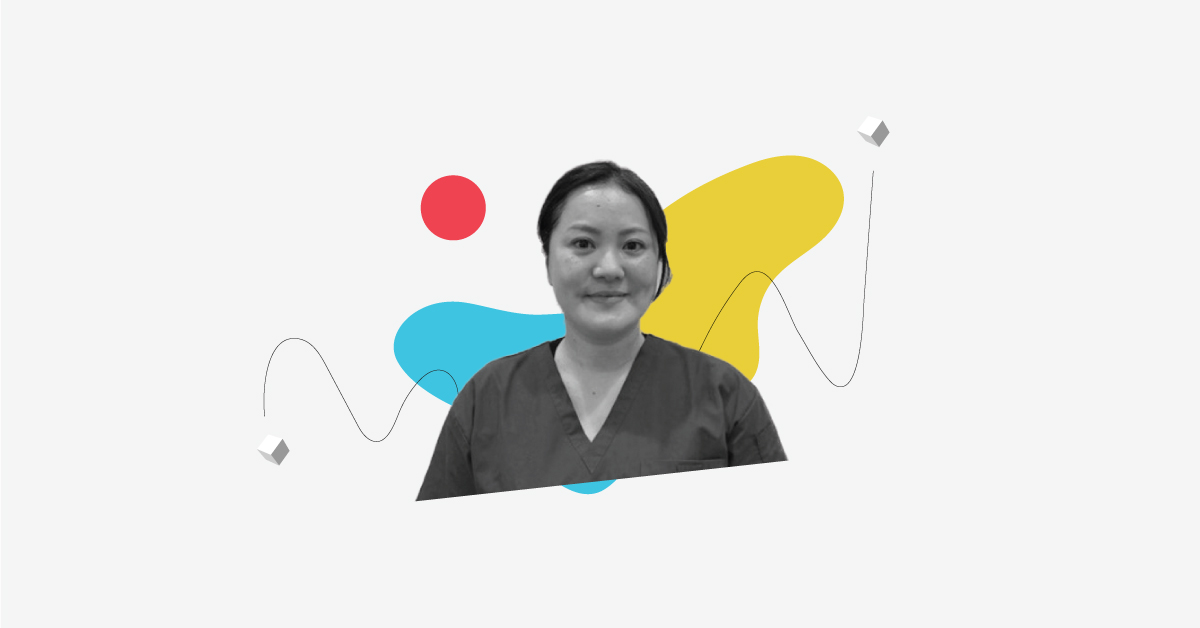
The Supportive Care Assistant (SCA) program gives students the opportunity to contribute to the health and well-being of loved ones and others, while setting them on a path to find decent work and contribute to economic growth. Students in the program learn in-demand skills, get hands-on work experience, and launch careers in long-term care. Across Canada, SCA students are providing much-needed support to their communities. This is Sayo’s story.

Sayo Yazumi arrived in Canada from Japan ten years ago. With a background in accounting and finance, she found it difficult to find work in her field due to Canadian certification requirements. Eventually, Sayo found work as a cashier and enjoyed interacting with customers; however, in 2020 – due to COVID – Sayo was laid off from her job as a cashier. That led her on a new career path, one that introduced her to SDG 3: Good Health and Well-Being.

The United Nations Sustainable Development Goals (SDGs) are 17 actionable items that call on countries to work together to solve issues that affect us all – like poverty, hunger, inequality, and climate change – while planning for a long-term equitable, peaceful and prosperous future.

SDG 3 challenges us to ensure healthy lives and promote well-being for all people at all ages.

When one of her family members became gravely ill, Sayo devoted time to caring for them but found it challenging as she did not have any practical healthcare training. This experience motivated her consider the Supportive Care Assistant (SCA) program.

The SCA program is a national microcredential designed to attract and rapidly train new workers for the personal care sector. Students take six weeks of flexible online training, followed by a 2 to 4 month paid work placement. Students can then access a $5,000 stipend to pursue further studies.

Sayo heard about the SCA program at Vancouver Community College (VCC), decided it seemed like a good fit, and enrolled. “I didn’t have experience in healthcare,” she said, “so the SCA program seemed like a nice way to explore the field, especially because the work experience was paid. I liked that the SCA program had the $5,000 stipend to get into the Health Care Assistant* program, too.”

After completing six weeks of online training, Sayo found a work placement with a local home healthcare provider, Proof of Care, in North Vancouver. She enjoyed the experience in a healthcare setting, particularly interacting with clients in her community. “I hadn’t worked with seniors before, but the clients were all very nice. I found the work rewarding and learned a lot about how to care for seniors. My employer, Proof of Care, was supportive of my learning.”

SDG 8: Decent Work and Economic Growth challenges us to act in a way that promotes inclusive and sustainable economic growth, full and productive employment, and decent work for all. Learning experiences like the SCA program prepare people to find fulfilling careers.

The experience helped Sayo confirm that she wanted to pursue a career in healthcare, and she was accepted into VCC’s Health Care Assistant program, the next step in her career. Immediately, she applied for the $5,000 stipend from Colleges and Institutes Canada. She says, “I’m looking forward to building a career as a health care assistant. After graduation, I am open to jobs in long-term care, group homes, or home care.”

Looking back on her experience in the Supportive Care Assistant program, Sayo says, the SCA program is “a low-risk way to get into healthcare. You don’t know if you would like to work in healthcare until you try. The SCA program prepares your mind for what it will be like.”

She adds, “If anyone is considering taking the SCA program, my advice is to just go for it!”

*In British Columbia, when students complete the Supportive Care Assistant program, they can move to become a Health Care Assistant. Other provinces use different terms, including Personal Support Worker in Ontario and Health Care Aide in Alberta.

March 8, 2023

There’s wider economic sense in helping young people get overseas experience

First published in the Globe and Mail.

Zabeen’s Hirji highlights the importance of the Global Skills Opportunity program, the value of international experience for Canadians, and why it’s crucial to provide long-term funding to support more students to go abroad beyond 2025.

“As I reflect on my rewarding career in financial services, starting as a teller at RBC and retiring 40 years later as the bank’s chief human resources officer, I realize it is my human skills that endured the test of time.

Such skills, including adaptability and critical thinking, can’t be learned from books and lectures, But I know where I got them from: Having immigrated to Canada from Tanzania as a teenager, I can attest to how being thrust into an unfamiliar place helps develop competencies quickly.”

Read more

Zabeen Hirji is executive adviser, future of work, at Deloitte and strategic adviser to the public sector and executive-in-residence at Simon Fraser University’s Beedie School of Business. She sits on the advisory group of Global Skills Opportunity. She served for 10 years as chief human resources officer at Royal Bank of Canada.