Have more study permit holders entered Canada so far this year? Yes, however, international students who entered Canada from January to May would almost certainly have applied and been approved for their study permits before the cap came into effect on January 22.
In fact, publicly available data from Immigration, Refugees and Citizenship Canada (IRCC) shows that international student applications are down 36% year over year. For CICan members in particular – Canada’s network publicly funded colleges, institutes, cégeps, and polytechnics – applications are down as much as 54%.
Make no mistake, the policy is having the effect it was designed to have. Namely, to reduce the number of international student permit applications, and by extension the number of approved permits.
We consulted CICan members to get a sense of how that story is playing out on the ground.What we heard? Institutions are preparing for big and unintended consequences.
Overwhelmingly, we do not need more drastic measures.
On the contrary, the cap is already at risk of worsening a long-term trend of reduced provincial spending, tuition freezes, and rising costs for post-secondary institutions.
Already, some institutions are reducing hiring and academic staff. Already, institutions are limiting intakes for some programs, while others are cutting whole programs – including in critical areas like early childhood education, continuing care, and environmental technologies. Already, institutions are reducing some commercial research activities and student outreach programs.
If we’re not careful, we could irreparably damage our publicly funded postsecondary education system.
Colleges and institutes train critical workforces that meet our national and global challenges – things like building sustainable and affordable housing, providing high-quality healthcare, and transitioning to green energies. Chronic underinvestment has forced these publicly funded institutions to rely more heavily on international student fees to sustain operations.
Fewer international students not only limits access to training for Canadian students that is vital to growing key sectors of our economy – particularly in rural, remote, northern, and Indigenous communities – but threatens the vitality of our sector as a whole.
We need smart, deliberate, and predictable solutions.
The Minister and post-secondary institutions want the same thing – an improved international student program that operates efficiently and with integrity. What we need now more than ever are measured and predictable solutions that address key issues – such as funding shortfalls, international student supports, and long-term strategic planning – without rushing to implement policies that could inadvertently create larger-than-intended consequences.
Canada needs to pause and reassess how these abrupt policy changes could undermine the sustainability of a sector vital to the public good. The path forward is thoughtful policy-making that recognizes the interconnectedness of international students, colleges, and institutes within Canada’s broader economic and social landscape.
In 2022 alone, international students contributed $30.9 billion to Canada’s economy and supported 360,000 jobs.
That stream supporting our economy is slowing. We’re not seeing the impacts yet, but they’re coming.
Home / Articles posted by Justin Hand-Gregory ( / Page 4)
August 6, 2024
Modernizing Canada’s Federal Funding Ecosystem to Drive Impact
Canada’s research and innovation landscape is ready for an overhaul. For years, Canada’s public research and development (R&D) spending has trailed behind other Group of Seven (G7) and Organisation for Economic Co-operation and Development (OECD) countries, and we’re missing out on realizing the full benefits of our research right here at home.
But here’s the good news: change is on the horizon.
The Government of Canada wants to create a new capstone research funding organization to enhance the impact of federal funding. The goal is to improve coordination among diverse research actors and foster collaboration to address emerging challenges – a move that hits all the right notes with our sector!
Colleges and Institutes Canada (CICan)’s Perspective: Anchoring Impact
In response to the Government’s request for feedback on the design of the new organization, CICan consulted its National Applied Research Committee, comprising vice presidents and deans of applied research from colleges and institutes across Canada.
Our recommendations focus on how the new organization can ensure the benefits of Canadian research are captured and retained within the country, driving both community and economic returns. We also highlighted how colleges and institutes are ideally positioned for mission-driven research, creating real-world solutions through partner-focused, efficient, and specialized research – a unique approach that yields practical benefits for Canadians.
On the Blog:Canada’s Research and Innovation Group Chat Needs Colleges and Institutes. Challenge-driven research mobilizes college and institute applied research expertise, their networks of partners across sectors, and state-of-the-art facilities to develop solutions for Canada’s biggest challenges.
Our key recommendations include:
Identify and Address Research Gaps: Clearly define the problems and gaps the new organization is designed to solve, prioritizing the anchoring of research benefits in Canada.
Inform Structure with Stakeholder Needs: Tailor the new organization’s strategy and mandate to meet the needs of small-and medium-sized enterprises and underserved communities, including Indigenous groups.
Expand Research Capacity: Support historically excluded groups in conducting impact-oriented research.
Ensure Strong Organizational Capacity: Dedicate appropriate expertise and operational resources to the capstone organization.
Provide Proper Investment: Provide the organization with a reasonable stand-alone budget that enables it to support its objectives.
For our full list of recommendations and detailed insights on the essential role of colleges and institutes,explore our submission here.
Home / Articles posted by Justin Hand-Gregory ( / Page 4)
Canadians can expect a lot of change in the next 18 months. In view of a coming federal election, it’s clear that colleges and institutes can and must focus on the things Canada needs most.
My priority is on greater integration in our work to maximize impact.
Our message – in plain language – is that colleges and institutes are the partners on the ground that will come up with solutions to build more homes, integrate more newcomers, help local companies transition to the green economy, and train the health and childcare workers our country desperately needs.
On national issues like this and many others, it’s imperative that we demonstrate our public and political value proposition, scale our impact, and connect institutional efforts to deliver.
Impact Goals as the focal point of our strategic direction.
CICan is at an important inflection point. We have a new leadership team and organizational structure. And, with your input, we have refreshed and extended our Strategic Plan to 2026.
In everything we do, we remain laser-focused on the interests of our members in these disruptive times.
CICan’s Roadmap to 2026 – approved by our Board of Directors this spring – will guide our next 18 months. It will focus CICan’s agenda in a way that helps us set priorities and activities for impact and ensures we are positioned to navigate the changing, uncertain and complex landscape.
The roadmap also introduces Impact Goals that will serve as targeted responses to the pressing issues faced by Canada and by our members, directing our resources towards priority areas where we want to drive tangible change.
We’ll share more on the Roadmap and our Impact Goals in the coming weeks and months.
I am confident it will position our sector strategically, leading to a more focused, fit-for-purpose CICan better able to serve our members, and to greater impact the communities we serve.
Together, working in shared purpose around shared challenges, we are going to achieve big things for Canada, and the world.
CICan is strongest when it’s informed by strong leaders. Your input ensures we move forward with confidence. Your priorities are guiding our advocacy, your needs are guiding our services, and your impact is guiding our message.
We will deliver for Canadians by charting a course that is intentional, integrated, and impactful.
Home / Articles posted by Justin Hand-Gregory ( / Page 4)
June 28, 2024
Winners: CICan’s 2024 Student Art Contest
CICan is thrilled to announce the winners of our 2024 Student Art Contest. This annual competition, which began ten years ago, provides students at CICan member institutions across Canada with a platform to showcase their creative skills and engage in art-making. It also gives us an opportunity to celebrate the diverse artistic talents of students nationwide.
This year’s theme, “Unbounded Creativity,” truly challenged the participants by removing any thematic constraints; the only limit was their imagination.
We received 85 submissions across five categories: photography, drawing and painting, textile and mixed media, sculpture and printmaking, and digital illustration or animation. Out of these submissions, five talented students were selected as winners.
The winners in each category will receive a cash prize of $500, courtesy of our affinity partner, TD Insurance, and have their artwork displayed at our national headquarters in Ottawa.
Thank you to everyone who participated!
The winners of the 2024 CICan Student Art Contest are:
Home / Articles posted by Justin Hand-Gregory ( / Page 4)
June 27, 2024
Our Year in Impact
What’s On My Mind? With Pari Johnston.
In a year marked by change, we have a lot to be proud of.
I’m happy to share some reflections on our achievements, on our challenges, and on way forward as a united sector.
Since my arrival in December, I’ve made it a top priority to get out on your campuses to listen deeply and to learn with curiosity. In my first six months, I’ve had the opportunity to visit 30 member institutions in seven provinces and join several provincial college association meetings.
To say I’ve been blown away by the dynamism, diversity, and community-driven spirit of your campuses is an understatement. Getting on more campuses will continue to be a top priority for me this year and next.
What I’ve heard about your aspirations, your needs, and your challenges are the key drivers of CICan’s evolving strategic directions.
I’ve been listening hard – and I hear you. Your priorities are guiding our advocacy, your needs are guiding our services, and your impact is guiding our message.
We are focusing our advocacy agenda on Canada’s big challenges and elevating our voice in national public policy conversations that matter to Canadians.
We are modernizing our approach to member services to create more touchpoints more frequently, with a stronger focus on convening college presidents on shared issues affecting institutional strategy and sustainability.
We are bringing our national and international programs together with a greater focus on benefits for members, collaboration, and capacity-building guiding our choices and our work.
I’m fully convinced that the time is now – and the future is bright – for Canada’s colleges and institutes.
I’m excited about the opportunity to continue growing our impact and to position CICan’s work in a way that best serves you and ensures that our members are positioned to support Canadians.
That’s not to say there haven’t been significant pressures. CICan is keeping our eye on the ball and laser focused on promoting members’ interests in these very disruptive times – especially unprecedented reforms to Canada’s international student program as part of the federal government’s plan to better manage overall immigration levels by reducing temporary resident numbers. And as always, we are pro-actively working to keep our members engaged and well-informed.
As we look ahead, I fundamentally believe that the value of the college and institute sector is in asking ourselves what problems we’re solving for Canadians.
When we think purposefully about the connections between what we teach and research and what we need in our country and our communities, colleges and institutes become natural partners in meeting Canada’s biggest public policy challenges – challenges like providing sustainable and affordable housing, transitioning to clean energies, responding to the care economy and driving productivity and industrial transformation.
As a sector, what you do ensures we have a skilled workforce to meet housing demand, ensures workers are equipped to thrive in green and digital industries, and makes businesses more innovative, efficient, and productive.
CICan understands – and promotes – that impact wholeheartedly.
We’re proud to be the national leader bringing the sector together in this way, and we continue to advocate with a strong, coordinated voice for our shared interests.
Our work is making it clear to leaders, to decision makers, and to Canadians that colleges and institutes are high value ecosystem partners with a unique and differentiated value proposition.
You are the educators, the innovators, the job creators, the makers, the builders and the growers.
You are the ones driving real-world impact on matters Canadians care about every day.
In the context of these big policy challenges, we can reflect on what we’ve accomplished in the past year through our programs.
To name a few, on Canada’s housing crisis and in the healthcare sector, our work brought together colleges and institutes from across the country to build a skilled workforce and address acute labour shortages.And, in climate action, our work has supported green skills and literacy, helped businesses and community organizations lower their carbon footprints, and improved planning for sustainability in Canada.
We should be all very proud of the incredible achievements highlighted in our 2023-24 Impact Report – both as members participating in CICan’s projects and as a sector.
As our work continues to evolve to focus on the things Canada needs most, my priority is on greater integration to maximize impact.
Home / Articles posted by Justin Hand-Gregory ( / Page 4)
June 17, 2024
By the Numbers: Indigenous Post-Secondary Education in Canada
Indigenous postsecondary education in Canada is a dynamic landscape marked by resilience, progress, and ongoing challenges. The latest data from Statistics Canada (StatsCan), as well as the 2021 census data, sheds light on this landscape, emphasizing the pivotal role of colleges and institutes and the need for ongoing efforts to ensure equitable access for these students.
Let’s take a look!
Indigenous Post-Secondary Education Trends
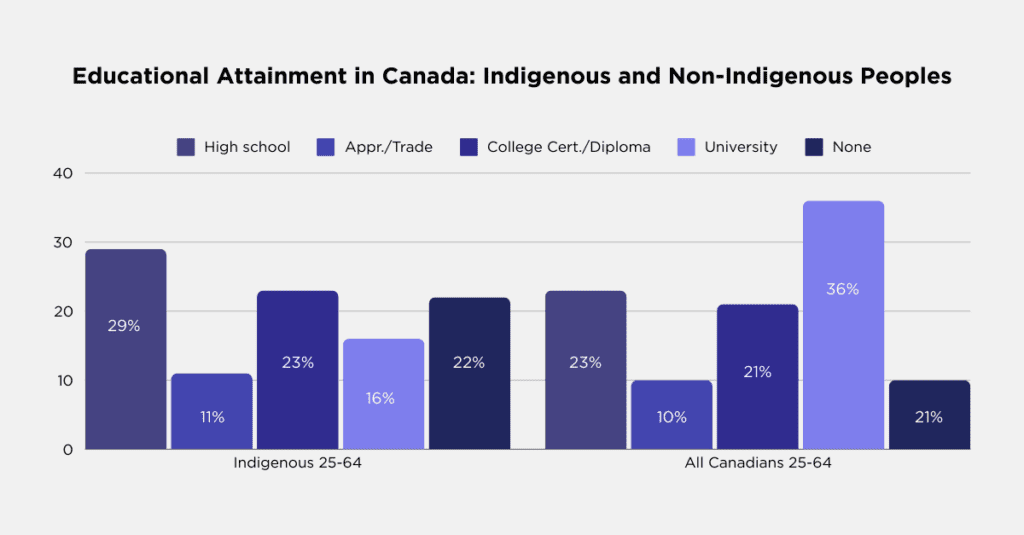
Despite facing challenges, Indigenous Peoples have made notable strides in education. While 16% of Indigenous peoples hold a university degree (compared to 36% of the overall population), 23% have obtained a college credential, and 11% have completed apprenticeships—figures that surpass those of the general population (Statistics Canada, 2021). Nevertheless, while the share of Indigenous adults with a bachelor’s degree or higher has increased since 2016, the gap between Indigenous and non-Indigenous populations has widened.
Source: Melvin, Alexandria. 2023. “Postsecondary educational attainment and labour market outcomes among Indigenous peoples in Canada, findings from the 2021 Census”. Insights on Canadian Society. October. Statistics Canada Catalogue no. 75-006-X.
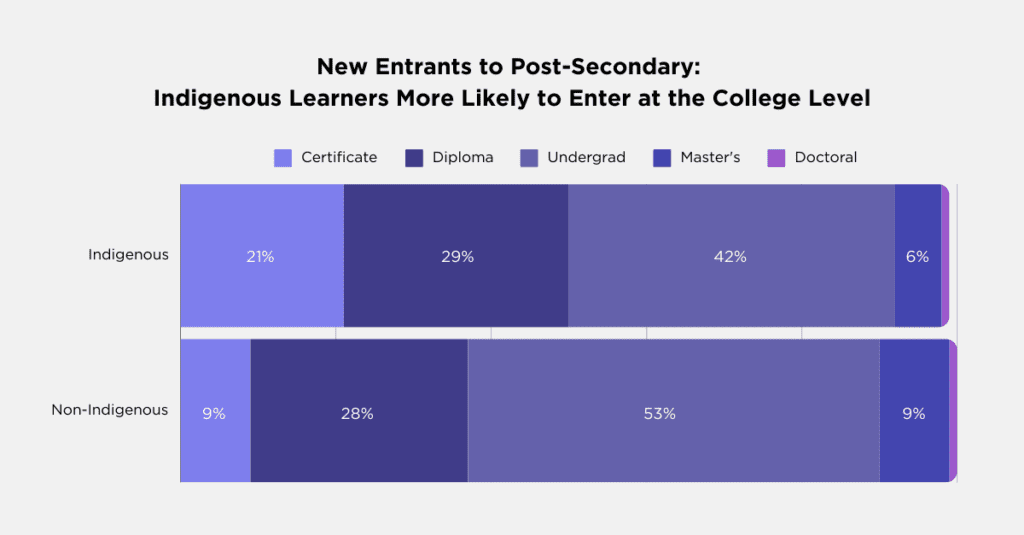
Did you know? Half ofIndigenous new postsecondary entrants start their journey at colleges, compared to 37% of non-Indigenous entrants(Statistic Canada, 2024).Additionally, Indigenous new entrants at collegesare far more likely to be women and more likely to be 20 years or older compared to non-Indigenous new entrants. These statistics underscore the critical role colleges play in providing accessible and supportive educational opportunities – including delivery in community and essential wrap-around services – for Indigenous learners at any stage in their lives, regardless of their life circumstances.
Source: Statistics Canada. Table 37-10-0264-01 New entrants to postsecondary education by Indigenous identity, educational qualification, field of study (STEM and BHASE (non-STEM) groupings), gender and age.
Navigating Challenges: Regional Disparities and Remote Living
The educational journey for Indigenous peoples isn’t without its challenges. Historical and ongoing injustices, such as the legacy of residential schools and intergenerational trauma, coupled with ongoing structural challenges like limited access to educational institutions, food insecurity and lack of childcare options while in school, have long cast a shadow over Indigenous education.
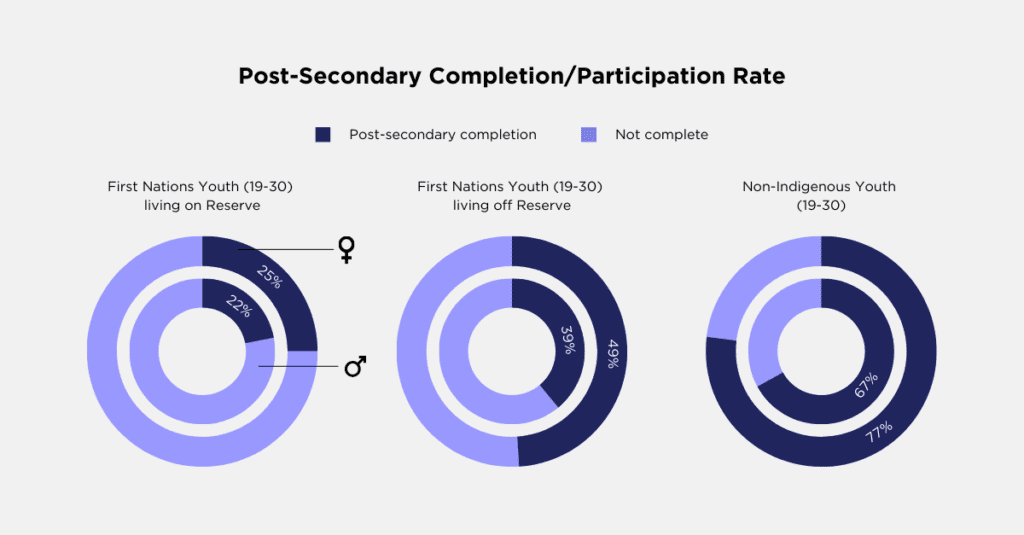
Among Indigenous populations, First Nations youth, in particular, face numerous challenges. These include higher rates of young parenthood, low-income households, and rural residence, contributing to a disparity in postsecondary completion rates compared to non-Indigenous youth. As a result of these challenges, non-Indigenous youth are nearly twice as likely (72%) to have completed or recently attended a postsecondary program as First Nations youth (37%) (Statistics Canada, 2023).
Source: Layton, Jaclyn. 2023. “First Nations youth: Experiences and outcomes in secondary and postsecondary learning.” June. Statistics Canada Catalogue no. 81-599-X.
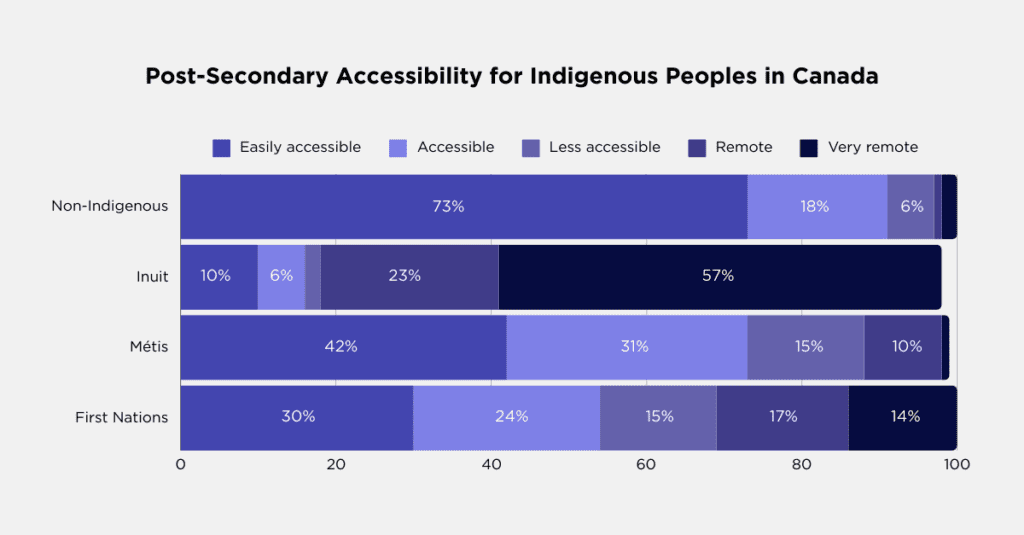
Adding to the complexity, Indigenous communities are disproportionately situated in rural and remote areas. In 2016, 26% of Indigenous individuals aged 19 to 45 lived in these regions, in stark contrast to just 3% of the non-Indigenous population (Statistics Canada, 2023).
How does this translate into educational outcomes? Those who lived in easily accessible areas completed high school in much higher proportions than those in very remote areas. An expanded age analysis also reveals that there are higher rates of high school completion and postsecondary education attendance among First Nations individuals living outside rural areas, with almost half of females and over a third of males attending or completing postsecondary education.
Source: Layton, Jaclyn. 2023. “Distance as a Factor for First Nations, Métis, and Inuit High School Completion.” Education, learning and training: Research Paper Series. June. Statistics Canada Catalogue no. 81-595-M.
Proximity to postsecondary institutions, therefore, plays a crucial role in the success of Indigenous learners. Fortunately, 86% of Indigenous Peoples live within 50km of a college campus or service centre. However, proximity alone is not enough. Offering flexible, adaptable, and culturally responsive options—such as outreach programs, community partnerships, and online resources—is essential to bridging the gap in postsecondary education and empowering Indigenous learners to achieve their full potential.
Indigenous-led institutes across the country, such as those in Ontario, Saskatchewan, Alberta and British Columbia along with Northern colleges like Nunavut Arctic College and Yukon University, also play a unique leadership role. Their locations, combined with their capacity and cultural understanding, enable them to address community-driven needs and deliver programs that are relevant, accessible, and empowering for Indigenous learners.
Looking Ahead: Empowering Indigenous Youth for a Stronger Future
The Public Policy Forum reports that by 2026, around 350,000 Indigenous youth will reach adulthood. Empowering these individuals with high-quality, culturally relevant postsecondary education and training will not only promote social inclusion and justice but also help Canada address its underemployment and skill gaps. It is estimated that supporting these young people can boost our economy by a significant $27.7 billion each year (Public Policy Forum, 2024).
With their unique insights, Indigenous knowledge systems offer valuable solutions for addressing Canada’s pressing issues. More and more colleges are recognizing this and engaging in applied research community partnerships with Indigenous organizations as part of their commitment to social innovation and partner-driven research. At SAIT’s Centre for Innovation and Research in Unmanned Systems, for example, researchers are working with the Stoney Nakoda First Nations and Alberta Health Services to develop a scalable drone fleet that can support medical delivery and amplify drone signals in remote areas.
Indigenous-Focused Programs & Support
As the primary postsecondary education providers for Indigenous learners from across Canada, colleges and institutes continually strive to listen, learn, and collaborate with Indigenous Peoples to enhance the educational experiences of Indigenous learners. We offer flexible learning formats and support services such as childcare, counselling, and mentorship, along with nearly 300 Indigenous-focused programs and courses across Canada’s ten provinces and territories.
Through CICan’s national programs, such as Skills Compass, colleges and institutes are also making a significant impact by supporting Indigenous and newcomer youth not currently in education, employment, or training. The accessible initiative helps Indigenous youth develop essential skills and become career-ready and equips members with a Skills Compass Curriculum Framework—a lasting resource to help institutes tailor their programs to the unique needs of Indigenous youth.
Colleges and institutes also foster connections for Indigenous learners globally through Global Skills Opportunity (GSO). This initiative enables Canadian post-secondary students to gain new global skills, enhancing their resilience, adaptability, and readiness for success. For instance, I’M SIENT (International Mobility Supporting Indigenous Entrepreneurs), funded under GSO at Sault College in Ontario, empowers Indigenous students by enhancing technical and analytical skills in collaboration with Indigenous entrepreneurs in Mexico’s Yucatan region.
Recognizing that Indigenous reconciliation is an ongoing journey, we remain committed to culturally responsive approaches. Through continued dedication, the potential for positive change and empowerment within Indigenous communities is immense.
Take Action:
Colleges and institutes can advance their commitment by joining the 72 institutions that have signed CICan’s Indigenous Education Protocol.This protocol – created in 2014 – highlights the need for tailored structures and approaches to meet the educational needs of Indigenous peoples, supporting their self-determination and the socio-economic development of their communities.
To mark its 10th year anniversary and reflect on progress and stubborn gaps, CICan will be initiating a refresh of the protocol – and how to mobilize greater take by our member institutions – at our upcoming Indigenous Education Symposium in Halifax from October 27-29 that we are hosting in partnership with the Indigenous Institutes Consortium (IIC).
Home / Articles posted by Justin Hand-Gregory ( / Page 4)
May 21, 2024
Education is an Enabler of Change
What’s on My Mind? with Pari Johnston.
If there’s one thing on my mind, it’s change. Coming together to set priorities, coordinate, and share resources can help us prepare for it and manage it.
As an association, that’s why we bring together college and institute leaders through networking and capacity building events. It’s the strategic conversations we have that will help us define shared goals and focus solutions on big societal challenges.
Change can be intimidating. But I’m hopeful and optimistic.
As leaders in education, we’re going to do big, bold things.
Colleges and institutes are high value partners. We are educators; we are innovators; we are job creators; we are trusted partners; we are anchor institutions in our towns, cities, provinces, territories, and regions.
Our network prepares nearly 800,000 learners in urban, rural, remote, and northern communities with more than 10,000 programs across all sectors, conducts more than 8,000 applied research projects annually, and adds over $190B to Canada’s economy each year.
That’s the value of a college or institute education.
If we frame that impact around our big challenges – like providing sustainable and affordable housing, transitioning to clean energies, and driving productivity and industrial transformation – what we do ensures we have a skilled trades workforce to meet housing demand, ensures workers are equipped to thrive in green and digital industries, makes businesses more innovative, efficient, and productive, and more.
Our future prosperity depends on what we do collectively – not just for the learner, but for our country and communities. And, it ensures our transitions are just, fair, and equitable for all.
As leaders in education, a lot is going to be asked of us.
When we talk about the value of the college and institute sector, we should be asking ourselves what problems we’re solving. We need to think purposefully about the connection between what we teach and what we need in our workforce. That goes for the housing crisis as well as other challenges like responding to the energy transition, the needs of the care economy and digital transformation.
As institutions, what we can do is ensure that we create spaces – whether that’s in a traditional classroom, through online courses, in a mobile classroom, or using tech like virtual reality – spaces that meet talent and opportunities where they are at – especially in rural, remote, northern, and Indigenous communities. In other words, to ensure that all the talent we see in our towns, cities and communities is provided an opportunity to contribute to our economy and to our society.
It’s not just about the skills training, or the research, or the partnerships. It’s about what we can achieve when it all comes together in shared purpose.
The time for colleges and institutes is now.
Two weeks ago, we brought the sector together at our national conference – the largest event of its kind. Navigating change was very much on the agenda.
Our sector is under major pressures, with declining provincial funding and increasing labour market demands. All in the context of a very public national conversation on sustainable growth in international student numbers and global competition for talent and skills. Still, there is a role for our sector to scale and connect institutional efforts to deliver on urgent national challenges.
In my keynote address, I shared my vision for a bold national agenda in which Canada’s publicly funded colleges and institutes are recognized as mission-critical partners. (Listen to my keynote podcast).
I’m left inspired by the new ways to collaborate that turn challenges into strengths and excited about the opportunity to develop a shared approach to our work that is intentional, integrated, and impactful.
Home / Articles posted by Justin Hand-Gregory ( / Page 4)
April 21, 2024
How Colleges and Institutes Can Drive Canada’s Housing Agenda
At a time when housing affordability and availability are among the most pressing challenges for Canadians, the Government of Canada has demonstrated its commitment to addressing these challenges head-on through its recent 2024 Housing Plan and Federal Budget. But they’re not in this fight alone. Colleges and institutes, deeply rooted in communities with a proven track record of innovation and adaptability, emerge as critical partners.
In case you missed it, here’s a summary of the key housing-related announcements impacting our sector:
New Loan Funding for Apartment Construction: Starting in 2025-26, the $15 billion Apartment Construction Loan Program opens to colleges and institutes, providing additional financial support.
Investment in Skilled Trades: $90 million for the Apprenticeship Service and $10 million for the Skilled Trades Awareness and Readiness Program aim to encourage Canadians to pursue careers in the skilled trades.
Foreign Credential Recognition: $50 million, with a focus on streamlining recognition in construction to address skilled labour shortages in the construction sector.
GST Relief for Student Residences: Eligibility conditions for GST removal on new student residences relaxed for not-for-profit universities, public colleges, and school authorities.
Homebuilding Technology and Innovation Fund: $50 million allocated to launch this fund, administered by Next Generation Manufacturing Canada.
Harnessing the full potential of colleges and institutes will be key to realizing the success of these investments. Not only do they train, upskill and reskill Canada’s construction workforce, but they fast-track student housing developments and support innovative and sustainable solutions to build better homes faster. Let’s break that down.
Training Skilled Labour in Construction
A sustainable housing agenda hinges on a skilled workforce in the construction trades. Did you know building a typical home takes 30 different skilled trades and other on-site occupations? From designers to painters, plumbers to electricians, masons to roofers – it’s a huge effort! Right now, Canada faces a shortage of skilled labour, slowing its housing productivity. Build Force Canada highlights the need for around 350,000 workers over the next decade to accommodate growth and replace retiring workers. Our members are here to help.
To meet demand, Canada must tap into colleges and institutes’ vast array of specialized programs, including over 300 pre-apprenticeship programs in key fields. These programs are essential for equipping individuals of all generations with the necessary skills to build more homes. Program advisory committees, made up of industry and community representatives, ensure these programs align with evolving housing-sector needs, producing graduates ready to hit the ground running. Additionally, colleges and institutes will support the Government’s efforts by participating in integration services that leverage newcomer talent, such as federal credential recognition programs. Our members support international outreach strategies to recruit newcomers, facilitate credential and competency assessment, ensure recognition, and foster seamless integration into the labour market with wrap-around support. There’s also a concerted effort among institutions to develop tailored programs for traditionally underrepresented groups, such as women and Indigenous learners, to enhance diversity and access a broader talent pool.
Finally, our members are proposing a set of new immigration policies to better retain Canadian-trained talent in high-demand occupation areas, including a pilot pathway program to help international students access the trades. This program aims to enable students in trades programs or active registered apprentices to smoothly transition between academic and work periods and would be tailored to accommodate diverse training models across provinces.
Leading Practical and Innovative Partnerships to Expedite Student Accommodation
Colleges and institutes are addressing the pressing demand for student housing while easing the strain on the rental market. Through innovative partnerships with local developers and non-profit organizations, they’ve been delivering tailored solutions for their communities, such as redesigning existing spaces to expand on-campus housing and forming partnerships for affordable living spaces. Recent surveys led by CICan reveal significant investment—over 30% of our members are allocating more than $950 million to student housing projects, with 43% contemplating similar initiatives. Additionally, with 75% possessing available land, they stand as crucial partners in achieving Canada’s housing objectives.
Conducting Innovative Building Research
The need for innovative and sustainable solutions lies at the core of the housing agenda. It’s more than just constructing houses; it’s about building homes that provide immediate access and ensure long-term sustainability. Colleges and institutes are at the forefront of applied research in this area. Their state-of-the-art training facilities and cutting-edge research centres work with local businesses and industry to drive solutions like green building technologies and sustainable urban planning, benefiting both communities and the environment.
The Budget’s commitment to modernizing Canada’s research and innovation funding system, focusing on mission-driven research, could be Canada’s secret weapon in addressing the housing crisis. Now is the moment to harness our national applied research capacity to confront challenges, including building more homes better. Our members are key players in this space. They’re championing the adoption of emerging technologies and fostering innovation in sustainable construction practices, resulting in enhanced productivity. This expertise could support challenge-based research for greater impact in housing innovation. College and institute research centres are well-suited for a mission-driven research approach, given their strong industry partnerships and networks, demand-driven ethos and trades-related academic programs in an applied research environment.
A Call to Action: Leveraging Colleges and Institutes for Success
To achieve its housing goals, the Government of Canada must leverage colleges and institutes by continuing to make necessary investments in these institutions for the homebuilding workforce development and housing innovation. We’re ready and eager to partner. Together, we can make a bold and meaningful impact.
Home / Articles posted by Justin Hand-Gregory ( / Page 4)
April 8, 2024
My “Why?”
What’s on My Mind? With Pari Johnston
Deputy Prime Minister and Minister of Finance Chrystia Freeland will be tabling the federal budget next week, with expected investments in housing, early childhood education, healthcare, and the next generation. For CICan, it’s an opportunity to make sure you – our members – are positioned to contribute to the long-term national agenda.
Investing in skills and innovation is critical to Canadians’ future in a rapidly changing world. My vision is one where Canada’s publicly-funded colleges and institutes are recognized as key partners in meeting our country’s biggest public policy challenges – things like providing sustainable and affordable housing, ensuring food security, transitioning to clean energies, driving productivity and industrial transformation, and responding to the growing needs of the care economy.
Thinking about the “why?” of investing in college and institute education and applied research means each challenge becomes an opportunity for us as educators, partners, and innovators to be a bigger part of the solution.
I understand our impact.
This budget season is also an important milestone for me because it marks my first 100 days at CICan and I’ve had a lot to think about since starting this role in December!
I come from a long line of educators; over three generations of family members have been teachers, principals, instructors, and school board superintendents. And, I’ve spent my career advancing the impact of Canada’s research, talent, and innovation ecosystem – first, at Universities Canada and later at Genome Canada. I’m proud to have landed at CICan, working now with Canada’s largest postsecondary network, and continuing a history of impact.
To say these past few months have been a whirlwind is an understatement. Our sector is under major pressure, with declining provincial funding and increasing labour market demands, all in the context of a very public national conversation on sustainable growth in international student numbers and global competition for talent and skills.
So, it’s a pivotal time to be the 8th steward of this important national organization and I’m excited about the opportunity to develop an approach to our work that is intentional, integrated, and impactful, all with an eye to meeting members’ evolving needs and priorities.
Already, I was inspired to see so many of you in Ottawa sharing your visions for greater impact at our National Applied Research Symposium in February. I know you’re looking to CICan to bring our sector together to find shared purpose, to reimagine research programs and investments, and to be bold about what we can accomplish with colleges and institutes centred as core partners in a mission-driven research agenda. Expect more on that.
I hear you.
Lastly, thanks for the incredible welcome. I’ve been on the road connecting with members across the country, and I’m impressed by the individual strengths I’ve seen and amazed at what’s possible when it all comes together.
Each institution has a unique approach that defines its impact at many levels. I’ve toured impressive examples of sustainable design in campus infrastructure and new centres for clean energy and automotive innovation, heard the community-building aspirations of senior leaders, and explored how your institutions integrate arts, technologies, and Indigenous education. I’m excited to continue my tour, to listen, and to learn more to inform and inspire our work here in Ottawa.
When we scale our shared commitments to supporting our communities, making learning accessible, finding practical solutions to partners’ research questions, and tackling urgent workforce challenges at the national level, our impact is unmatched.
Home / Articles posted by Justin Hand-Gregory ( / Page 4)
March 8, 2024
By the Numbers: Exploring Women’s Presence in Canadian Colleges and Institutes
Canada has undoubtedly made significant strides in advancing gender equality, yet the journey towards full parity remains ongoing. Access to and representation in post-secondary education is critical here. Alongside global efforts to empower girls and women, Canadian colleges and institutes are at the forefront of cultivating inclusive learning environments, encouraging women’s entrepreneurship and supporting women in Canada in non-traditional fields.
As we commemorate International Women’s Day, let’s explore some data to understand our progress and inspire the work yet to be done!
Celebrating a Decades-Long TrendinFemale Enrolment and Graduation Rates
In the early 1990s, a significant shift occurred in Canada as women started earning more degrees than men. Since then, female graduation rates in Canadian colleges and institutes have consistently remained above or around half, marking a lasting and positive trend (Statistics Canada, 2022). The most recent data from 2021/22 reveals women represent 55% of college and institute enrolment and nearly 60% of graduates across various disciplines.
So, we achieved total equality? Not quite.
Despite this trend, men continue to dominate the high-paying, sought-after STEM fields, such as mathematics, computer and information sciences, engineering, and related technologies. And, while 34% of Canadians with a STEM degree are women, they only constitute 23% of Canadians working in science and technology roles (Statistics Canada, 2019). This persistent gender gap underscores the need for targeted interventions that bolster women’s participation and success in these critical areas of study and employment.
Empowering Women on Campus
Colleges and institutes have launched various initiatives to address current statistics and advance women’s empowerment on multiple fronts. For example:
Seneca College, in partnership with College of the Rockies and NorQuest College, offers a Herizons program that breaks down gender barriers to empower women in their careers by providing women-focused support, mentorship, and networking opportunities to empower women in various aspects of their professional lives.
Sheridan College, St. Clair College, Fanshawe College and Durham College have come together to spearhead initiatives focused on elevating awareness and providing opportunities for women to explore career education, networking, and apprenticeships within the Red Seal skilled trades.
Dawson College has several awards and scholarships to recognize its female students’ outstanding achievements and contributions.
Collège Boréal has created a training program entitled Mining Potential to promote the presence of young people, women and newcomers to Canada in the mining sector.
Bow Valley College’s Centre for Entertainment Arts proudly displays a Wonder Woman statue, acknowledging that more women than men are enrolled in the college’s game development program, and that a statue representing female empowerment, fierceness and determination served as a fitting tribute.
Cambrian College’s Women’s Resource Centre offers its students various services, including seminars and workshops that examine women’s safety, health and wellness, financial and legal issues, substance abuse, and sexuality.
Initiating Change from the Top Down
Beyond enrolment rates, women are increasingly assuming leadership roles within Canadian colleges and institutes, driving innovation, fostering inclusivity, and shaping the future of higher education. Approximately 40% of CICan’s member presidents are women. Yet, the question arises: how can we surpass the 50% mark?
Initiatives like CICan’s 50 – 30 Challenge Project are making notable headway. Through our two Knowledge Mobilization and Dissemination Centres and five regional hubs, we provide comprehensive resources and tools to empower participants throughout their equity, diversity, and inclusion journeys. At CICan, initiatives like this have contributed to a management team of 68% women, and two consecutive female CEOs, underscoring our steadfast commitment to gender diversity and equitable representation across all decision-making levels.
Thinking Beyond Enrolment Rates
While we celebrate the progress achieved in post-secondary education, it’s imperative to recognize that our journey towards true gender equality is far from complete. Merely focusing on enrolment rates does not provide the full picture. We must also consider attainment rates and dive deeper into the nuanced challenges women face in fields where gender imbalances persist. By prioritizing empowerment, creating equal opportunities and challenging biases and stereotypes, we can shape a more inclusive future for everyone.
Manage Consent
To provide the best experience, we use technologies like cookies to store, access, and process personal data such as your visits to this website, IP addresses, and cookie identifiers. Consenting to these technologies will allow us to process data such as browsing behavior or unique IDs on this site. Not consenting or withdrawing consent may adversely affect certain features and functions.
Functional
Always active
The technical storage or access is strictly necessary for the legitimate purpose of enabling the use of a specific service explicitly requested by the subscriber or user, or for the sole purpose of carrying out the transmission of a communication over an electronic communications network.
Preferences
The technical storage or access is necessary for the legitimate purpose of storing preferences that are not requested by the subscriber or user.
Statistics
The technical storage or access that is used exclusively for statistical purposes.The technical storage or access that is used exclusively for anonymous statistical purposes. Without a subpoena, voluntary compliance on the part of your Internet Service Provider, or additional records from a third party, information stored or retrieved for this purpose alone cannot usually be used to identify you.
Marketing
The technical storage or access is required to create user profiles to send advertising, or to track the user on a website or across several websites for similar marketing purposes.