
What’s On My Mind? With Pari Johnston.
The start of the fall semester always feels like a new beginning. I still get that little frisson of nervous excitement the week everyone goes back to school.
Across the country, our member campuses are coming back to life – nearly 1 million students are arriving with aspirations, jitters, and hopes for their future; faculty and staff are preparing for another year of teaching, learning, and innovation; community partners are looking to colleges and institutes for solutions to local challenges; and so much more.
There is an unmatched energy to the start of the academic year that invites reflection on both the opportunities ahead and the responsibilities we, as postsecondary leaders, carry.
This fall, one thought has been circling in my mind: Stewardship. A concept – and a call to action – that we don’t talk about enough in public discourse these days.
Local Institutions as Public Assets
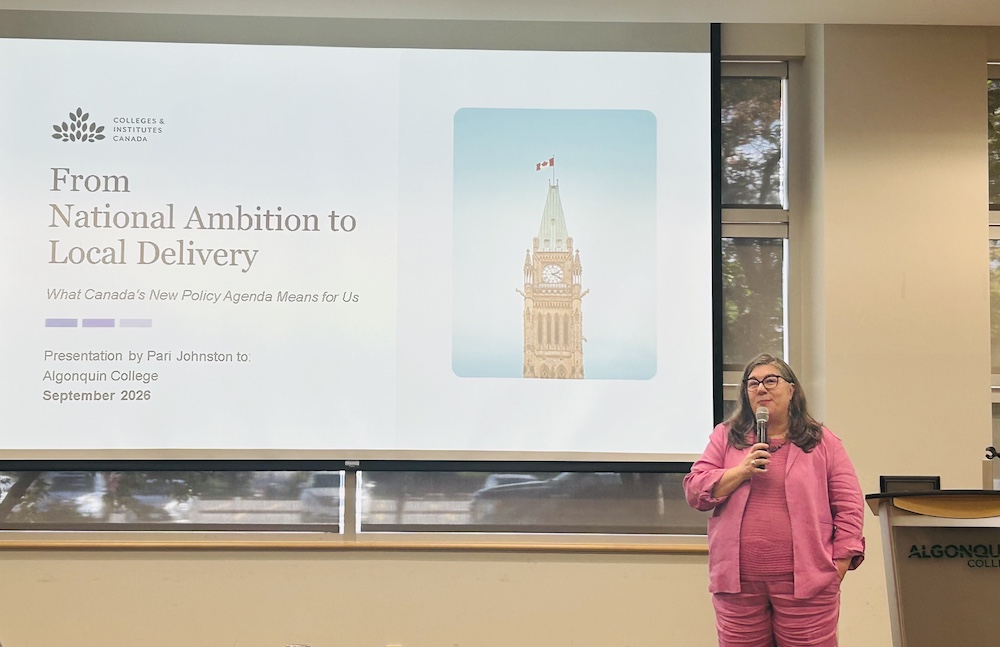
Over the past two and a half years, I have had the privilege of meeting in person and virtually with 15 college and institute Board of Governors across the country. This summer and fall alone, I am meeting with 6, a noticeable uptick of requests. They focus on providing a bird’s eye view of what I am witnessing across the sector and making sense of what it means for the institution’s future directions.
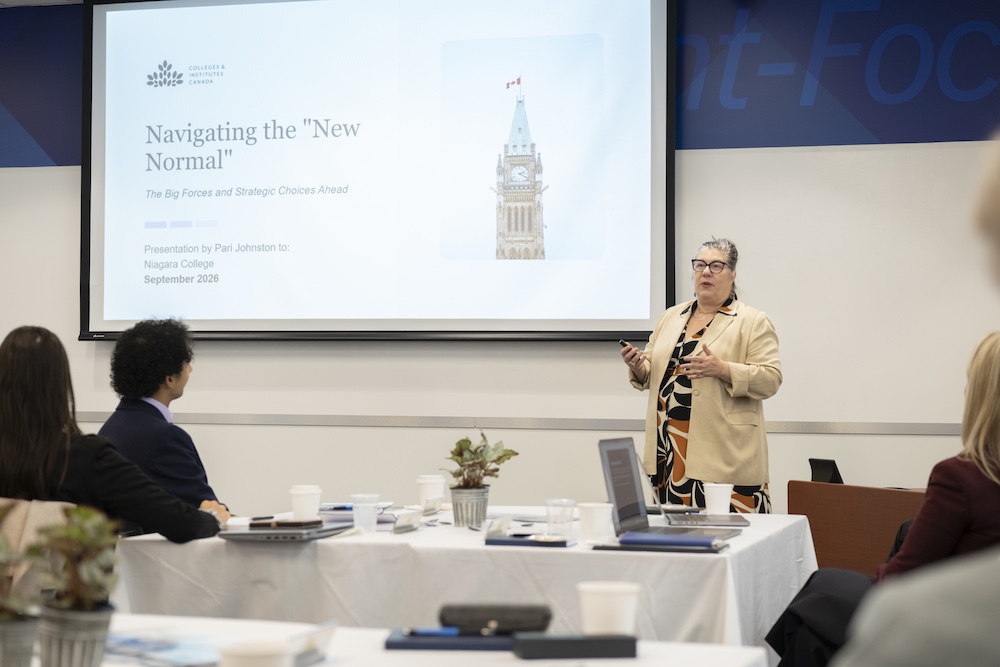
My inspiring sessions with the Boards of Northern Lights College in Dawson Creek, British Columbia, Niagara College and Algonquin College in Ontario, and the many communities in between from Castlegar to Moncton have left me with this conclusion: stewardship is one of the most important forms of leadership in our country today.
And for Board members across the public college and institute sector, it’s a responsibility they take up – and take seriously – every day.
In these boardrooms and community gatherings, I have heard different stories, diverse priorities, and different local realities. Yet a common theme has emerged everywhere I go: a deep commitment to the viability and vitality of the public training institution that anchors their community and sparks the hopes and dreams of its citizens.
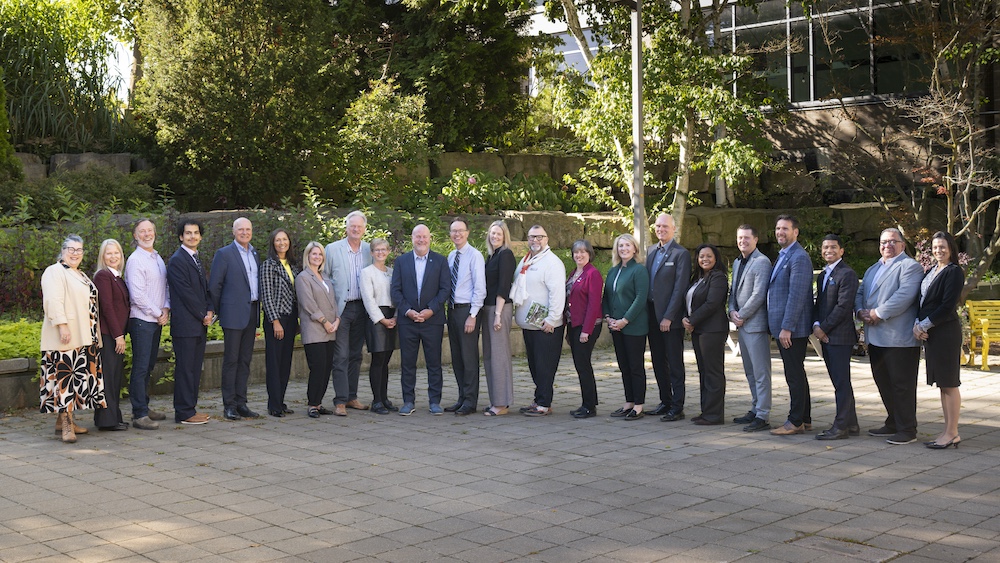
College and institute governors are not professional – nor paid – Board members. They are farmers, artists, veterans, entrepreneurs, Indigenous community leaders, allied health professionals, public servants, alumni, faculty, staff, and students.
They volunteer their time, their energy and their networks because they believe fiercely in the power of their local college and the role it plays in building opportunity for others – and they steward these institutions as public assets that belong to their communities and, ultimately, to all Canadians.
What’s more, their work comes at a time of extraordinary change, for Canada and for our sector.
Reassurance Amid Precarity
Our country is reimagining its place and role in the world. Building economic sovereignty, domestic capabilities and supply chain resilience are a united call to action from our governments at all levels, businesses and workers.
And at the same time, Canadians are anxious. David Coletto from Abacus Data, describes this moment and what many Canadians are experiencing on the ground as a precarity mindset.
They are worried about affordability, their jobs, economic uncertainty – and, importantly, whether the future will offer the same opportunities they expected for themselves, their families and their children.
At moments like this, Canadians look for reassurance and stability. They want confidence that their local communities will remain places where families can build meaningful lives and livelihoods.
That is precisely why stewardship of local public colleges and institutes – which can be found within 50 km of 95% of Canadians and at ground zero of most of the Major Projects – plays such an important role.
At the heart of these communities, our members are adapting to demographic shifts, changes in international student policy and enrolment trends, rapid advances in artificial intelligence, labour market disruption, and making difficult operating decisions while remaining focused on long-term mission and public purpose.
As these headwinds swirl around us, the conversations I am having with Boards in all corners of Canada are not simply about navigating today’s pressures; they are about claiming our national relevance, seizing new sector-wide opportunities and translating them into local benefits. In other words, ensuring their institutions remain strong, relevant, and impactful for the generations that follow.
Bringing the National, Local
Our institutions help meet immediate needs by preparing skilled workers, working directly with employers, and creating solid pathways to good careers. But stewardship also requires us to look beyond today’s preoccupations and identify tomorrow’s big opportunities.
It means helping communities prepare for emerging industries that bring local value, supporting businesses as they adapt and adopt new technologies to remain competitive, and ensuring learners have the agile skills to succeed in a changing economy. It means caring for the present without losing sight of the future.
One of the lessons emerging from the Institute for Research on Public Policy (IRPP)‘s Community Transformations Project is that place matters.
People experience national change locally. Job loss, industrial transitions, social disruption, and technological change are felt first in communities. When local institutions are strong, trusted, and directly connected to the needs of the people they serve, communities are better able to navigate uncertainty and adapt to change.
At a time when global forces can sometimes feel overwhelming – and deeply destabilizing – it is easy to focus exclusively on national and international debates and solutions.
The conversations we are having as a country about national missions matter deeply; national stewardship to resource and deliver on these missions matters. A lot. The Investment Summit hosted by Prime Minister Carney a few weeks ago attracted nearly $500B of new Canadian and global investment to drive our nation-building agenda.
But what I have been reminded of again and again this year is that local stewardship matters now even more because it serves to translate this national ambition into local impact. It helps ensure we turn investment announcements into projects that get delivered on the ground and local benefits so that communities continue to thrive.
Across Canada, dedicated individuals from all walks of life who gather around our college Board tables are quietly helping to guide these public institutions through a period of significant change and opportunity, setting strategy and making decisions not only for the next quarter, but for the next generation.
They are thoughtfully and intentionally stewarding institutional strategies for talent and workforce development, innovation and productivity, and community renewal and resilience. In many ways, they are helping to steward Canada’s future – particularly at a moment when public trust in our institutions cannot be taken for granted.
The Edelman Trust Barometer’s recent Global Report continues to show that people place significant importance on institutions that demonstrate competence, responsibility, and a commitment to delivering for society. Stewardship is, at its heart, about earning and maintaining that trust through thoughtful action, local relationships and long-term commitment. The report warns we are in an age of insularity and that public institutions must serve as “trust brokers” that bridge divides and find shared purpose and optimism.
So, as we begin this new academic year, I want to recognize and thank the college and institute governors, leaders, faculty, staff, students, and community partners who embrace their responsibility of trusted stewardship every day.
Here at CICan, I also want to salute the volunteer leaders who steward our association on behalf of the sector, including our new Board Chair and Vice Chair: Carolyn Campbell, President and CEO of NorQuest College, and Marie-Chantale Lortie, President, Groupe MCL – Partnerships & Financing, and Corporate Director. Their intentional and inspired stewardship of CICan’s Roadmap to 2030 is a gift I do not take for granted.
Their leadership reflects the same commitment I see across the country: a belief that colleges and institutes are essential community anchors and nation-builders that must remain strong, sustainable and future-focused.
Building for the Future
The challenges before us are real. But so is the opportunity.
Public colleges, institutes, CEGEPS, polytechnics and Indigenous Institutes have always helped Canada lead through change and build for the future.
Our most important task right now is stewardship: leading our institutions, our learners, our communities, and our country through a period of profound transformation. To build a strong and resilient Canada.
And from what I have seen across Canada this past year, I am optimistic that we are in very capable hands.